cluster bombs are dropped from an airspeed of 500 to 2300 km/h and altitudes between 300 m to 10
km.
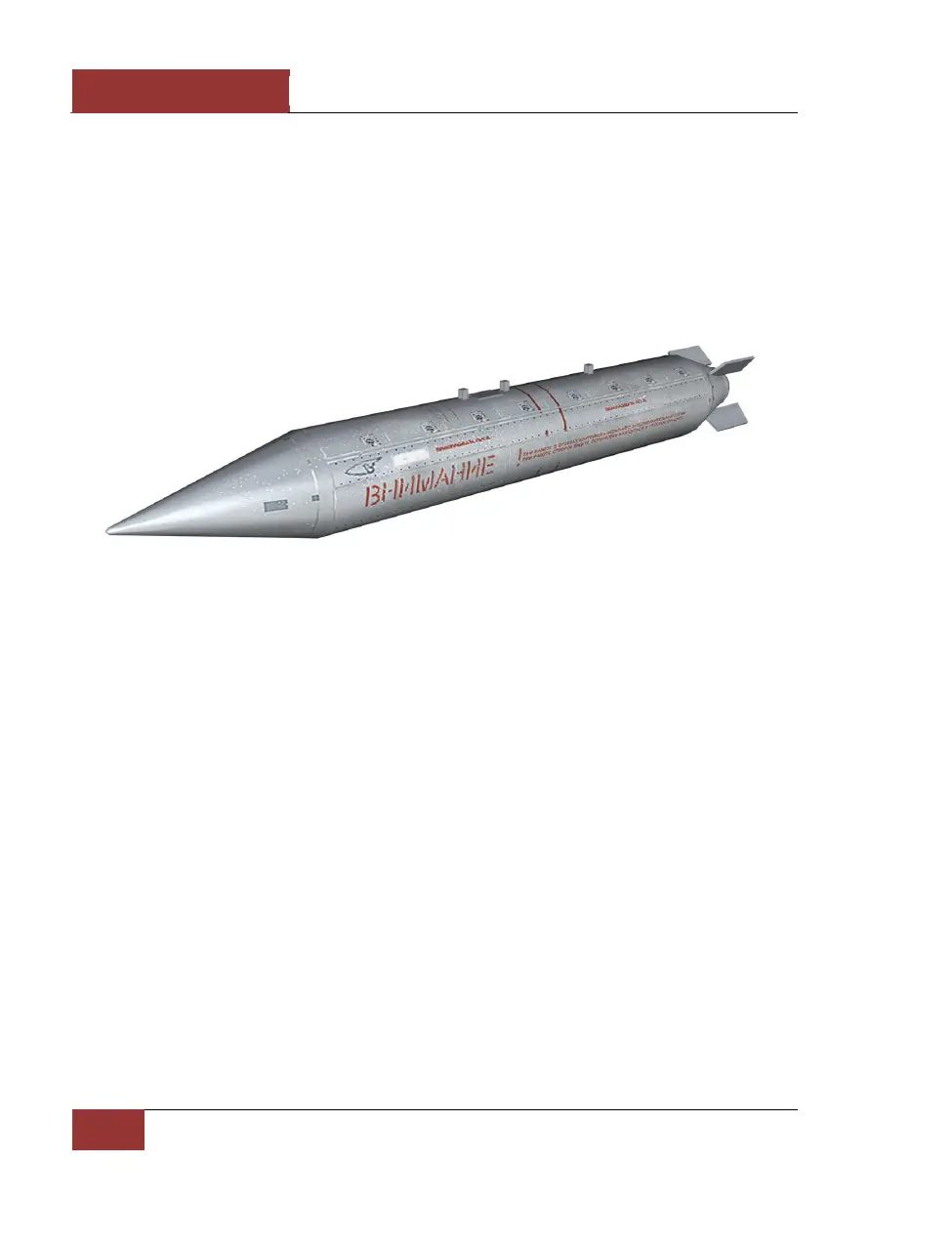
KMGU-2 Submunition Dispenser
The KMGU-2 ("General Container for Small-Sized sub-munitions") is designed to dispense small
caliber bomblets and air deployed mines. The sub-munitions are placed in the dispenser in cartridges
(BKF – "container blocks for frontal aviation"). The KMGU-2 consists of a cylindrical body with front
and rear cowlings and contains 8 BKF cartridges filled with bomblets or mines, carried in specialized
slots. The dispenser doors are pneumatically actuated to dispense the sub-munitions.
Figure 78: KMGU-2 Sub-munitions Dispenser
The KMGU-2 electrical system ensures a regular time interval of 0.005, 0.2, 1.0 or 1.5 seconds
between each cartridge release. BKF cartridges carried by Su-25 aircraft are usually equipped with 12
AO-2.5RT fragmentation bombs of 2.5 kg caliber, 12 PTM-1 1.6 kg antitank mines, or 156 PFM-1C 80
g high explosive mines. KMGU-2 dispensers are suspended singly on universal BDZ-U beam bomb
racks. Cartridges are released from altitudes of 50-150 m and airspeeds of 500–900 km/h.
Authorization for release is provided by cockpit indications.
Unguided Aerial Rockets
Despite the existence of precision guided weapons, unguided rockets continue to see widespread use
as air-to-ground weapons, combining effectiveness, reliability and ease of use with low cost. The
unguided rocket has relatively simple design, consisting of a fuse, warhead, body, rocket motor and
stabilizing fins. Unguided rockets are usually carried in special containers or launch tubes. The rocket
motor usually burns for 0.7 to 1.1 s after launch, accelerating the rocket to speeds of 2100 – 2800
km/h. After motor burnout, the rocket flies a ballistic trajectory like an artillery shell. To ensure
directional stability, the rocket stabilizing fins, located at the tail, unfold from their stowed position.
Some rockets are further stabilized by gyroscopic rotation around the longitudinal axis. An aircraft
can be equipped with unguided rockets of different calibers (from 57 mm to 370 mm) and/or
warheads, depending on the mission. The fuse can be contact- or proximity-detonated to achieve the
desired dispersal of blast fragments.
Hit accuracy is dependent on the rocket's flight range, which in turn varies according to rocket type
and caliber. Error accumulates with longer ranges, since the rockets fly without any trajectory


 To Next Page