
 Need help?
Do you have a question about the Dinstar UC100 and is the answer not in the manual?
Provides a general introduction to the UC100 gateway's multi-functional capabilities and its role in voice and data services.
Illustrates typical use cases and network integration scenarios for the UC100 VoIP solution.
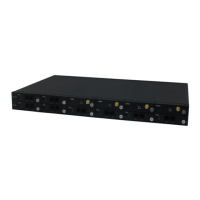
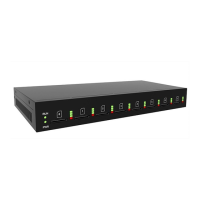
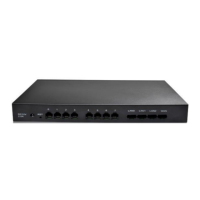
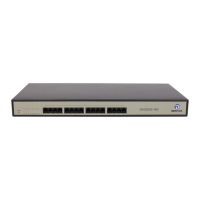
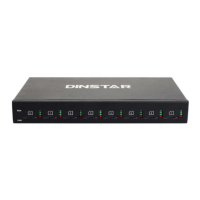
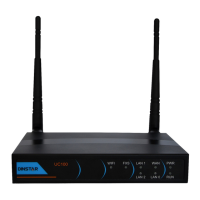
Details the physical layout and external views of the UC100 device, including front and back panel interfaces.
Lists the key hardware and software features, capabilities, and specifications of the UC100, covering voice, network, and system functions.
Outlines important safety and setup considerations before installing the UC100 device, including power and network requirements.
Provides step-by-step instructions for physically connecting the UC100, including antenna, power, network cables, and SIM card.
Explains network connectivity options and diagrams for the UC100 in both route and bridge modes.
Describes the two primary methods for dialing telephone numbers or extensions using the UC100 device.
Explains how users can place an active call on hold and switch between different calls on the UC100.
Details the call waiting feature, allowing users to manage incoming calls while on an existing conversation.
Covers the different methods for transferring calls to a third party, including blind and attended transfer techniques.
Lists and explains various feature codes used for accessing specific functionalities and configurations on the UC100.
Information on supported fax modes, including T.38 and pass-through, and explanations of their functionality.
Procedures for resetting the UC100's IP address, username, and password to their factory default settings.
How to restore all UC100 configurations to their original factory default settings via hardware or web interface.
Step-by-step guide on how to access and log into the UC100's web-based management interface for configuration.
Outlines common configuration wizards for setting up the UC100 as a terminal, FXS/FXO device, or connecting to a PBX.
Details how to view system status, network information, SIP, PSTN, call logs (CDRs), and service status on the UC100.
Covers essential system settings including language, time zone, user management, logs, backup, restore, and device reboot options.
Configuration of network settings such as IP addressing, access control, firewall rules, DHCP server, and port mapping.
Allows configuration of SIP profiles, FXS/FXO settings, codecs, number manipulation, time profiles, and dial plans for call routing.
Configuration of SIP extensions, FXS port extensions, and ring groups to manage internal call routing and user extensions.
Setup and configuration of SIP, FXO, and GSM trunks to connect the UC100 to external telephony networks and services.
Manages call routing, feature codes, IVR settings, SMS functionality, and fax configurations for comprehensive call handling.
 General
| Model | UC100 |
|---|---|
| Category | Gateway |
| Voice Channels | 1 |
| Protocols | SIP, H.323 |
| FXS Ports | 1 |
| Weight | 0.5 kg |
| Voice Codec | G.711, G.729, G.723 |
| Fax | T.38 |
| Network Interface | 1 x 10/100 Mbps Ethernet |
| Operating Temperature | 0°C to 40°C |
| Humidity | 10% to 90% (non-condensing) |



 To Next Page
