2-7
PTC Device Replacement
1. Disconnect the unit from the power
source.
2. Disconnect the PTC from the compres-
sor terminals.
3. Remove the lead wires from the PTC
terminals.
4. Replace the PTC and reconnect the
wires to the proper terminals.
RUN CAPACITOR
The run capacitor is mounted adjacent to
the compressor. It is electrically connected
to the compressor circuit to provide the
required phase difference between the start
and run windings for running the
compressor.
Capacitor Failures May Be Caused By:
(1) A Short Circuit - Will cause the start
windings to be energized continuously
in the start mode. The compressor
could start, but the overload protector
will trip, and eventually trip continu-
ously.
(2) An Open Circuit - Should, under normal
conditions, allow the compressor to
start. Under a heavy running load, how-
ever, the compressor will trip on the
overload.
(3) A Capacitor Low in Capacitance - A
capacitor may lose capacitance by a loss
of its electrolytic properties. The com-
pressor would run under a light load,
but would trip on the overload in high
ambient conditions.
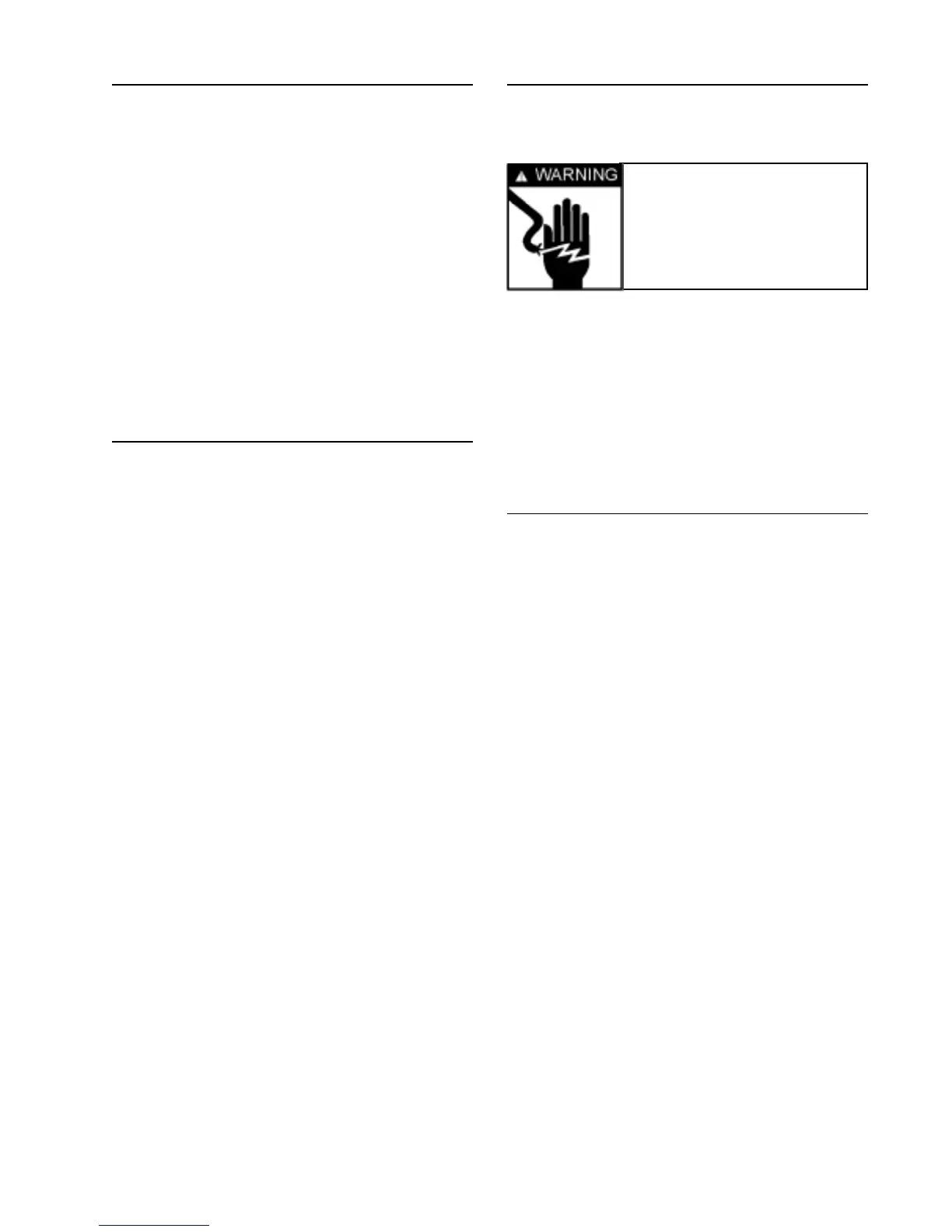
Warning - Discharge a ca-
pacitor before handling.
Short across its terminals,
using a resistor with a
minimum resistance of
1,000 Ohms.
Testing the Capacitor
We recommend using a capacitor analyzer
when testing. A solid state unit that mea-
sures capacitance and power of any capaci-
tor, and has an automatic means of discharg-
ing the capacitor through resistance is pre-
ferred.
Alternate Method Using
Ohmmeter
1. Disconnect the unit from the power
source.
2. Disconnect the capacitor lead wires.
3. Short across the terminals using a re-
sistor with a minimum resistance of
1,000 ohms. This ensures that no
charge remains to damage the ohmme-
ter.
4. Set the ohmmeter selector switch to
the 10,000 ohm scale (R x 10K).
5. Connect the ohmmeter leads to the ca-
pacitor terminals and observe the
meter point lower end.



 To Next Page