35 PB
INSTALLATION OF THE OUTDOOR UNIT
Leak Check, Evacuation and Charging
Warning:
No ignition sources: No person carrying out work in relation to a
REFRIGERATING SYSTEM which involves exposing any pipe work shall
use any sources of ignition in such a manner that it may lead to the risk
of fire or explosion. All possible ignition sources, including cigarette
smoking, should be kept sufficiently far away from the site of installation,
repairing, removing and disposal, during which refrigerant can possibly
be released to the surrounding space. Prior to work taking place, the
area around the equipment is to be surveyed to make sure that there are
no flammable hazards or ignition risks.
Ventilated Area: Ensure that the area is in the open or that it is adequately
ventilated before accessing the refrigerant in the system or conducting
any hot work. A degree of ventilation shall continue during the period
that the work is carried out. The ventilation should safely disperse any
released refrigerant away from the work area or external to building
envelope.
During Repairs To Sealed Components: All power must be removed from
the equipment being worked on prior to any removal of sealed covers,
etc. If it is absolutely necessary to have an electrical supply to equipment
during servicing, then a constant leak detector shall be located at the
most critical point to warn of a potentially hazardous situation.
Checks And Repairs To Electrical Devices:
• Repair and maintenance to electrical components shall include
initial safety checks and component inspection procedures. If a fault
exists that could compromise safety, then no electrical supply shall
be connected to the circuit until it is satisfactorily dealt with. If the
fault cannot be corrected remove power supply to unit. DO NOT
OPERATE.
• Initial safety checks shall include:
•That capacitors are discharged: this shall be done in a safe
manner to avoid possibility of sparking;
•That no live electrical components and wiring are exposed while
charging, recovering or purging the system;
•Verify unit is properly grounded.
• Particular attention shall be paid to the following to ensure that
by working on electrical components, the casing is not altered in
such a way that the level of protection is affected. This shall include
damage to cables, excessive number of connections, terminals not
made to original specification, damage to seals, incorrect fitting of
glands, etc.
• Ensure that the apparatus is mounted securely.
• Ensure that seals or sealing materials have not degraded to the
point that they no longer serve the purpose of preventing the
ingress of flammable atmospheres. Replacement parts shall be in
accordance with the manufacturer’s specifications.
•
The following is a list of important considerations when working with
R-454B equipment:
• R-454B pressure is similar to R-410A and approximately 60% higher
than R-22 pressure.
• R-454B cylinders must not be allowed to exceed 125˚F, they may
leak or rupture.
• R-454B must never be pressurized with a mixture of compressed
air, it may become MORE flammable.
• Servicing equipment and components must be specifically designed
for use with R-454B and dedicated to prevent contamination.
• Manifold sets must be equipped with gauges capable of reading 750
psig (high side) and 200 psig (low side), with a 500-psig low-side
retard.
• Gauge hoses must have a minimum 750-psig service pressure
rating.
• Recovery cylinders must have a minimum service pressure rating
of 400 psig, (DOT 4BA400 and DOT BW400 approved cylinders).
• POE (Polyol-Ester) lubricants must be used with R-454B equipment.
• To prevent moisture absorption and lubricant contamination, do not
leave the refrigeration system open to the atmosphere for extended
periods of time.
• If unit refrigerant is low, recover the refrigerant, evacuate, and
recharge unit to nameplate amount.
• If there is any amount of refrigerant in the system charge from the
low side.
• Always charge by liquid inverted.
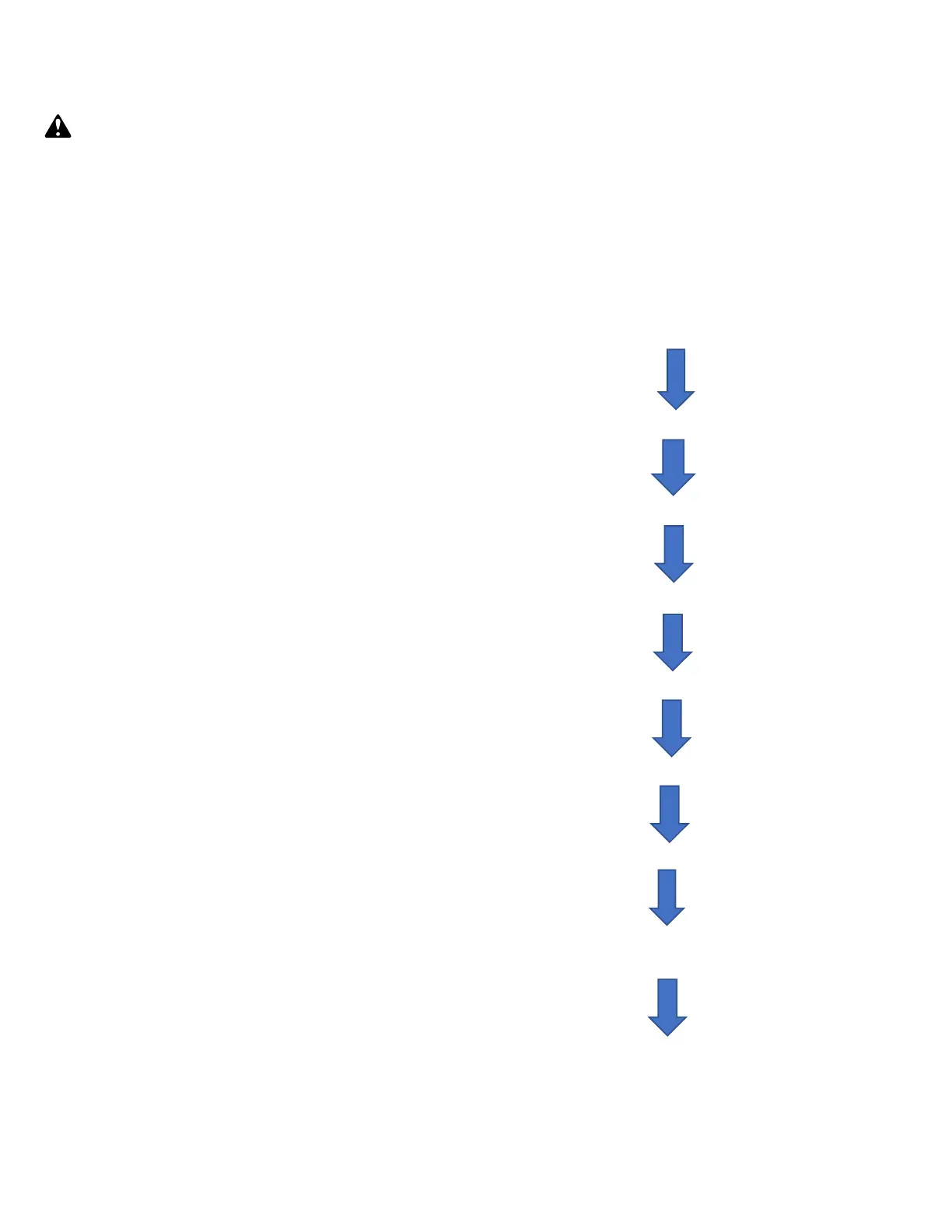
WAIT
EVACUATE
BREAK VACUUM WITH DRY NITROGEN
CHARGE SYSTEM
EVACUATE
WAIT
EVACUATE
CHECK FOR TIGHT, DRY SYSTEM
(IF IT HOLDS A VACUUM)
BREAK VACUUM WITH DRY NITROGEN
Figure G.1



 To Next Page