PCR-M 83
Appendix
Causes of and remedies for overload status
If the overload protection function is activated, take the remedies below. Then, wait
at least 1 minute before resuming operations.
When the cause of the overload is eliminated, the protection function is
automatically deactivated.
■ For linear loads
■ For capacitor-input rectifying loads
■ For loads that draw an inrush current
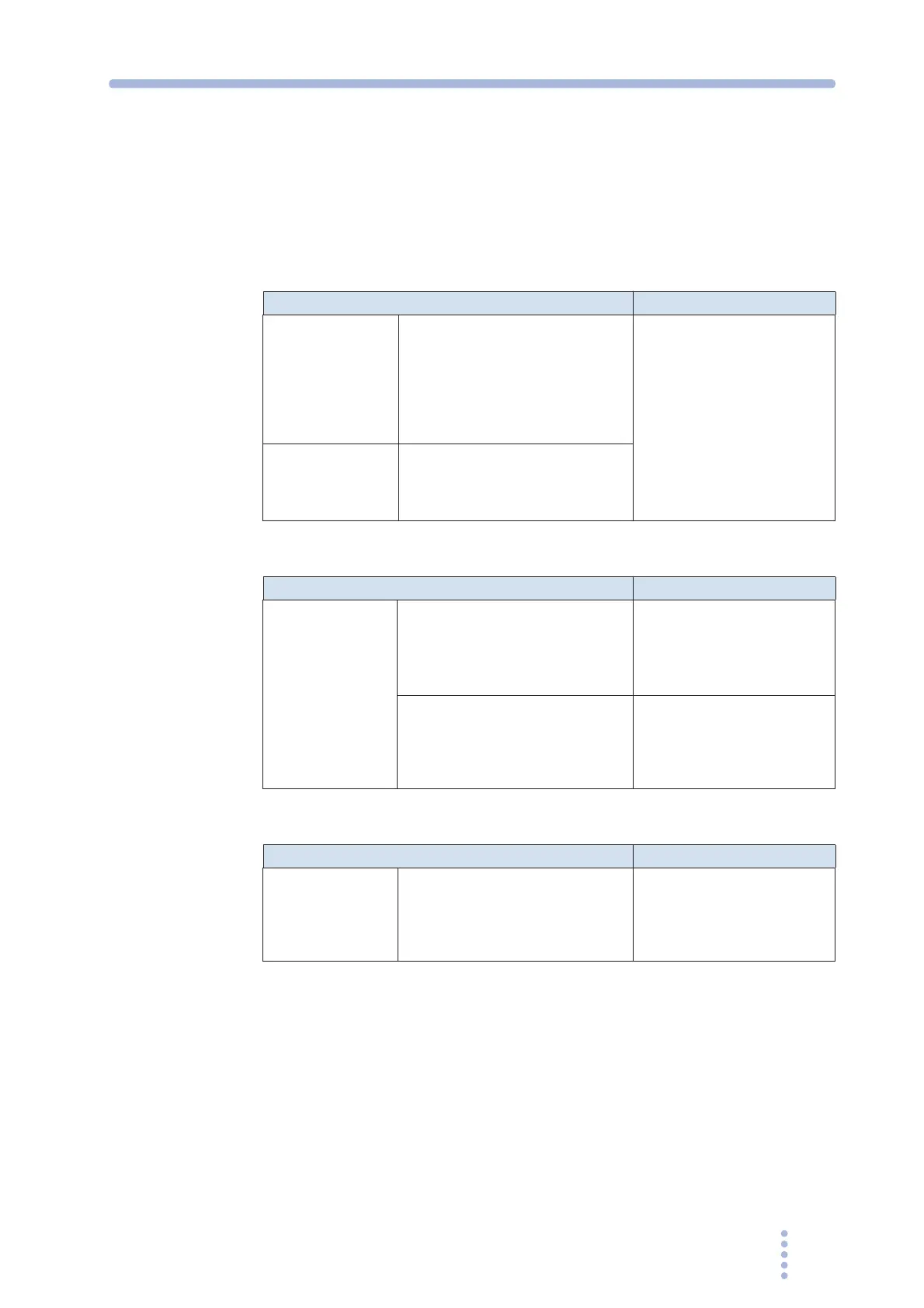
Overload Condition Remedy
Gradual output
current increase
• If the voltage drops as shown in
Fig. A-4 (a), the current limiting
function is activated.
• If the output voltage waveform is
distorted as shown in Fig. A-4 (b-
1) or (b-2), the internal protection
function is activated.
• If the current limit value is
set low, change the setting.
• If the rated maximum current
is exceeded, reduce the
load.
Sudden output
current increase
• If the output voltage waveform is
distorted as shown in Fig. A-4 (b-
1), (b-2), or (c), the internal
protection function is activated.
Overload Condition Remedy
Output current
increase
• If the voltage drops as shown in
Fig. A-4 (a), the current limiting
function is activated.
• If the current limit value is
set, change the setting.
• If the rated maximum current
is exceeded, reduce the
load.
• If the voltage waveform is
distorted as shown in Fig. A-4 (c),
the internal protection function is
activated due to the output peak
current.
• Reduce the peak current.
Overload Condition Remedy
When voltage is
applied to the load
or when the voltage
suddenly changes
• If the voltage waveform is
distorted as shown in Fig. A-4 (c),
the internal protection function is
activated due to the inrush
current.
• Reduce the inrush current.



 To Next Page