224 CONTENTS
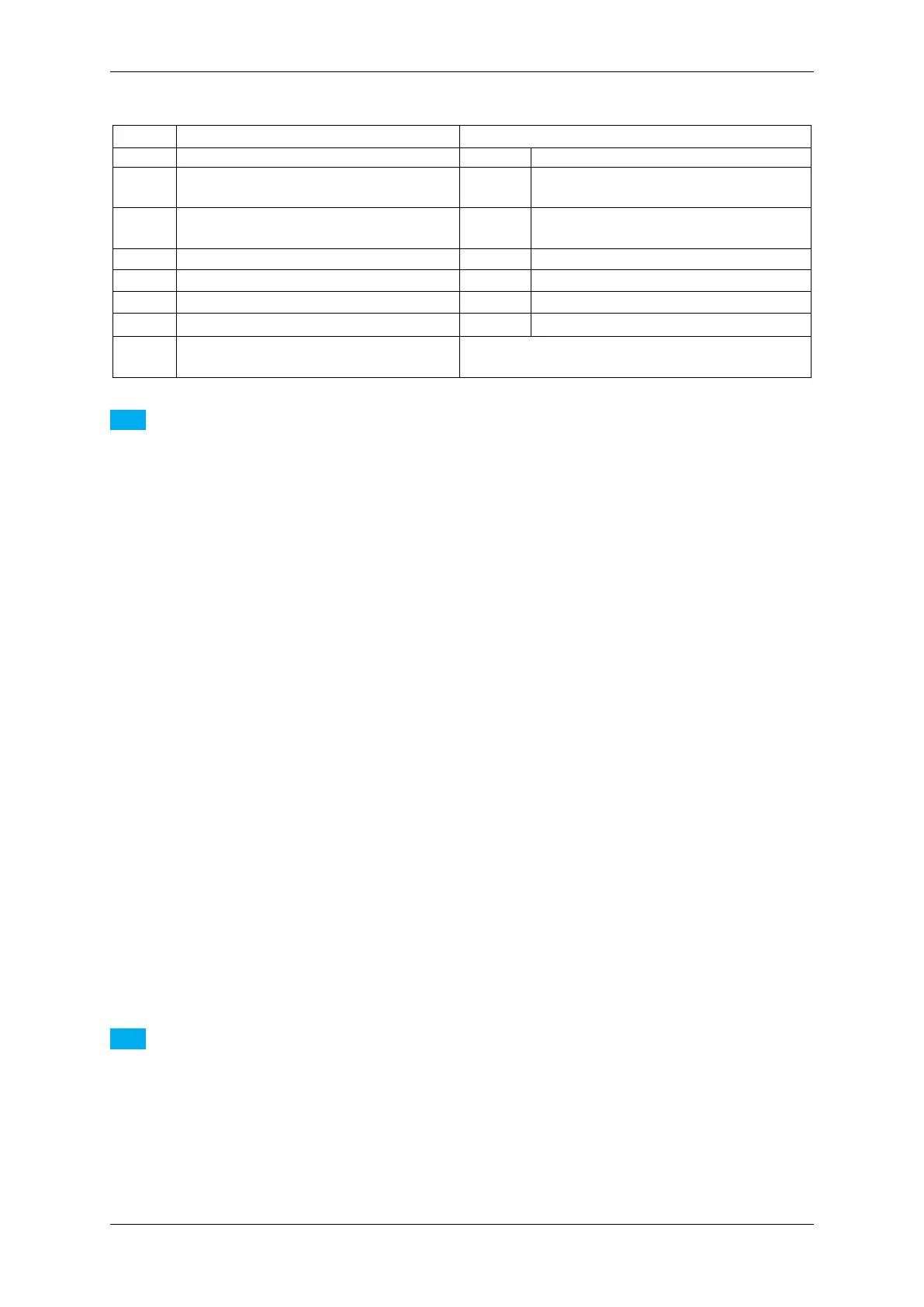
Name Description Pixel clock
20 MHz 40 MHz
t
trig
Time from trigger
(internal or external) to exposure start
10.2us 5.1us
t
trans
Image transfer time
(move image to readout cells in CCD)
96us 48us
t
readline
time needed to readout a line 96us 48us
t
vshift
time needed to shift unused lines away 10.2us 5.1us
t
wait
minimal time to next trigger 316us 158us
t
exposure
Exposure time 1us..10s 1us..10s
t
readout
Image readout time
(move image from readout cells to memory
t
readout
= (ActiveLines ∗ t
readline
) + (1248 - ActiveLines)
∗ t
vshift
+ t
readline
Note
In partial scan mode (readout window ysize < 1200 lines).
To calculate the maximum frames per second (FPS
max
) you will need following formula (Expose mode: No overlap):
FPS_max = 1
--------------------------------------------------
t_trig + t_readout + t_exposure + t_trans + t_wait
(Expose mode: Overlapped):
t_trig + t_readout + t_trans + t_wait < t_exposure: FPS_max = 1
---------------
t_exposure
t_trig + t_readout + t_trans + t_wait > t_exposure: FPS_max = 1
-------------------------------------
t_trig + t_readout + t_trans + t_wait
20.5.3.1.1 Example: Frame rate as function of lines & exposure time
Now, when we insert the values using exposure time of, for example, 8000 us, 1200 lines and 40MHz pixel clock
(Expose mode: No overlap):
FPS_max = 1
---------------------------------------------------------------------------------------
5.1 us + ((1200
*
48 us) + ((1248 - 1200)
*
5.1 us) + 48 us) + 8000 us + 48 us + 158 us
= 0.000015127700483632586 1 / us
= 15.1
20.5.3.2 Frame rate calculator
Note
The calculator returns the max. frame rate supported by the sensor. Please keep in mind that it will depend
on the interface and the used image format if this frame rate can be transferred.
See also
To find out how to achieve any defined freq. below or equal to the achievable max. freq., please have a look
at Achieve a defined image frequency (HRTC) (p. 180).
MATRIX VISION GmbH


 To Next Page