10 SEBU8603-01
Safety Section
General Hazard Information
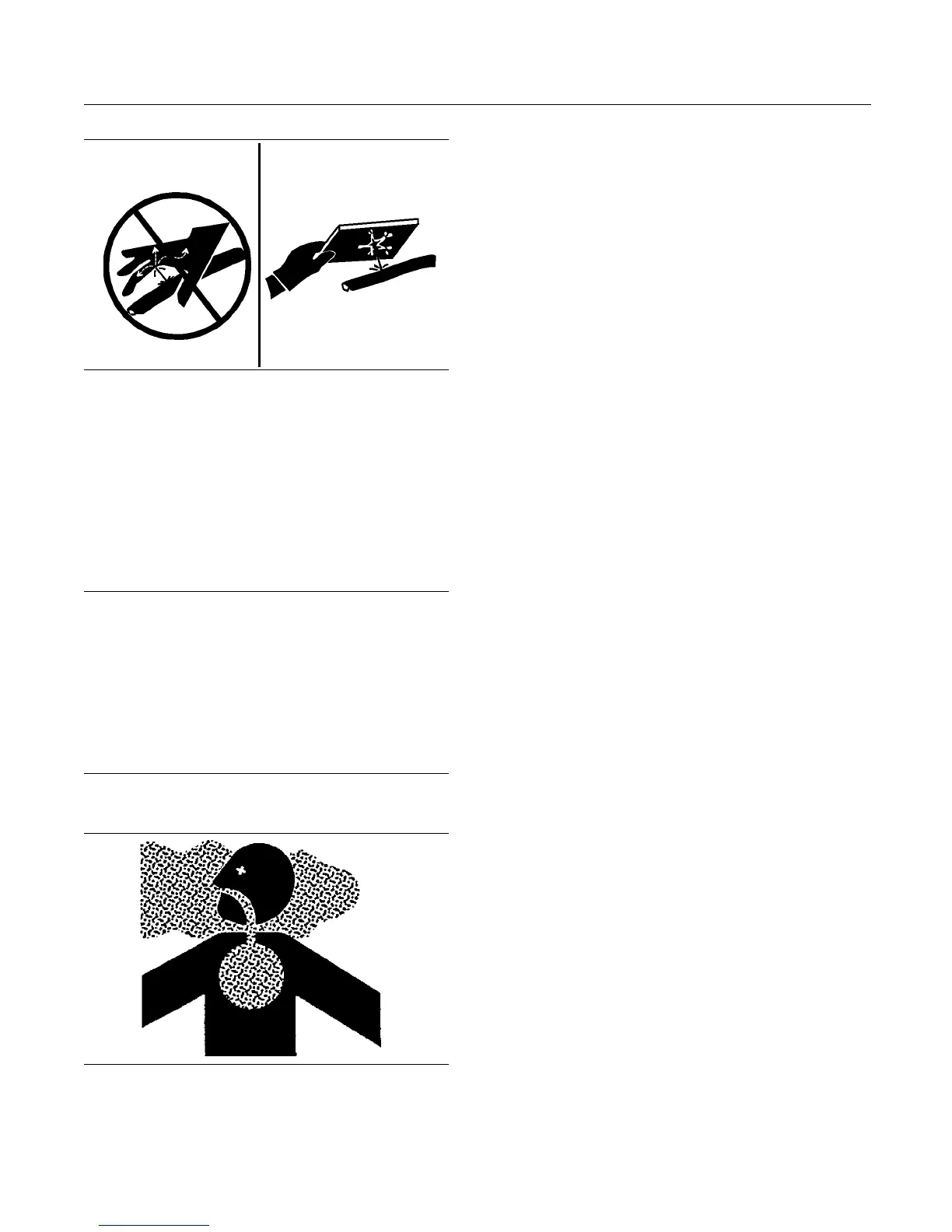
g00687600
Illustration 8
Always use a board or cardboard when you check
for a leak. Leaking fluid that is under pressure can
penetrate body tissue. Fluid penetration can cause
serious injury and possible death. A pin hole leak can
cause severe injury. If fluid is injected into your skin,
you must get treatment immediately. Seek treatment
from a doctor that is familiar with this type of injury.
Contain ing Flui d Spill age
NOTICE
Care must be taken to ensure that fluids are contained
during performance of inspection, maintenance, test-
ing, adjusting and repair of the product. Be prepared to
collect the fluid with suitable containers before open-
ing any compartment or disassembling any compo-
nent containing fluids.
Dispose of all fluids according to local regulations and
mandates.
Asbestos Information
g00702022
Illustration 9
Perkins replac
ement parts that are shipped from
Perkins are asbestos free. Perkins recommends
the use of only genuine Perkins replacement parts.
Use the follow
ing guidelines when you handle any
replacement parts that contain asbestos or when you
handle asbestos debris.
Use caution. Avoid inhaling dust that might be
generated when you handle components that contain
asbestos fib
ers. Inhaling this dust can be hazardous
to your health. The components that may contain
asbestos fibers are brake pads, brake bands, lining
material, c
lutchplates,andsomegaskets.The
asbestos that is used in these components is usually
bound in a resin or sealed in some way. Normal
handling i
s not hazardous unless airborne dust that
contains asbestos is generated.
If dust tha
t may contain asbestos is present, there
are several guidelines that should be followed:
•
Never use
compressed air for cleaning.
•
Avoid brushing materials that contain asbestos.
•
Avoid grinding materials that contain asbestos.
•
Use a wet
method in order to clean up asbestos
materials.
•
A vacuum
cleaner that is equipped with a high
efficiency particulate air filter (HEPA) can also be
used.
•
Use exhaust ventilation on permanent machining
jobs.
•
Wear an approved respirator if there is no other
way to control the dust.
•
Comply with applicable rules and regulations
for the work place. In the United States, use
Occu
pational Safety and Health Administration
(OSHA) requirements. These OSHA requirements
can be found in “29 CFR 1910.1001”.
•
Obey environmental regulations for the disposal
of asbestos.
•
Stay away from areas that might have asbestos
particles in the air.





 To Next Page