12 SEBU8603-01
Safety Section
Fire Prevention and Explosion Prevention
Batteries
Electrolyte i
s an acid. Electrolyte can cause personal
injury. Do not allow electrolyte to contact the skin or
the eyes. Always wear protective glasses for servicing
batteries. Wa
sh hands after touching the batteries
and connectors. Use of gloves is recommended.
i03652933
Fire Preventio n a nd Explosion
Prevention
g00704000
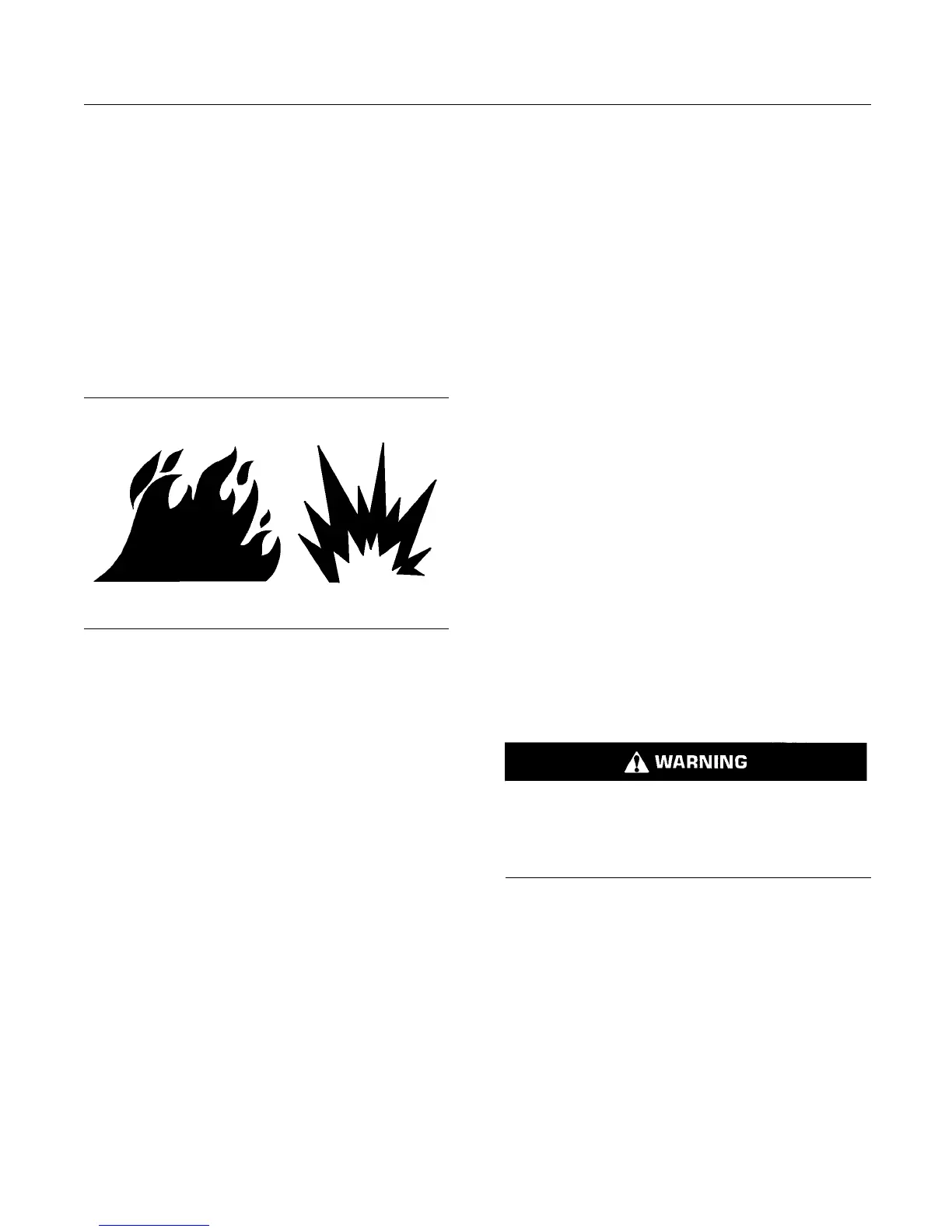
Illustration 11
All fuels, most lubricants, and some coolant mixtures
are flammable.
Flammable fluids that are leaking or spilled onto hot
surfaces or onto electrical components can cause
a fire. Fire may cause personal injury and property
damage.
After the emergency stop button is operated ensure
that you allow 15 minutes, before the engine covers
are removed.
Determine whether the engine will be operated in an
environment that allows combustible gases to be
drawn into the air inlet system. These gases could
cause the engine to overspeed. Personal injury,
property damage, or engine damage could result.
If the application involves the presence of combustible
gases, consult your Perkins dealer and/or your
Perkins distributor for additional information about
suitable protection devices.
Remove all flammable combustible materials or
conductive materials such as fuel, oil, and debris from
the engine. Do not allow any flammable combustible
materials or conductive materials to accumulate on
the engine.
Store fuels and
lubricants in correctly m arked
containers away from unauthorized persons. Store
oily rags and any flammable materials in protective
containers. D
onotsmokeinareasthatareusedfor
storing flammable materials.
Do not expose
theenginetoanyflame.
Exhaust shields (if equipped) protect hot exhaust
components
from oil or fuel spray in case of a line,
a tube, or a seal failure. Exhaust shields must be
installed correctly.
Do not weld on lines or tanks that contain flammable
fluids. Do not flame cut lines or tanks that contain
flammable fl
uid. Clean any such lines or tanks
thoroughly with a nonflammable solvent prior to
welding or flame cutting.
Wiring must be kept in good condition. All electrical
wires must be correctly routed and securely attached.
Check all
electrical wires daily. Repair any wires
that are loose or frayed before you operate the
engine. Clean all electrical connections and tighten
all elect
rical connections.
Eliminate all wiring that is unattached or unnecessary.
Do not us
e any wires or cables that are smaller than
the recommended gauge. Do not bypass any fuses
and/or circuit breakers.
Arcing or sparking could cause a fi re. Secure
connections, recommended wiring, and correctly
mainta
ined battery cables will help to prevent arcing
or sparking.
Contact with high pressure fuel may cause fluid
pene
tration and burn hazards. High pressure fu-
el spray may cause a fire hazard. Failure to fol-
low these inspection, maintenance and service in-
stru
ctions may cause personal injury or death.
After the engine has stopped, you must wait for 10
min
utes in order to allow the fuel pressure to be
purged from the high pressure fuel lines before any
service or repair is performed on the engine fuel lines.
Ensure that the engine is stopped. Inspect all lines
and hoses for wear or for deterioration. The hoses
mu
st be correctly routed. The lines and hoses must
have adequate support and secure clamps.
Oi
l filters and fuel filters must be correctly installed.
The filter housings must be tightened to the correct
torque. Refer to the Disassembly and Assembly
m
anual for more information.





 To Next Page