SEBU8603-01 9
Safety Section
General Hazard Information
•
For initial sta
rt-up of a new engine or for starting an
engine that has been serviced, make provisions to
stop the engine if an overspeed occurs. This may
be accomplish
ed by shutting off the fuel supply
and/or the air supply to the engine.
•
Start the eng
ine from the operator's station (cab).
Never short across the starting motor terminals or
the batteries. This could bypass the engine neutral
start syste
m and/or the electrical system could be
damaged.
Engine exha
ust contains products of combustion
which may be harmful to your health. Always start the
engine and operate the engine in a well ventilated
area. If th
e engine is in an enclosed area, vent the
engine exhaust to the outside.
Cautiousl
y remove the following parts. To help
prevent spraying or splashing of pressurized fluids,
hold a rag over the part that is being removed.
•
Filler caps
•
Grease fit
tings
•
Pressure taps
•
Breathers
•
Drain pl
ugs
Use caution when cover plates are removed.
Gradua
lly loosen, but do not remove the last two
bolts or nuts that are located at opposite ends of
the cover plate or the device. Before removing the
last t
wo bolts or nuts, pry the cover loose in order to
relieve any spring pressure or other pressure.
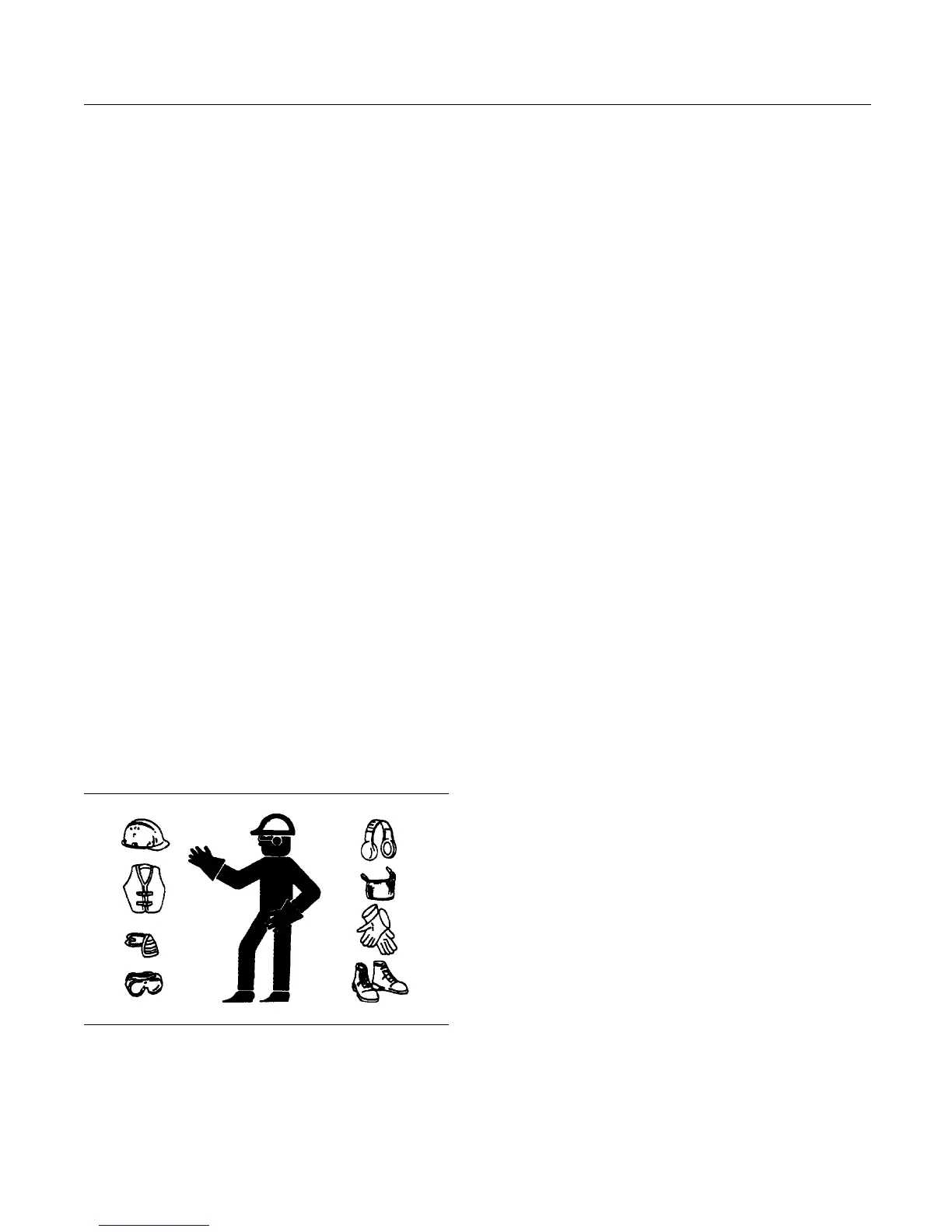
g00702020
Illustration 7
•
Wear a hard hat, p rotective glasses, and other
protective equipment, as required.
•
When work is performed around an engine that is
operating, wear protective devices for ears in order
to help prevent damage to hearing.
•
Do not wear loos
e clothing or jewelry that can snag
on controls or on other parts of the engine.
•
Ensure that al
l protective guards and all covers are
securedinplaceontheengine.
•
Never put mai
ntenance fluids into glass containers.
Glass containers can break.
•
Use all clea
ning solutions with care.
•
Report all necessary repairs.
Unless other instructions are provided, perform
the ma intenance under the following conditions:
•
The engine is stopped. Ensure that the engine
cannot be started.
•
Disconnect the batteries when maintenance
is performed or when the electrical system is
serviced
. Disconnect the battery ground leads.
Tape the leads in order to help prevent sparks.
•
Do not att
empt any repairs that are not understood.
Use the proper tools. Replace any equipment that
is damaged or repair the equipment.
Pressurized Air and Water
Pressurized air and/or water can cause debris
and/or hot water to be blown out. This could result in
person
al injury.
When pressurized air and/or pressurized water is
used f
or cleaning, wear protective clothing, protective
shoes, and eye protection. Eye protection includes
goggles or a protective face shield.
The maximum air pressure for cleaning purposes
must be below 205 kPa (30 psi). The maximum
wate
r pressure for cleaning purposes must be below
275 kPa (40 psi).
Fluid Pen etr a tion
Pres
sure can be trapped in the hydraulic circuit long
after the engine has been stopped. The pressure can
cause hydraulic fluid or items such as pipe plugs to
esc
ape rapidly if the pressure is not relieved correctly.
Do not remove any hydraulic components or parts
unt
il pressure has been relieved or personal injury
may occur. Do not disassemble any hydraulic
components or parts until pressure has been relieved
or
personal injury may occur. Refer to the OEM
information for any procedures that are required to
relieve the hydraulic pressure.





 To Next Page