68 SEBU8603-01
Maintenance Section
Refill Capacities
Lubricant Visc
osity Recommendations
for Direct Injection (DI) Diesel Engines
The correct SA
E viscosity grade of oil is determined
by the minimum ambient temperature during
cold engine start-up, and the maximum ambient
temperature
during engine operation.
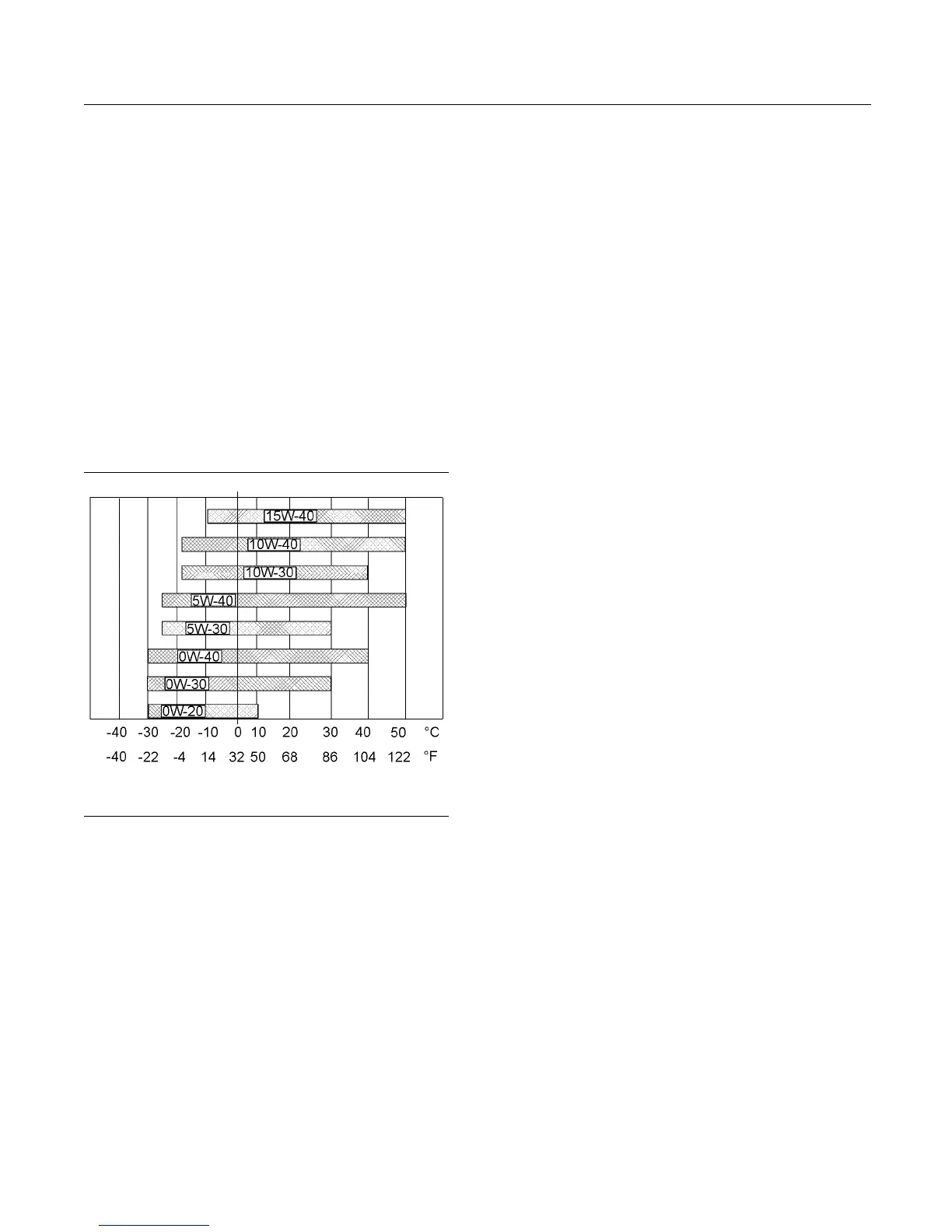
Refertoillustration37(minimumtemperature)in
order to det
ermine the required oil viscosity for
starting a cold engine.
Refer to ill
ustration 37 (maximum temperature) in
order to select the oil viscosity for engine operation at
the highest ambient temperature that is anticipated.
Generally, use the highest oil viscosity that is
available to meet the requirement for the temperature
at start-u
p.
g02210556
Illustration 37
Lubricant Viscosities
Supplemental heat is recommended for cold soaked starts below
the m inimum am bient temperature. S upplemental heat may be
required for cold soaked starts that ar e above the minimum
temperature that is stated, depending on the parasitic load and
other factors. Cold soak ed starts occur when the engine has not
been operated for a period of time. This interval will allow the oil to
become more viscous due to cooler am bient temperatures.
Aftermarket Oil Additives
Perkins does not recommend the use of aftermarket
additives in oil. It is not necessary to use aftermarket
additives in order to achieve the engines maximum
service life or rated performance. Fully formulated,
finished oils consist of base oils and of commercial
additive packages. These additive packages are
blended into the base oils at precise percentages in
order to help provide finished oils with performance
characteristics that meet industry standards.
There are no ind
ustry standard tests that evaluate
the performance or the compatibility of aftermarket
additives in finished oil. Aftermarket additives may
not be compati
blewiththefinished oils additive
package, which could lower the performance of the
finished oil. The aftermarket additive could fail to mix
with the finis
hed oil. This failure could produce sludge
in the crankcase. Perkins discourages the use of
aftermarket additives in finished oils.
To achieve the best performance from a Perkins
engine, conform to the following guidelines:
•
See the appropriate “Lubricant Viscosities”. Refer
totheillustration37inordertofind the correct oil
viscosity
grade for your engine.
•
At the specified interval, service the engine. Use
new oil and
install a new oil filter.
•
Perform maintenance at the intervals that are
specified
in the Operation and Maintenance
Manual, “Maintenance Interval Schedule”.
Oil anal
ysis
Some engines may be equipped with an oil sampling
valve. I
f oil analysis is required, the oil sampling valve
is used to obtain samples of the engine oil. The oil
analysis will complement the preventive maintenance
progra
m.
The oil analysis is a diagnostic tool that is used to
determ
ine oil performance and component wear
rates. Contamination can be identified and measured
by using oil analysis. The oil analysis includes the
follo
wing tests:
•
The Wear Rate Analysis monitors the wear of the
engin
es metals. The amount of wear metal and
type of wear metal that is in the oil is analyzed. The
increase in the rate of engine wear metal in the
oil i
s as important as the quantity of engine wear
metal in the oil.
•
Test
s are conducted in order to detect
contamination of the oil by water, glycol, or fuel.
•
The
Oil Condition Analysis determines the loss of
the oils lubricating properties. An infrared analysis
is used to compare the properties of new oil to the
pro
perties of the used oil sample. This analysis
allows technicians to determine the amount of
deterioration of the oil during use. This analysis
al
so allows technicians to verify the performance
of the oil according to the specification during the
entire oil change interval.





 To Next Page