Representing Spectra as Vectors 55
5
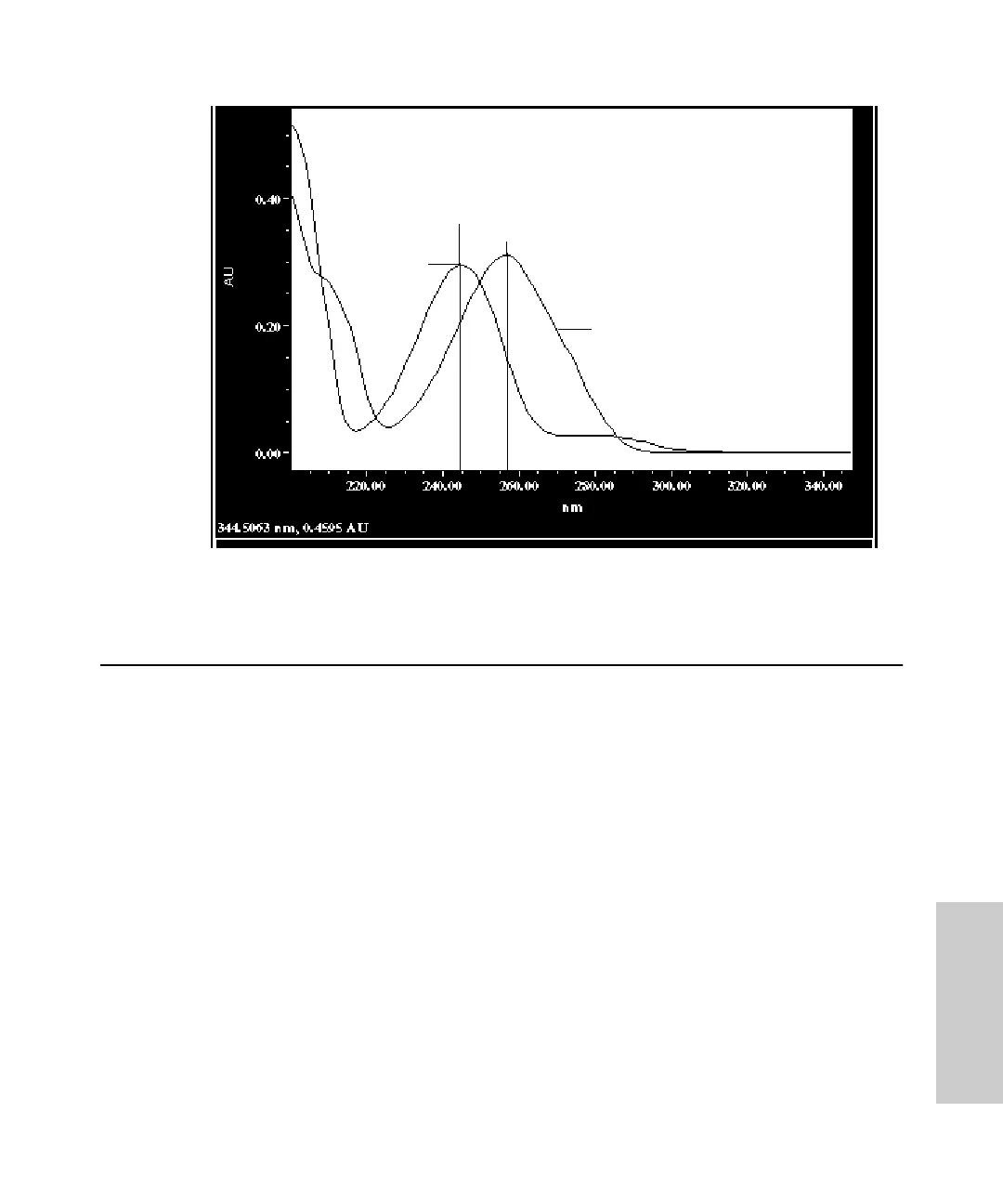
Figure 5-1 Comparing Spectra of Two Compounds
5.2 Representing Spectra as Vectors
The Spectral Contrast technique uses vectors to quantify differences in the shapes of
spectra. Spectral Contrast converts baseline-corrected spectra to vectors and then
compares the vectors. Spectral vectors have two properties:
•
Length
– Proportional to analyte concentration.
•
Direction
– Determined by the relative absorbance of the analyte at all wavelengths
(its absorbance spectrum). Direction is independent of concentration.
Vector direction contributes to the identification of a compound, since the direction is a
function of the absorbance spectrum of the compound. The ability of spectral vectors to
differentiate compounds depends on the resolution of spectral features. As both
wavelength range and spectral resolution increase, the precision of a spectral vector for
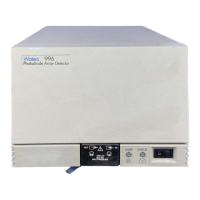
the resultant spectrum increases. A vector derived from the Waters 996 PDA Detector can
include absorbances in any range between 190 nm and 800 nm with a spectral resolution
of 1.2 nm.
Compound B
Compound A
245 nm
257 nm
Ab
245
Ab
257
------ -------- 2 . 2=
Ab
245
Ab
257
------ -------- 0 . 7=
Compound A:
Compound B:


 To Next Page