Subject to change · V 2.02.20 · EN
Page 68
www.argo-hytos.com
24.3 Particle contaminations
The required oil cleanliness in the system depends on the components that are most sensitive to contaminants.
If the component manufacturers do not give any specific information about the required oil cleanliness or filter fineness, it is
recommended to determine the oil cleanliness on the basis of the tables shown below:
The listed reference values for standard components refer to a pressure range from 160 to 210 bar.
System components Required oil cleanliness according to ISO 4406
Pumps Axial piston pumps 21 / 18 / 15
Radial piston pumps 21 / 18 / 15
Gear pumps 21 / 18 / 15
Vane pumps 20 / 17 / 14
Motors Axial piston motors 21 / 18 / 15
Radial piston motors 21 / 18 / 15
Gear motors 21 / 18 / 15
Vane motors 20 / 17 / 14
Valves Directional control valves 21 / 18 / 15
Pressure valves 21 / 18 / 15
Flow control valves 21 / 18 / 15
Check valves 21 / 18 / 15
Proportional valves 20 / 17 / 14
If the operating pressure in the system is increased, it is necessary to improve the oil cleanliness, to ensure the same wear resistance
of the components as with normal pressure.
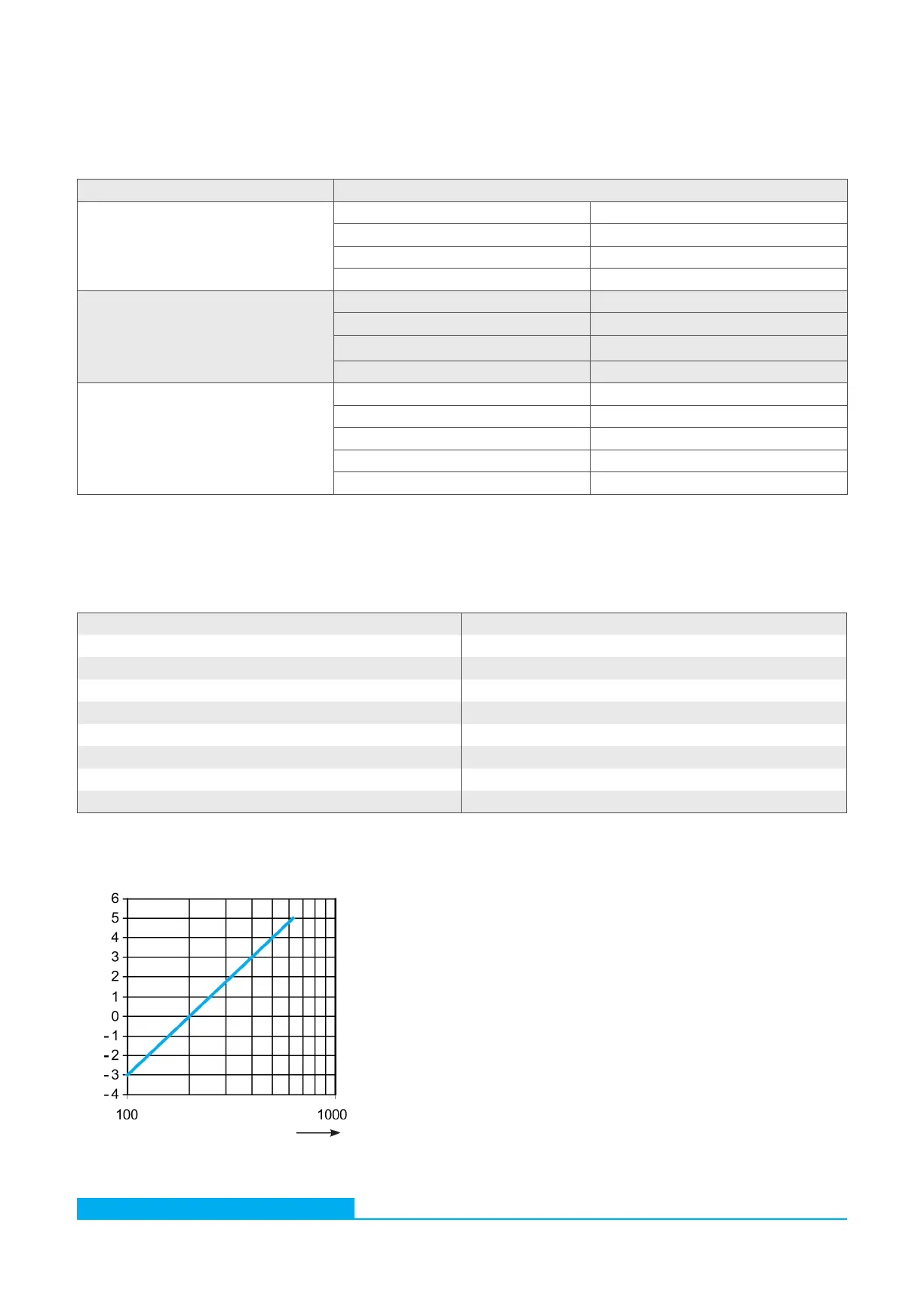
The following table shows the required change in oil cleanliness, when the operating pressure changes in relation to the basic
pressure range of 160 to 210 bar.
Operating pressure in bar Change in oil cleanliness
<100 3 classes worse
100 ... 160 1 class worse
160 ... 210 None
210 ...250 1 class better
250 ... 315 2 classes better
315 ... 420 3 classes better
420 ... 500 4 classes better
500 ... 630 5 classes better
Fig. 33: Change of the cleanliness classes at different operating pressures
Change in cleanliness classes
Max. system pressure [bar]
Example:
In a system with a gear pump and proportional valves, an oil
cleanliness of 20/17/14 according to ISO 4406 for an operating
pressure of 210 bar is necessary. If the operating pressure is
increased to 250 bar, the table shows that the cleanliness of the
oil needs to be reduced by one class to 19/16/13. The required
oil cleanliness is also determined by other influencing variables:
› Expected life time of the machine
› Costs for repairs / spare parts
› Costs due to downtime and interruptions
› Requirements for the safety of the system (these are not only
influenced by the oil cleanliness)
If one of these aspects is particularly important, the required oil
cleanliness should be improved by one class. If two or more
criteria are important, the oil cleanliness should be improved by
two classes.
Table 49: Cleanliness class for system components
Table 50: Change of the cleanliness classes at different operating pressures


 To Next Page