The Unity Bulk Feeder C9C Compact is a device designed for the automated feeding of rivets, specifically 5mm rivets, in industrial assembly solutions. It is a compact bulk rivet feeder, standard model, operating at 24V. This manual provides original instructions for its operation and maintenance.
Function Description
The Unity Bulk Feeder C9C Compact is a sophisticated system that automates the process of feeding rivets to a riveting tool, either directly or via a magazine. It is designed to handle loose rivets, orient them correctly, and then present them to the riveting tool. The system is controlled by a separate Main Controller, which manages the entire Rivet Setting System.
The core function involves several key components working in unison:
- Hopper Assembly: This is where loose rivets are initially loaded. The hopper chute is angled to feed rivets to the dispensing section.
- Vibrating Bowl and Track: The vibrating bowl aligns the loose rivets and feeds them down a track. An inductive sensor identifies full and empty conditions, ensuring a continuous supply.
- Standard Escapement: This mechanism takes a single rivet from the T-Tube and presents it to the riveting tool. It uses a pneumatic cylinder and solenoid valve to actuate the gate, allowing one rivet to pass at a time. Sensors detect the presence of rivets and the position of the gate.
- Main Blow and T-Tube Connection: This system uses regulated air pressure to convey the rivet at high speed through the T-Tube to the escapement assembly. An inductive sensor detects when the rivet has been projected out of the unit.
- Continuous Bleed and Blow Back: This feature uses two airlines to provide continuous bleeding air to remove misaligned rivets and a recovery airline to remove jammed rivets at the escapement track.
The device is designed for use with Henrob Self-Pierce Riveting (SPR) equipment and is intended for industrial applications where precise and automated rivet feeding is required.
Important Technical Specifications
The Unity Bulk Feeder C9C Compact has several key technical specifications:
Performance / Specification:
- Rivet feed & setting: Ø5mm Rivets
- Air consumption: 660 L/min. Max.
- Power consumption: 12W
- Operating conditions: +5°C to +40°C
- Weight (without rivets): 19kg ± 5%
- Humidity: Relative humidity - 15 to 95% (internal), Level RH-2, no condensation (at 45 °C storage)
Services Required:
- Electricity: 24V, DC
- Air: 6 Bar (Clean, dry, class 2 air, filtered to 5microns)
- Temperature range: -5°C to +40°C
- Lubrication: Non-lubricated
Noise:
- @ 1m (Lid Closed): 78.7dB
Connectivity:
- Ethernet Connections: The unit features Ethernet IN and OUT ports (XF1 and XF2) for communication with a robot or to daisy chain to another compact bulk feeder.
- Programmable PLC Node Address Setup: The system uses a BL20 Gateway for network communication. The upper dial assigns the node's x10 (tens) register, and the lower dial assigns the node's x1 (units) register.
T-Tube Specifications:
- Maximum recommended length of T-Tube: 25m
- Maximum cable run distance from the Compact Bulk Rivet Feeder to the Controller: 50m
- T-Tube curvature: Minimum diameter of 300mm for 3mm T-Tube and 400mm for 5mm T-Tube.
- T-Tube twist: A twist of no more than 90° from the exit track or selector can be made over T-Tube lengths of less than 2m. A twist greater than 90° over T-Tube lengths less than 2m may result in process faults.
- Protective outer tube (conduit): For more exposed and vulnerable to damage sections, it is advised that the T-Tube is sleeved within a Ø25mm protective outer tube (conduit).
Usage Features
The Unity Bulk Feeder C9C Compact is designed for ease of use and integration into existing assembly lines.
System Overview:
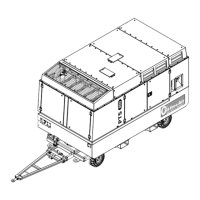
The feeder comprises a hinged lid, lid key-lock, top cover, door, door handle, stud lock, side panel, lifting handle, rear panel, bulk head plate, T-Tube, and main air inlet hose. Internally, it includes a control module, hopper assembly, dispenser unit, bowl assembly, vibration unit, escapement assembly, main blow, bulk head plate, T-Tube, main air inlet hose, main filter unit, main regulator unit, vibration unit regulator, main solenoid valve, manifold, radial blow & blow back solenoid valve, escapement advance solenoid valve, and dispensing cylinder solenoid valve.
Installation:
- Lifting and Moving: The unit weighs 19kg without rivets and should be handled with care, observing normal health and safety practices for lifting and moving loads.
- Storage: It is packed suitable for short-term storage, but should be protected from dust, moisture, and excessive temperature (+5°C to +40°C, non-condensing).
- T-Tube Installation: Proper T-Tube installation is crucial for effective rivet feeding. The T-Tube should be supported along its length, and sharp turns or twists should be avoided. The manual provides detailed instructions on how to ensure correct layout and prevent damage.
- T-Tube Dressing: Instructions are provided for cutting the T-Tube to the correct length using a T-Tube cutter, ensuring a clean square face. A drilling jig is used to prepare the T-Tube for insertion into the escapement.
Operation:
- Control: The feeder is automatically controlled by software running in the Controller, which is an inherent function of the riveting system.
- Filling and Refilling: Rivets are dispensed via the hopper, and the hopper needs to have rivets in it to replenish the bowl. The user should not directly fill the bowl with rivets; always fill via the hopper.
- Vibration Adjustment: This adjustment controls the speed at which rivets are delivered. It is crucial for optimal performance, and a poorly set vibratory unit can seriously impact rivet feed reliability. An inductive sensor detects the full and empty conditions of the bowl, and the vibration unit regulator can be adjusted to optimize rivet flow.
- System Pre-Startup Check: Before starting up, a checklist ensures the T-Tube is connected, electrical connections are made, no rivets are in the bowl or linear track, no rivets are in the escapement/gate, and the main blow pressure regulator and bowl blow flow regulators are correctly set.
Maintenance Features
Regular maintenance is essential to ensure the longevity and reliable operation of the Unity Bulk Feeder C9C Compact.
General Maintenance:
- Personnel Training: Personnel performing maintenance activities must be adequately trained and supervised by a qualified person.
- Safety: Ensure equipment is isolated (both electrical and pneumatic supplies) before attempting any maintenance. Always wear appropriate Personal Protective Equipment (PPE), including protective eye wear, gloves, and a dust mask.
- Preventative Maintenance (PM): PM tasks, including frequencies and references, are detailed in a Preventative Maintenance Guide. Routine maintenance tasks use Standard Tool Kits recommended by Atlas Copco IAS UK Limited.
Opening the Device:
- Opening the Door: The door is secured by a stud. Turning the stud in the door handle a quarter of a turn opens the hinged door.
- Side Cover Removal: Two side covers are fitted to the unit. They are removed by sliding back the yellow plates and rotating the side panel away from the aluminium mounting legs.
- Top Cover Removal: The top cover is removed by unscrewing four screws securing it to the top plate and then sliding it backwards.
- Rear Panel: The rear panel is fixed and not removable.
Linear Track/Escapement Alignment:
Following any activity resulting in the removal of the track/escapement from the Compact Bulk Rivet Feeder, it is necessary to set up the linear track/escapement alignment again. This ensures an unimpeded passage of rivets from the track to the escapement. The escapement is aligned when the arrows on the track and escapement are in alignment.
Removing a Rivet That Fails Length Check:
Two methods are provided for removing a singular fault rivet:
- Method 1: Undo the thumb screw, manually cycle the gate using the solenoid override, and remove the rivet.
- Method 2: Remove the clear gate cover and remove the erroneous rivet. Magnetic devices should not be used to purge the escapement of rivets.
Cleaning:
- Cleaning Inside the Unit: Stray rivets embedded in the bowl may inadvertently gather inside the unit. These rivets need removing, and should not be recovered for re-use in production. The base plate and vibrating plate should be cleaned with a suitable vacuum cleaner.
- Cleaning Solutions: Do not use any cleaning solutions on or near the Compact Bulk Rivet Feeder. Any components requiring cleaning solutions should be cleaned off-line and away from the Compact Bulk Rivet Feeder.
- Compressed Air: The procedure recommends the use of either a compressed air canister (suitable for cleaning) or a compressed air line (clean, dry, non-lubricated and filtered to 5µm (micron)).
T-Tube Wear:
Check the T-Tube end for damage or excessive wear. If damage or excessive wear is evident, the T-Tube interface should be remade. This involves loosening the T-Tube thumb screw under the escapement and carefully withdrawing the T-Tube from the escapement.
Disposal:
This equipment contains electrical components. Disposal should be in accordance with local environmental requirements and legislation. The Environmental Data Sheet provides further reference.

 Need help?
 General


 To Next Page