73
Cylinder Tank Maintenance
TANK Fire Suppression cylinders need to be replaced every 12 years, and after any system discharge.
Removing a Cylinder Tank (Empty or Storage)
• Unbolt the actuators from the tanks and bolt into shipped position. Repeat for all additional actuators.
• Disconnect the PAK hose.
IMPORTANT: If tank(s) will be stored for an extended period, you must prevent debris from
entering the system. Cover the discharge outlet (tank) and discharge adapter (system piping).
Install the Valve Protection Plate and Anti-recoil Plate onto the cylinder.
• Use a 1/2” and 9/16” box end wrench to remove the cylinder mounting bolts from the bracket.
• Loosen the tank straps, and remove the tank. Repeat for additional tanks.
• For each secondary cylinder, perform the following before moving to the next cylinder:
- Remove the Supervisory Pressure Switch from the cylinder valve if applicable.
- Loosen the cylinder bolts holding the valve to the discharge adapter and cylinder bracket.
- Loosen the tank straps holding the cylinder in place.
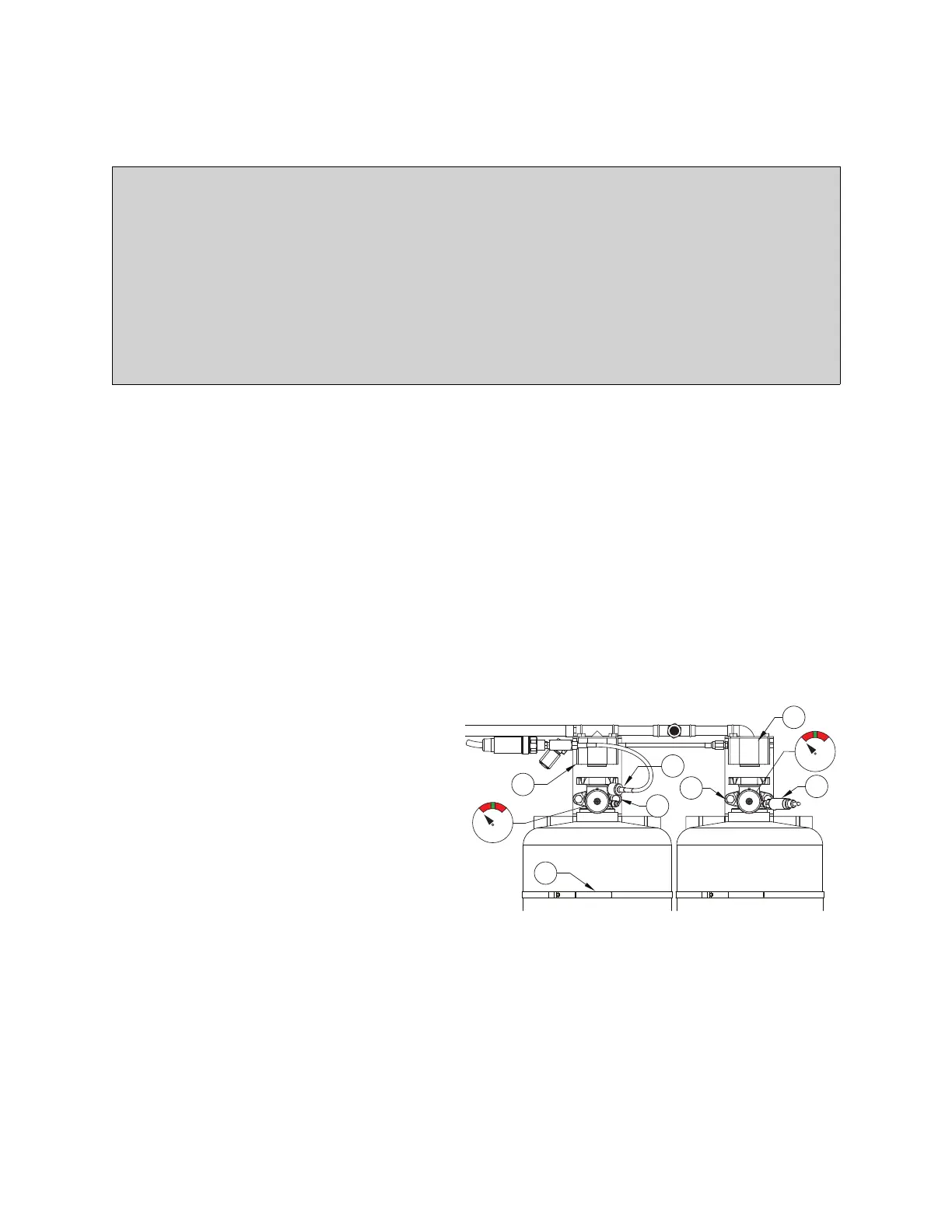
• Pull the cylinder out from the bracket. Refer to Figure 63.
Figure 63 - Tank Removal Process
WARNING!
Never assume that a cylinder is unpressurized. Handle all cylinders as if they are pressurized until
verified otherwise. Pressurized cylinders are extremely hazardous.
When performing any cylinder maintenance procedure, the cylinder must be properly secured to a
rigid structure capable of withstanding the full thrust that would result if the valve were to open
inadvertently.
Any time a cylinder assembly is unsecured, the anti-recoil plate must be installed on the valve
outlet to provide a safe, controlled discharge in the event of accidental actuation.
Failure to take proper precautions could result in death, serious personal injury and/or property
damage.
1. PAK in Ship/Test Position
2. SVA in Ship/Test Position
3. PAK Hose
4. Secondary Supervisor Pressure Switch
(Optional)
5. Cylinder Mounting Bolts
6. Tank Straps
NOTE: Tanks should never be filled with agent
in the field.



 To Next Page