75
Depressurizing a Cylinder Tank
1. Secure the cylinder in a chain vice, strap vice, or similar device.
2. Prepare high-pressure discharge hose with a spare nozzle on the end.
3. Remove the anti-recoil plate from the cylinder outlet and install the discharge adapter.
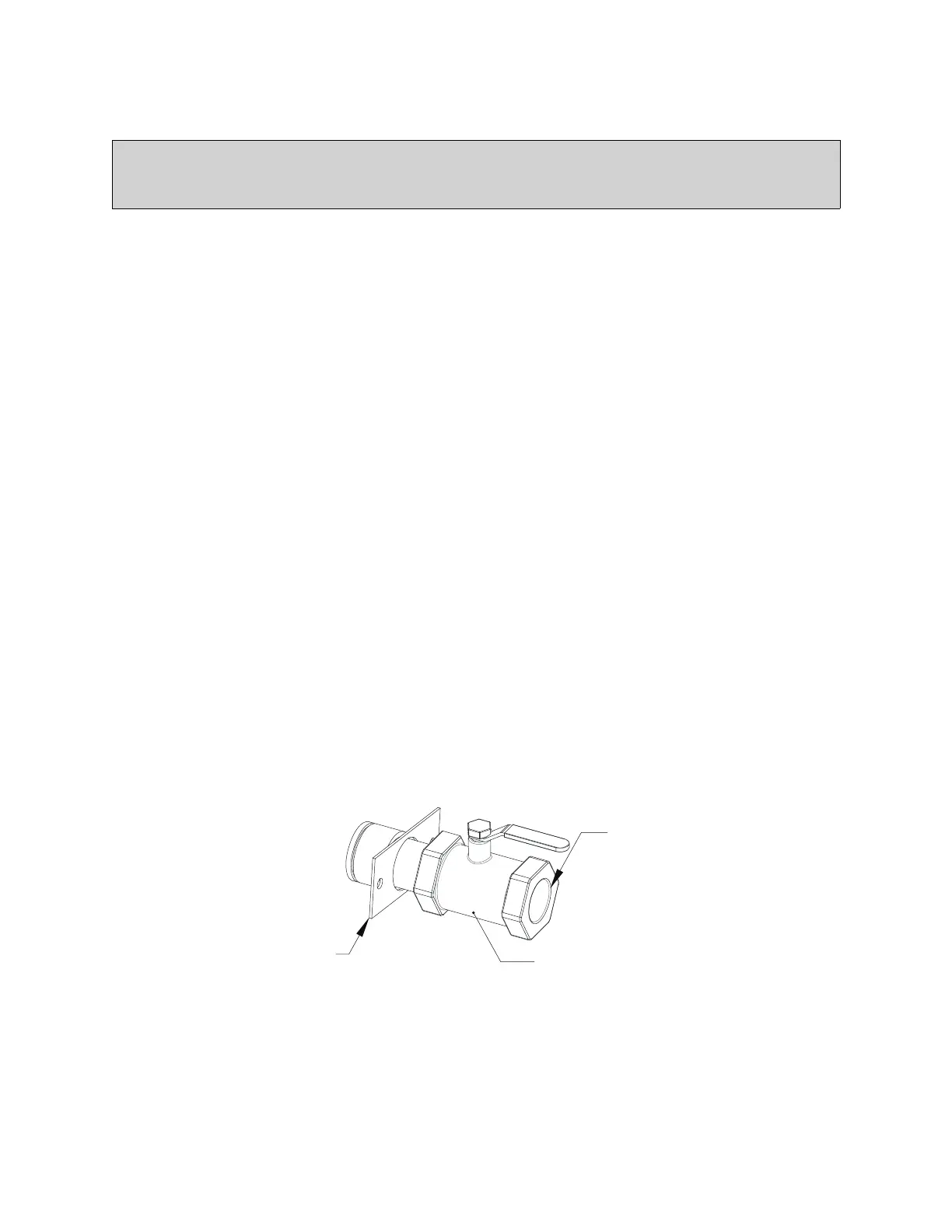
4. Install a ball valve onto the discharge adapter outlet. Refer to Figure 65.
5. Attach the discharge hose with nozzle to the ball valve outlet.
6. Attach the hose and discharge adapter assembly to the cylinder valve outlet.
7. Insert the opposite end of the hose into an appropriate container for the wet chemical agent.
8. Ensure that the hose is secure and will not come loose or separate from the container.
9. Install a Secondary Valve Actuator (SVA) onto the cylinder valve.
10. Connect the nitrogen service cylinder to one of the SVA ports, and a SVA vent limiting orifice in the
opposite port.
11. Ensure that the ball valve on the discharge assembly is in the closed position.
12. Open the nitrogen supply, slowly increase pressure until the SVA actuates. Turn off nitrogen supply.
13. Carefully open the discharge valve.
14. Monitor the discharge to prevent spillage and to ensure that the hose remains secure.
15. Control the rate of discharge via the ball valve.
16. If applicable, stop the flow and change containers.
17. When the discharge is complete, turn off the nitrogen service cylinder supply.
18. Check that the cylinder gauge indicates no pressure, and carefully depress the Schrader on the
cylinder valve. Check for any possible flow/leakage of nitrogen.
19. Slowly disconnect the nitrogen supply, relieving pressure from the SVA.
20. Remove the SVA from the valve.
21. Remove the valve/siphon tube assembly by unthreading the valve counterclockwise from the cylinder.
22. Invert the cylinder to remove any residual wet chemical.
23. Clean the cylinder and threads with warm soapy water and rinse with clean water.
24. Blow out any residual moisture from the cylinder and threads with dry air or nitrogen.
Figure 65 - Cylinder Discharge Assembly
Rechecking the System
After the inspections and procedures described previously in this section, the fire-suppression system is
ready to be fully checked out before installation of the replacement wet chemical cylinders.
1. Follow the system commissioning and test procedures outlined in “START-UP/INSPECTION TEST
PROCEDURE” on page 59.
2. Be sure to check the system for all modes of operation.
WARNING!
Failure to correctly secure the hose could result in death, serious bodily injury, and/or property
damage.
Attach Discharge
Hose to this End.
Valve
Cylinder Discharge
Adapter



 To Next Page