mid-80s. Its results testified to the fact that a really outstanding aircraft had been made, which was
second to none among the fighters as far as its manoeuvrability, range and combat effectiveness
were concerned. However, certain avionics components required the additional testing held under
special programmes after the joint official testing was over. With the avionics problems resolved, in
1990 the Su-27 was officially adopted in the inventory of the Soviet Air Force and Air Defence Forces
aviation.
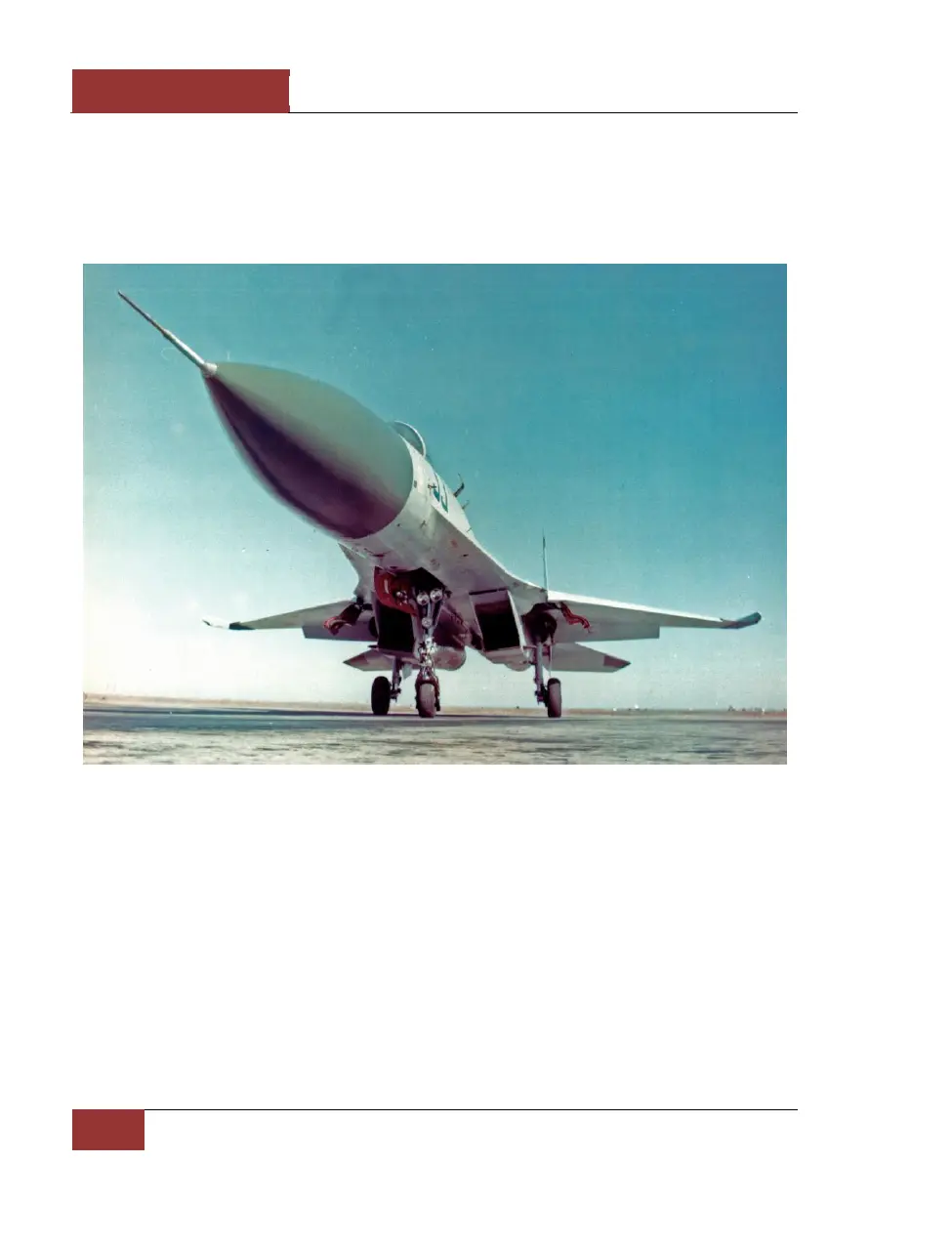
Figure 12: T-10-33
Due to the fact that the Su-27 differed considerably from the rest of Soviet fighters both in
performances and weapons control system, navigation suite and other equipment, its twin-seat
combat trainer version designated Su-27UB had to be designed. It was supposed that retaining the
full avionics and weapons suites inherited from the combat version would enable the twin-seater to
be used as an effective combat aircraft. Moreover, considering the Su-27's range and fuel endurance,
the crew of two was supposed at times to be a better option.
The Sukhoi team had begun designing the Su-27UB (developer's designation T-10U) in the late
seventies even before the testing of first new-configuration aircraft commenced. The developer was
tasked with providing a high degree of unification of the single-seater and twin-seater's avionics
design with the fighter retaining its superior performances. In 1980, the predesign work was
completed. The Su-27UB's aerodynamic configuration mainly matched that of the single-seater. The
primary differences lay in the design of the airframe fore part which incorporated a two-seat tandem


 To Next Page