Russian Knights, was established on the basis of that squadron, and later the Kubinka-based
regiment proper was reorganised into an Aircraft Show Centre named after Air Marshal I. Kozhedub.
The Leningrad, Arkhangelsk, and Tbilisi separate AD air forces operated two Su-27 regiments each
(airfields in the towns of Vainede, Nivenskoye, Killpyavr, Rogachovo, Krymsk, and Gudauta).
According to foreign estimates, in the early 1990s, the USSR operated approximately 600 Su-27s (to
all appearances, beside the Su-27 single-seaters based in the European USSR, that number included
the Su-27UB two-seat combat trainers as well as fighters stationed beyond the Urals).
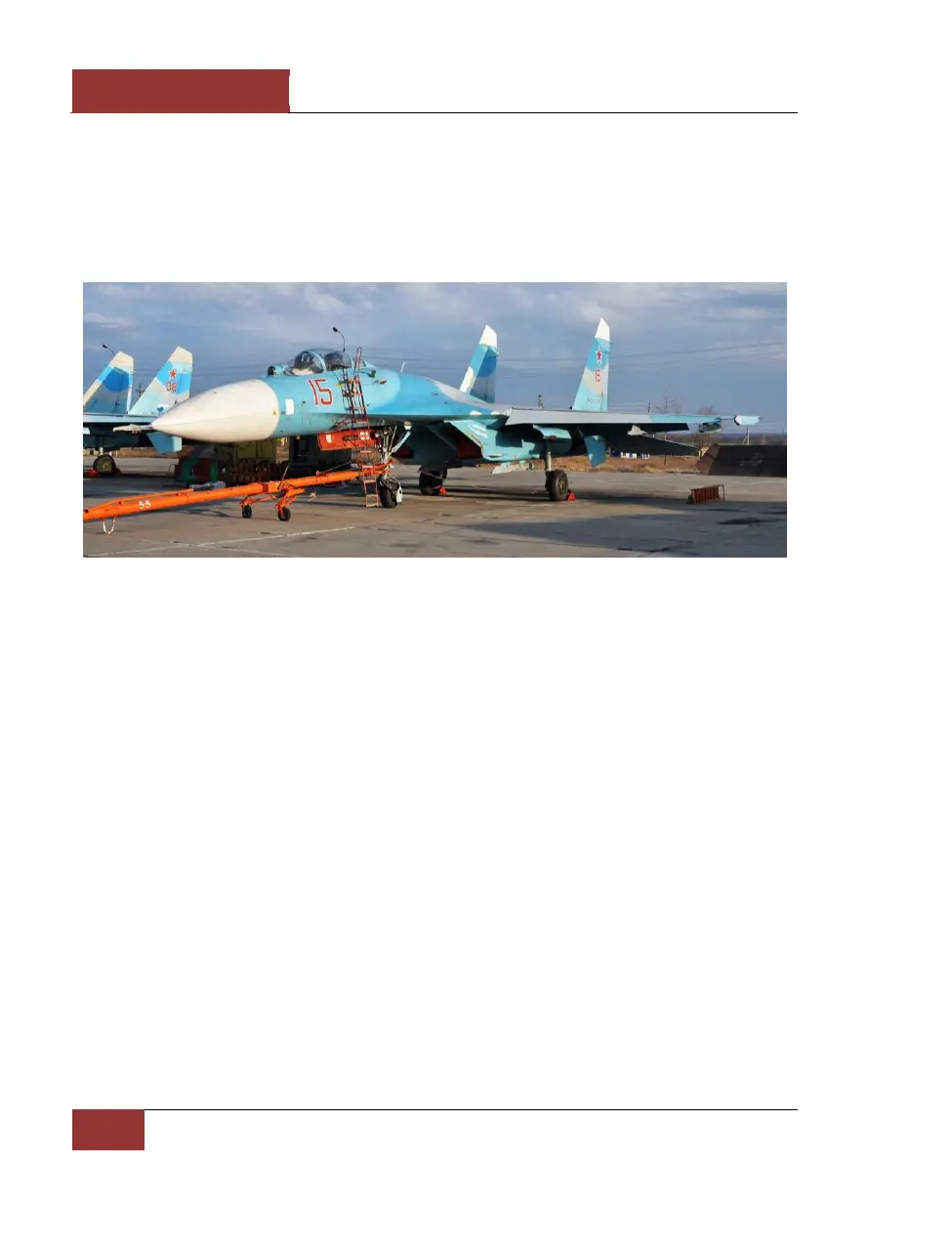
Figure 15: Su-27P on the ramp
The break-up of the Warsaw Pact followed by dissolution of the Soviet Union led to the redeployment
and deactivation of a number of AF and ADF units including those that operated the Su-27 fighters.
Besides, almost 100 aircraft were left in the former Soviet republics of Ukraine and Belarus. In
summer, 1992, the air regiments of the former USSR left Poland. According to foreign analysts, in
early 1996, the Russian Air Force operated about 130 Su-27s, with approximately 300 aircraft in the
inventory of ADF units. Besides, 24 Su-27Ks came under the ship-borne fighter air regiment of the
Russian Navy in the Northern Fleet (part of the Su-27s were on board the Admiral Kuznetsov heavy
aircraft-carrying cruiser, with the rest stationed on the coastal airfield).


 To Next Page