ASE 150 Operator’s Manual
146 Doc. 065207-02 9/08
Animal or plant tissue samples can be homogenized using any procedure,
such as a blender or tissue homogenizer. Soil samples do not need to be
ground before extraction.
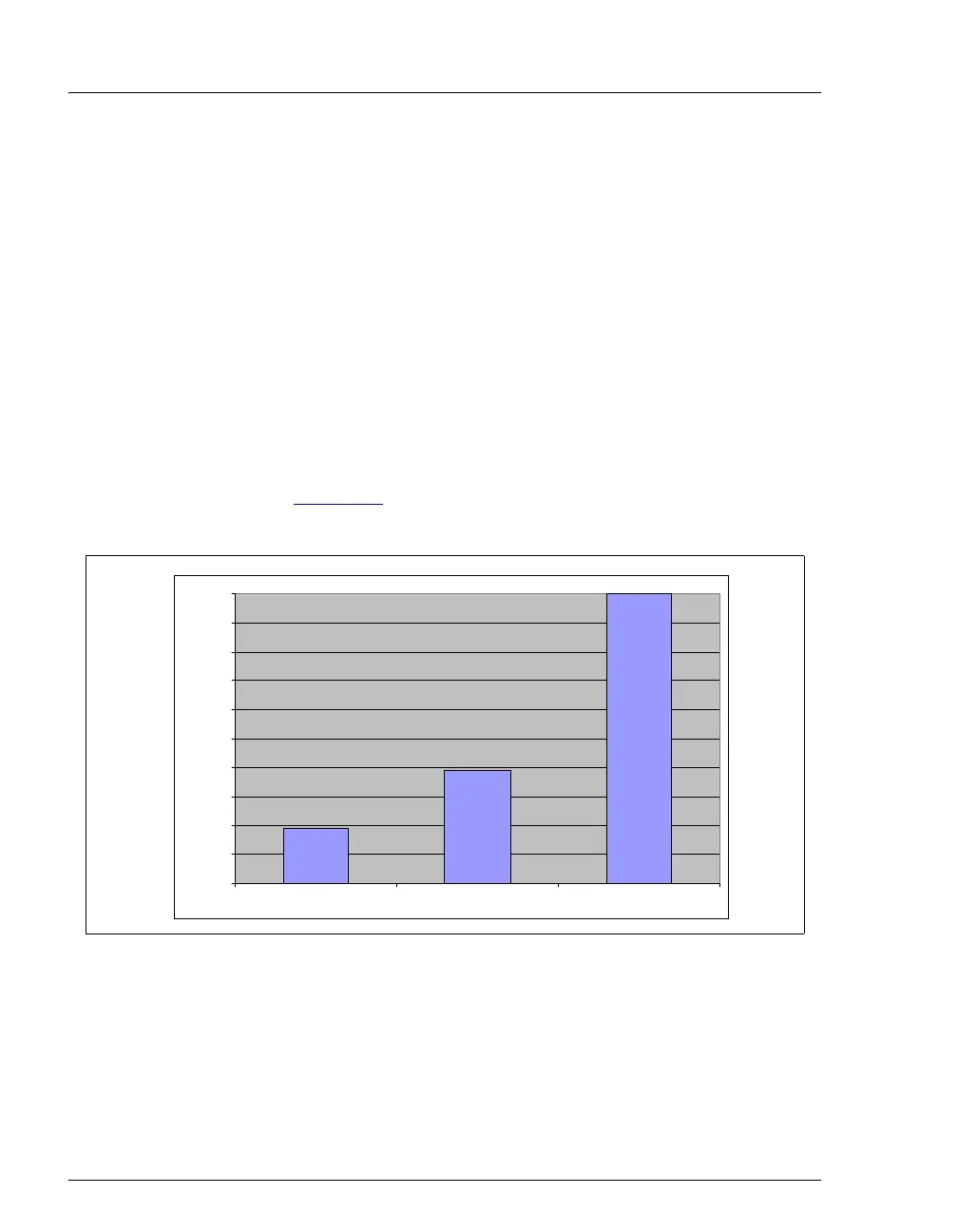
The effects of sample surface area on extraction efficiency have been
studied. Three samples of mozzarella cheese were prepared differently
and extracted for fat content using ASE. The chopped samples were cut
into pieces ranging in size between 2 and 5 mm. The ground samples
were ground with diatomaceous earth (1:2). Each sample was extracted
with a mixture of hexane:2-propanol (3:2) using the following ASE
conditions: 1000 psi, 125 °C, 6 min heat-up, 3 x 10 min static cycle,
100% rinse, 60 s purge, and one 11-mL cell containing one cellulose
filter. The extracts were analyzed gravimetrically. The ASE results were
compared to results obtained from Mojonnier extraction. These results
(shown in Figure E-4
) demonstrate that increasing the surface area by
grinding the sample results in higher extraction efficiencies.
Figure E-2. Effect of Sample Particle Size for ASE vs. Mojonnier Extraction. Whole
cheese (0.5 to 1.5 cm size); chopped (2-5 mm); ground (mixed thoroughly with
diatomaceous earth)
0
10
20
30
40
50
60
70
80
90
100
Whole Chopped Ground
Percent Recovery vs Mojonnier


 To Next Page