10
Accelerometers to get tilt of patient head: Three Axis Low-g micro
machined Accelerometer is used as tilt sensor (measuring gravidity vector
projection at each axis and convert it in angles).
These sensors are just intended to help trained doctor to positioning patient in right
place and with right head angles for
each type of test
andkeepingarecordofthese
parameters. Never are intended to
use these sensor’s data into test
analysis just to monitor test
conditions. Depending of test type
hostsoftware indicates to hardware
witch sensor monitor, for example if
an optokinetic test will be performed
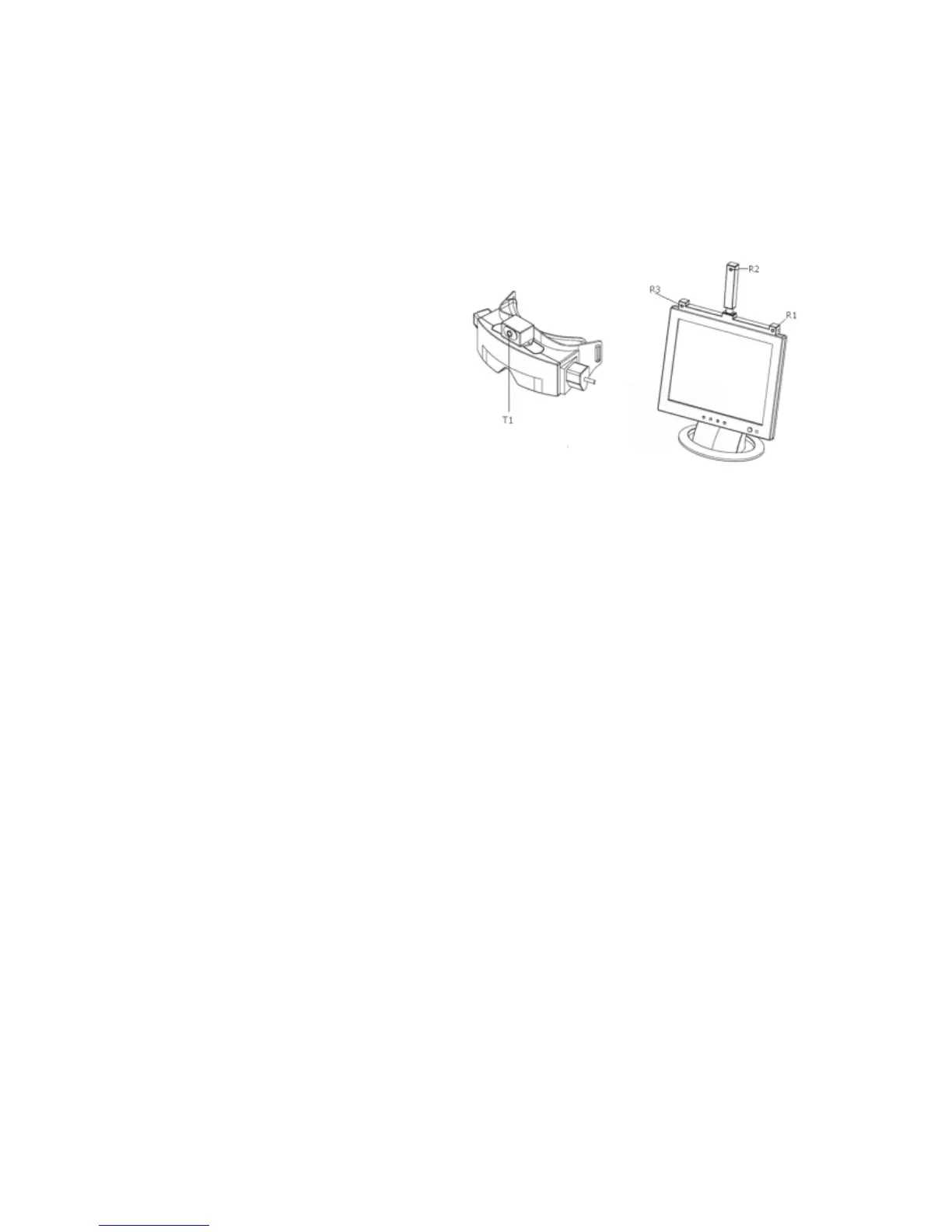
patient needs to use visual stimulator, so system active ultrasound sensors to
monitor patient relative position respect stimulator to achieve desired stimulus.
PATIENT CONSIDERATIONS
Vision: Patients must have adequate vision to follow targets for the
oculomotor portion.
Physical status: If the patient has back or neck injuries, consideration should be
given for some positional testing (head hanging) and the Dix-Hallpike maneuver to
avoid further complications.
To screen for vertebrobasilar insufficiency, the clinician may want to assess the
patient prior to head hanging or Dix-Hallpike maneuvers. This may include having
the patient engage in mental tasking (e.g., counting, reciting multiplication tables)
while gradually tilting the head back and then holding. Change in cognitive status or
reports of lightheadedness may be significant. This screening method is especially
important for older patients.
Status of the outer and middle ear: This should be evaluated prior to caloric
assessment. Presence of drainage in the outer ear canal precludes the use of water
irrigation; it may also affect air caloric stimulation because moisture will change the
calibrated temperature, thus limiting interpretation. Pressure equalization tubes or
perforation of the tympanic membrane precludes the use of water calorics. If
unilateral, large perforations limit interpretation of air calorics. Large perforations can
increase stimulation with cool air above calibrated expectation and can exhibit a
cooling effect for warm air because moisture of the middle ear mucosa is evaporated.
Excessive cerumen must be removed prior to any vestibular stimulation. Middle ear
fluid affects stimulation of the vestibular system with air and water.



 To Next Page