E-ESD3000-E-Manual.doc 7/66
1 Description
1.1.1 Electrostatic discharge ESD
Electro Static Discharge
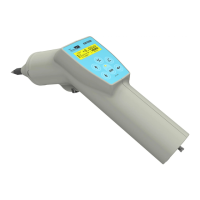
Figure: 1.0.2
What causes electrostatic discharges?
A person becomes electrostatically charged by walking over an insulating floor surface. The capacity of the
body can be charged to several kilovolts (1000 V). This capacity is discharged when contact is made with an
electronic unit or system. The discharge is visible as a spark in many cases and can be felt by person
concerned, who gets a „shock“. The discharges are harmless to humans, but not to sensitive, modern
electronic equipment. The resulting current causes interference in the units or makes entire systems
„crash“.
For over 25 years it has been known to the electrical industry that electrostatic discharges as encountered
every day can have a disastrous effect on electronic equipment.
The cost of damage caused by ESD is difficult to assess, but amounts to billions of dollars world-wide.
The areas most affected are:
• manufacturing of integrated circuits (chips).
• the chemical industry, e.g. by explosion, fires caused by the sparks from electrostatic discharges.
• malfunctioning of process control with the secondary damage costs. characteristics
1.1.2 How ESD, EFT, SURGE, DIPS differ
Characteristics Static discharges Switched
inductance
Lightning.
switching actions
Mains
Interruptions
Phenomenon
"ESD" "EFT Burst" "Surge" "DIPS"
Voltage U
up to 15 kV up to 4 kV up to 4 kV supply source
voltage
Energy at maximum
voltage
approx. 10 mJ 300 mJ 300 J -
Repetition rate
Single event Multiple event 5 kHz
Maximum 6
Impulse / minutes
supply source
frequency
Application to the
different ports
Touchable metallic
part ( enclosure
ports)
AC/DC ports, Signal
and data lines
AC/DC ports, Signal
and data lines
AC/DC ports
upper limit
frequency
approx.. 1 GHz approx. 200 MHz approx. 350 kHz approx. 100 kHz
impulse waveform
IEC 61000-4-2
IEC 61000-4-4
IEC 61000-4-5
IEC 61000-4-11
The overview of „How ESD,EFT, SURGE, DIPS differ“ shows that all four test have to be carried out
because the frequency content and energy of the four transient tests are different.


 To Next Page