Introduction
Emerson
®
MPH2
™
User Manual 9
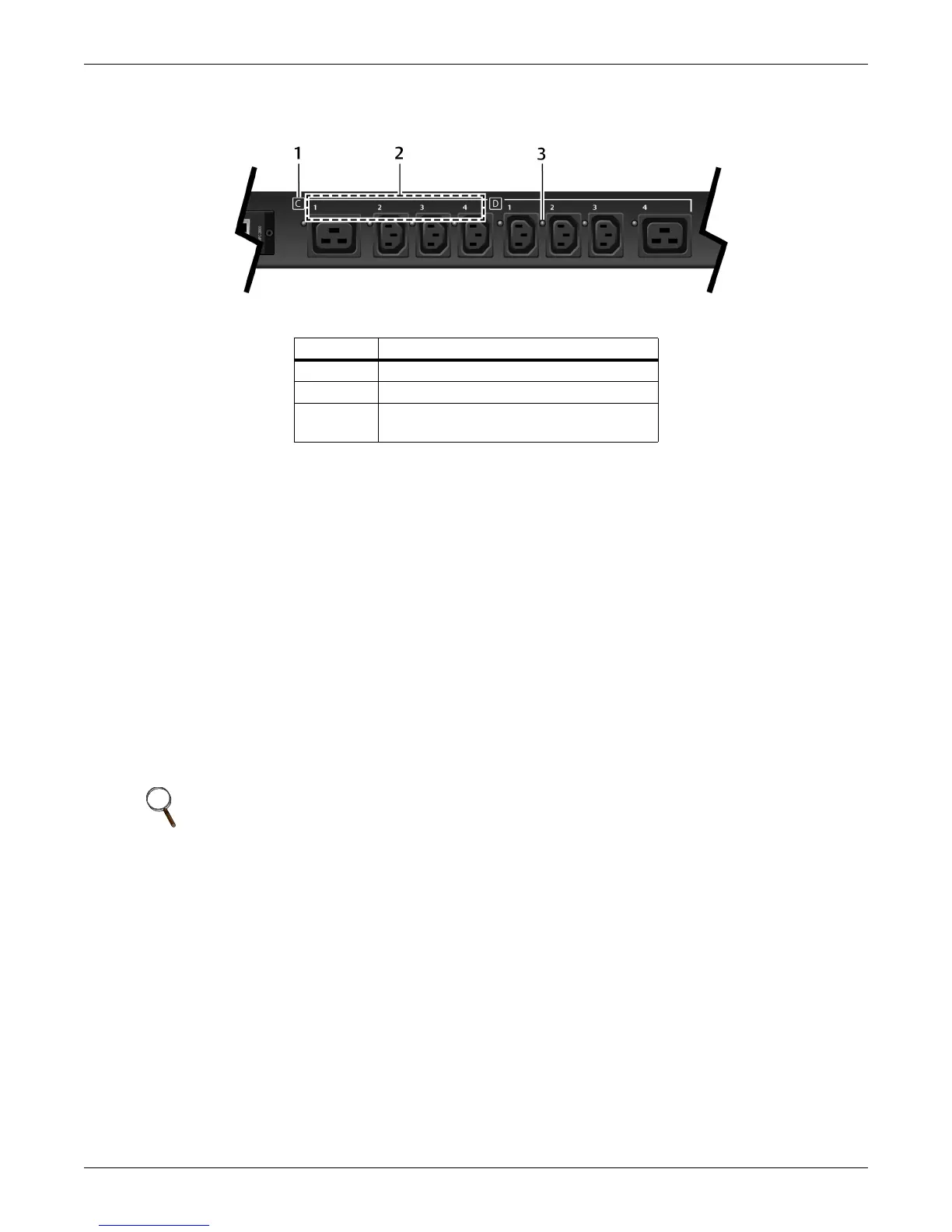
Figure 1-5 Branch and receptacle identification—Units with individually-monitored
and managed receptacles (Type C, R and M models)
1.3.4.1 Branch Overcurrent Protection
Models having more than 16-A input-current rating are equipped with branch overcurrent protection. The
branch circuit breaker is a UL 489-listed breaker with a flush-mount, rocker-style actuator. This protects
each receptacle group against overload and short circuit by interrupting the fault current flowing in the
line-to-line, line-to-neutral and line-to-PE conductors of the branch circuits. The branch circuit breaker
ratings apply over the full, rated operating temperature and frequency.
The flush-mount breakers guard against accidental trips that could interrupt power to the connected load.
Manually tripping a breaker requires a small, flat blade, such as a screw driver (see Figure 3-17).
Low-profile circuit breakers are used on all MPH2 Rack PDUs with two or three branch circuits less than
240-V rating in a line-neutral configuration. Standard-profile circuit breakers are used on MPH2 Rack
PDUs with six branch circuits or have a 240-VAC rating. Each type of circuit breaker is a rocker style (see
Figure 1-6).
The branch circuit breaker labeling (A, B, C and so on) shows which receptacles are protected by each
specific breaker. Receptacles on Branch A are protected by the circuit breaker labeled A. Three-phase
PDUs may also have labeling showing the phase associated with each circuit breaker.
Number Description
1 Branch identification
2 Receptacle identification
3
Receptacle-status LED (See 5.0 -
Troubleshooting, page 42.)
NOTE
The branch circuit breaker is not designed to be used as a disconnect device for the connected
load.


 To Next Page