EasyManua.ls Logo

Endress+Hauser Proline Promass 80 - User Manual

Endress+Hauser Proline Promass 80
162 pages
Print Icon
To Next Page IconTo Next Page
Loading...
BA057D/06/en/10.03
50098468
Valid as of software version:
V 1.06.XX (amplifier)
V 1.03.XX (communication)
PROline promass 80
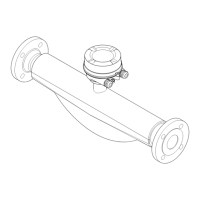
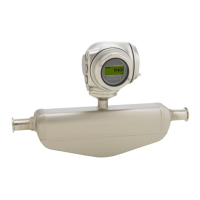
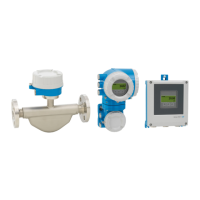
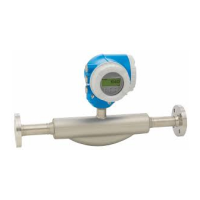
Coriolis Mass Flow
Measuring System
Operating Instructions

Table of Contents

Other manuals for Endress+Hauser Proline Promass 80

Questions and Answers

  • N
    Nicole MeyerAug 17, 2025
    What to do if Endress+Hauser Measuring Instruments show process error message EXC. CURR. LIM # 701?
    • M
      Michael MillerAug 17, 2025
      If you see the process error message EXC. CURR. LIM # 701 on your Endress+Hauser Measuring Instruments, it means the maximum current value for the measuring tube exciter coils has been reached because of fluid characteristics like high gas or solid content. Here are some possible solutions: 1. Install the measuring device downstream of a pump. 2. Mount the device at the lowest point in an ascending pipeline. 3. Install a valve or an orifice plate downstream from the measuring device.
  • P
    Patrick WilliamsAug 20, 2025
    How to fix system error message CURRENT SPAN n # 351 to 354 on Endress+Hauser Proline Promass 80?
    • G
      greenmichaelAug 20, 2025
      The system error message CURRENT SPAN n # 351 to 354 on your Endress+Hauser Measuring Instruments indicates that the current flow is outside the set range. To resolve this: 1. Change the upper or lower range values entered. 2. Increase or reduce flow, as applicable.
  • R
    Rebecca LittleAug 22, 2025
    What to do if Endress+Hauser Measuring Instruments display texts are in a foreign language?
    • A
      alan22Aug 22, 2025
      If the display texts on your Endress+Hauser Measuring Instruments are in a foreign language, switch off the power supply. Then, press and hold both P keys while switching the measuring device back on. This will reset the display text to English (default) with maximum contrast.
  • J
    Jesus Sims DVMAug 26, 2025
    What to do if Endress+Hauser Measuring Instruments detect empty pipe?
    • C
      changjamesAug 26, 2025
      If your Endress+Hauser Measuring Instruments detect an empty pipe, it may be due to the process fluid density being outside the set limit values. To resolve this: 1. Ensure there is no gas content in the process liquid. 2. Adjust the upper or lower limit value for empty pipe detection to match the current process conditions.
  • B
    barbararogersAug 28, 2025
    What to do if Endress+Hauser Measuring Instruments fluid is inhomogeneous?
    • T
      Terry MatthewsAug 28, 2025
      If the fluid in your Endress+Hauser Measuring Instruments is inhomogeneous, it can cause unstable frequency control due to gas or solid content. To increase system pressure and improve stability, especially with outgassing fluids or increased gas content, consider these measures: - Install the instrument at the outlet side of a pump. - Install the instrument at the lowest point of an ascending pipeline. - Install a flow restriction, like a reducer or orifice plate, downstream from the instrument.
  • W
    William BeckAug 30, 2025
    What to do if Endress+Hauser Measuring Instruments show no display but output signals are present?
    • J
      Jason JonesAug 30, 2025
      If your Endress+Hauser Measuring Instruments have no visible display but the output signals are present, check the following: - Ensure the ribbon-cable connector of the display module is correctly plugged into the amplifier board. - If the connection is secure, the display module may be defective and require replacement (order spare parts). - The measuring electronics may be defective and require replacement (order spare parts).
  • W
    William CookSep 2, 2025
    What to do if Endress+Hauser Measuring Instruments have no display visible and no output signals present?
    • K
      kevin73Sep 3, 2025
      If your Endress+Hauser Measuring Instruments have no display and no output signals, check the following: - Verify the supply voltage at Terminals 1 and 2. - Check the device fuse. For 84 to 260 V AC, use a 0.8 A slow-blow / 250 V fuse. For 20 to 55 V AC and 16 to 62 V DC, use a 2 A slow-blow / 250 V fuse. - The measuring electronics may be defective and require replacement (order spare parts).
  • N
    Nancy JonesSep 5, 2025
    What to do if Endress+Hauser Measuring Instruments measured value indicated, but no signal at the current or pulse output?
    • L
      Lisa MoodySep 5, 2025
      If your Endress+Hauser Measuring Instruments indicate a measured value but there is no signal at the current or pulse output, the measuring electronics may be defective and require replacement (order spare parts).
  • M
    Mr. Jeremy Rowe MDSep 8, 2025
    What to do if Endress+Hauser Measuring Instruments positive zero return is active?
    • L
      Luis JonesSep 8, 2025
      To switch off the positive zero return on your Endress+Hauser Measuring Instruments, navigate to: BASIC FUNCTIONS ? SYSTEM PARAMETER ? CONFIGURATION ? POS. ZERO RETURN (? OFF).
  • J
    John WeeksSep 12, 2025
    Why Endress+Hauser Measuring Instruments have no oscillation possible?
    • J
      Jackson GallagherSep 12, 2025
      If your Endress+Hauser Measuring Instruments show that no oscillation is possible, it is due to extreme process conditions that prevent the measuring system from starting. In this case, you should change or improve the process conditions.

Summary

PROline promass 80 Coriolis Mass Flow Measuring System

Operating Instructions

Main guide for using the measuring system.

Brief operating instructions

Safety instructions

Essential safety guidelines and precautions for device use.

Installation

Procedures and conditions for installing the measuring device.

Wiring

Instructions for electrical connections and wiring diagrams.

Commissioning with “QUICK SETUP”

Guided setup process for essential device functions.

Safety instructions

Installation, commissioning and operation

Guidelines for installation, commissioning, and operation by specialists.

Operational safety

Safety measures for hazardous environments and general compliance.

Identification

Nameplate of the transmitter

Details the information found on the transmitter's nameplate.

Nameplate of the sensor

Details the information found on the sensor's nameplate.

Installation

Mounting location

Guidance on selecting an appropriate mounting location for the sensor.

Orientation

Installation instructions

Installing the wall-mount transmitter housing

Post installation check

Device condition and specifications

Checks for device damage and correspondence to specifications.

Wiring

Connecting the sensor

Steps for connecting the sensor to the transmitter unit.

Connecting the transmitter

HART connection

Connection of a PC with an operating software

Electrical connection for PC-based operating software.

Post connection check

Operation

Brief operating instructions to the function matrix

Enabling the programming mode

Display of error messages

Type of error

Distinguishes between system and process errors.

Error message types

Explains fault messages and notice messages.

Communication

Device and process variables

Universal; Common practice HART commands

Read the primary process variable as current in mA and four (preset using Command 51) dynamic process variables

Write measuring range of primary process variable

Write assignments of the device variables to the four process variables

Device status; Error messages

Byte Bit Error No. Short error description

Table detailing error codes, their descriptions, and byte/bit mapping.

Commissioning

Switching on the measuring device

Procedure for switching on the device and the self-test sequence.

Quick Setup “Commissioning”

Zero point adjustment

Performing a zero point adjustment

Density adjustment

Performing a density adjustment

Detailed steps for performing the density adjustment.

Current output 1: active;passive

Current outputs 2: active;passive

Maintenance

Trouble-shooting

Trouble-shooting instructions

Routine for troubleshooting faults using checklists and error messages.

Check the display

Steps to check the display when no output signals are present.

System error messages

SENSOR HW DAT # 031

Cause and remedy for sensor hardware data issues.

System error messages (continued)

CHECKSUM TOTAL # 111

Cause and remedy for totalizer checksum errors.

FLUIDTEMP. MIN. # 381

Cause and remedy for minimum fluid temperature sensor issues.

Process error messages

EMPTY PIPE # 700

Cause and remedy for density outside limits (empty pipe condition).

Process error messages (continued)

FLOW LIMIT # 705

Cause and remedy for mass flow exceeding the electronics' range.

Process errors without messages

Response of outputs to errors

Failsafe mode of outputs and totalizers

Table detailing failsafe modes for outputs and totalizers during errors.

Spare parts

Removing and installing printed circuit boards

Wall-mount housing: removing and installing printed circuit boards (Fig. 29)

Replacing the device fuse

Technical data

Measuring ranges for liquids

Output signal

Performance characteristics

Maximum measured error

Values for maximum measured error for different outputs.

Zero point stability (Promass F, M, E)

Repeatability

Influence of medium pressure

Operating conditions

Limiting medium pressure range (nominal pressure)

Pressure loss

Pressure loss coefficient for Promass F

Pressure loss coefficient for Promass M

Pressure loss coefficient for Promass E

Pressure loss coefficient for Promass A

Pressure loss coefficient for Promass H

Pressure loss coefficient for Promass I

Human interface

Endress+Hauser Proline Promass 80 Specifications

General IconGeneral
Device TypeCoriolis mass flowmeter
Measuring PrincipleCoriolis
Accuracy±0.1% of rate
Repeatability±0.05% o.r.
Pressure RatingUp to 40 bar
Output Signal4 to 20 mA
Digital CommunicationHART, PROFIBUS DP, FOUNDATION Fieldbus
Power Supply24 V DC
Housing MaterialStainless steel
ApprovalsATEX, IECEx
Ingress ProtectionIP67

Related product manuals