Eureka Manta Manual Page 26 of 67
D SENSORS AND CALIBRATIONS
D.1 The Difference between Sensors and Parameters
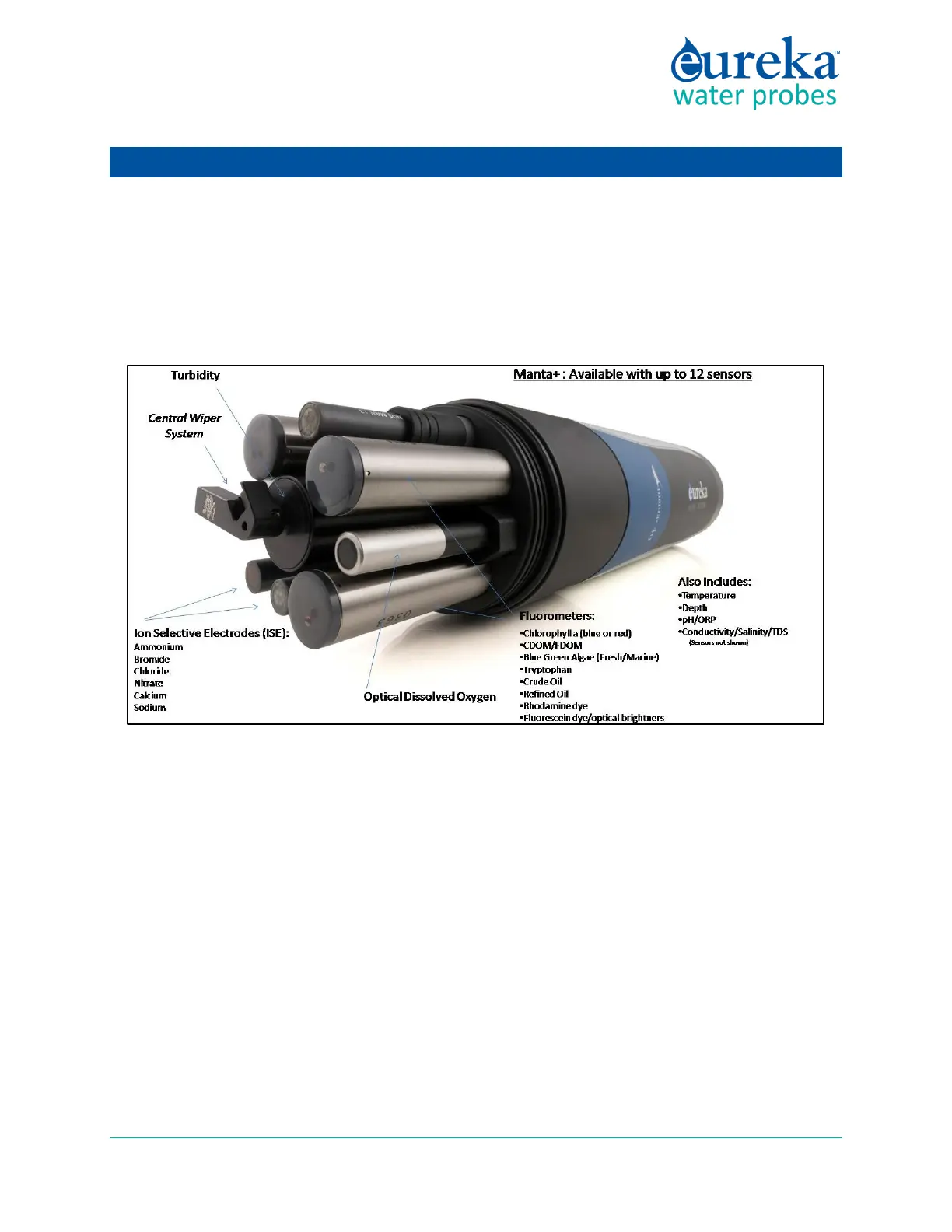
A sensor is a basic element, like a thermistor or a pH glass electrode. Each sensor has one or more parameters.
For instance, we use a thermistor to measure both Temperature °F and Temperature °C – that’s one sensor
with two parameters. A conductivity sensor can be read as Specific Conductance μS/cm, Specific Conductance
mS/cm, Total Dissolved Solids mg/l, and Salinity (PSS) – that’s one sensor with four parameters.
D.2 Basics of Parameter Calibrations
The Manta never guesses parameter values, so you have to calibrate it from time to time by simply telling
the instrument what it should read in a calibration situation for which the correct parameter value is
known. Here’s the general procedure; instructions for specific parameters will follow beginning with D.5:
1 Clean the sensor and perform any necessary sensor-specific maintenance.
2 Select a calibration standard whose value is close to the values you expect to see in the field. For best
results, use fresh calibration solutions, and discard once they have been used.
3 Rinse sensors thoroughly (more than once may be required) with DI (deionized) water, especially if
you have been using other calibration solutions. Pour the water into the calibration cup, position the
“stopper” side of the lid on top and shake the Manta vigorously to remove traces of old calibration
solutions – repeat if necessary.



 To Next Page