Eureka Manta Manual Page 33 of 67
5 Repeat steps 1, 2, and 3 if you choose to calibrate with one or two more standards.
D.10 Reference Electrode
The key to reliable pH, ORP, and ISE measurements is a well-maintained reference electrode. Recall that
a reference electrode is required to complete voltage measurement for pH readings.
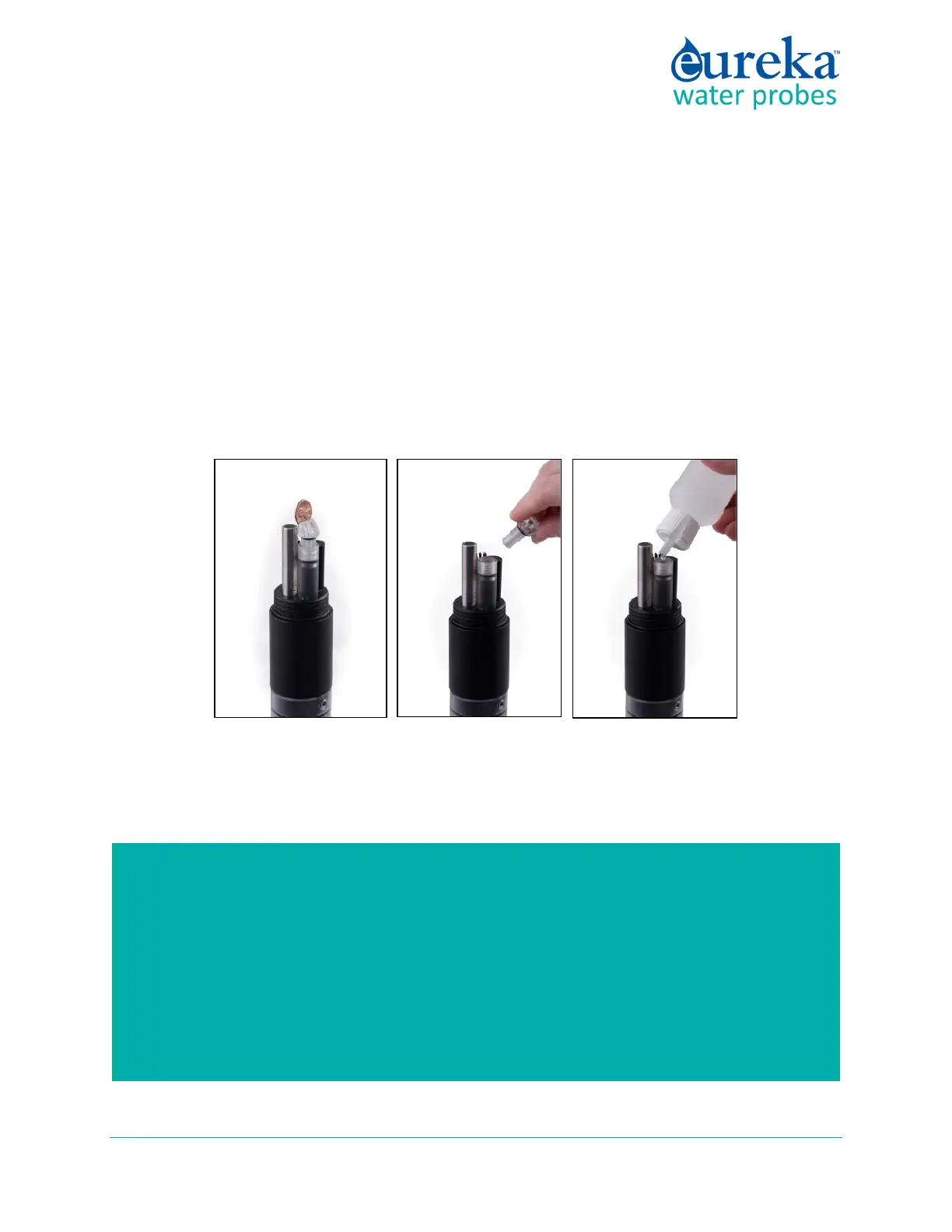
Reference electrode maintenance is simple:
1 Remove the reference cap by unscrewing it from the reference sleeve and discard old reference
electrolyte.
2 Fill the sleeve completely with fresh pH reference electrolyte (KCl saturated with silver chloride). Tap
the Manta a few times to dislodge any bubbles.
3 Sc
rew the reference cap back on to the sleeve. As you screw the sleeve into place, air and excess
electrolyte is forced out of the sleeve through the reference electrode junction (the white, porous
circle at the end of the sleeve). This not only purges bubbles from the electrolyte, but also cleans
nasty stuff out of the junction.
Other manufacturers may tell you that their integral, or combination, reference electrode
is better. This is not true.
First of all, every year or so you have to buy a new combination electrode for about $300
and install the whole thing yourself. Second, combination electrodes usually employ
“gelled” electrolyte, and are therefore inclined to calibrating easily in standard pH buffers
but measure poorly in low-conductivity waters (like < 200umhos). With the Eureka-style
reference electrode you spend a few pennies and a few minutes every month or two refilling
the electrolyte. And its “free-flowing” junction performs well in low-conductivity waters.



 To Next Page