Eureka Manta Manual Page 67 of 67
The Manta2, the first multiprobe in the world with “smart” sensors that were actually smart, was
introduced in 2008. It was even more reliable and easy to use than the Manta1 and has been accepted
by the most discerning field practitioners around the world.
Eureka was acquired by Measurement Specialties, Inc. in 2011 in the usual belief that multiple
synergies would make everyone happy. But the multiprobe market just doesn’t work well in a large,
corporate framework, so partners from Europe, Asia, and America purchased the “old Eureka” in
2014. They resumed business seamlessly as Eureka Water Probes.
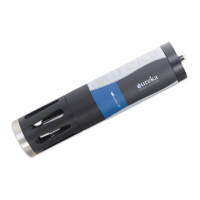
The MantaPlus takes all the field-proven qualities of the Manta2, adds a user-interface with a dozen
new features that is still easy to use, and adds a three-year warranty and marine-type connectors.
7 Why do you build the Manta the way you do?
Unlike the products of lesser manufacturers, the Manta uses the same basic electronic and
mechanical components regardless of how many sensors you order. Most importantly, we have a No-
Cramming Rule that prevents our stuffing too many sensors into an artificially small instrument
diameter. Yes, we know that you like small instruments, but cramming sensors together results in
sensors whose performance, reliability, reparability, and/or maintenance ease is compromised. We
choose the best sensors available on the world market for your needs and build the Manta around
them.
So, when you ordered your Manta, one of the Eureka product specialists determined the optimum
housing diameter for the sensors you selected. The Manta sizes (outside diameters) are 2 inches
(actually 1.95), 2.5 inches (2.45), 3 inches (2.95), 3.5 inches (3.50), 4 inches (4.00), and occasionally
even 4.5 inches (4.50).
Anytime you wish to add or subtract sensors, we can use all of your Manta’s circuit boards and sensors
in a larger or smaller housing. Cost is minimized, and you still have a conventional Manta instead of
having to change to a different instrument model.
We know that stuff - bad stuff - happens in the field, so we designed the Manta so you don’t need a
factory expert for troubleshooting if something goes wrong. If the multiprobe turns on and reads any
of its parameters correctly, then the basic communication circuitry is OK - if not, you need a new CPU
board. If the multiprobe reads temperature, but not, say, conductivity, then you need a new
conductivity sensor. You call Eureka, we send you the replacement component by FedEx, and you
install it yourself in a few minutes. There’s no labor charge, and only one day of down-time. It really
is that easy.
And, of course, the Manta continues Eureka’s tradition of user software that is so easy that most users
rarely read this instruction manual. In fact, you are the only person who has ever read this far.



 To Previous Page