Pilot’s Operating Handbook Section 3
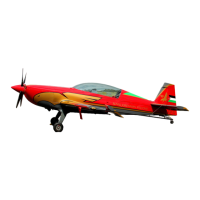
EXTRA 500 Emergency Procedures
26. January 2011
3-57
3.5.i Ditching, Power Off/Power On
Important The aircraft has not been flight tested in actual ditching.
Therefore the following recommended procedure is based
entirely on the best judgment available and following
calculations and consideration being made concerning
ditching with respect to the vaulted underside of aircraft
fuselage.
Transponder;
EMERGENCY
Mayday Call; Transmit
During approach:
PRESS; DUMP
Loose and heavy objects in cabin; Stow and secure
Seat, Seat Belts, Shoulder Harnesses; Fasten and secure
Passengers/Crew; Alert, instruct to cushion faces
LANDING GEAR; UP
Important: In high wind speeds, aircraft approach should be
headed into wind. In light winds and heavy swells, aircraft
approach should be executed parallel to swells.
If approach is established:
FLAPS; 30° (if possible)
Approach Speed; 70 KIAS
Caution: If flap setting 30° is not possible, the following
approach speed are relevant to flap setting:
Flaps 15° = 77 KIAS,
Flaps 0° = 91 KIAS.
If power on:
Power Lever; Set for sink rate of 300 ft/min
Engine; Prior ditching: Shut down
Short before ditching:
Airspeed; Maintain approach speed
Important: Stall warning is not available without electrical
power.
GEN; OFF
STDBY ALT; OFF
BATT; OFF
Ditching; Execute without flare (in descent attitude)
Important: Immediately after aircraft has alighted on water, try
to retract flaps by using momentarily battery power. This to
make evacuation via main door or emergency window easier.
Nevertheless, if flap retraction is not possible, push upper door



 To Next Page