The StellarMate Plus Manual
273 / 341
Since mounts are not perfect, they cannot perfectly keep track of object as it
transits across the sky. This can stem from many factors, one of which is the
misalignment of the mount's Right Ascension axis with respect to the celestial
pole axis. Polar alignment removes one of the biggest sources of tracking errors
in the mount, but other sources of error still play a factor. If properly aligned,
some mounts can track an object for a few minutes with the only deviation of 1-2
arcsec RMS.
However, unless you have a top of the line mount, then you'd probably want to
use an autoguider to keep the same star locked in the same position over time.
Despite all of this, if the axis of the mount is not properly aligned with the
celestial pole, then even a mechanically-perfect mount would lose tracking with
time. Tracking errors are proportional to the magnitude of the misalignment. It is
therefore very important for long exposure imaging to get the mount polar
aligned to reduce any residual errors as it spans across the sky.
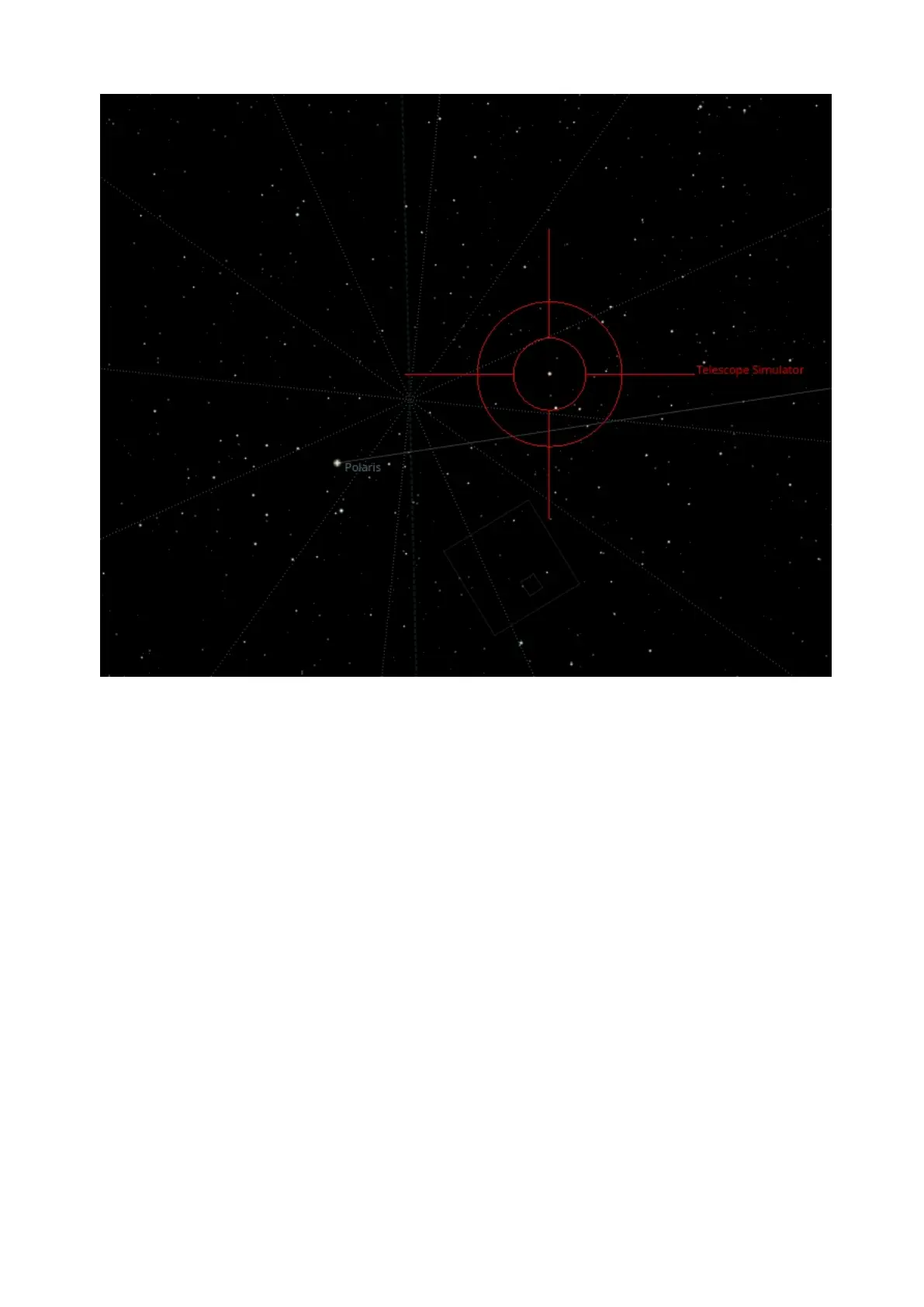
Before starting the process, point the mount as close as possible to the celestial
pole. If you are living in the Northern Hemisphere, point it as close as possible to
Polaris.
The tool works by capturing and solving three images. After capturing each, the
mount rotates by a fixed amount and another image is captured and solved.


 To Next Page