D-0126440-A – 2020/08
VisualEyes™ 515/525 Instructions for Use - US Page 21
4.5 Patient preparation
The operator and the patient should be aware of the below-listed points before starting a test.
1. Before starting a test, it is very important that the patient is provided with all the relevant
information about a test and what he/she/guardian can expect out of a test such as general
precaution, adverse effects etc. Especially, additional care should be given for irrigation and
positional tests (e.g. caloric test, rotary chair tests, etc.).
2. It is also important to consider the patient’s clinical condition/history before testing. The operator
should be aware of all emergency stop options and safety features if available with the product (refer
to section 1.6 for more details).
3. Ensure that the patient is informed about the emergency stop feature, which is accessible to her/him.
The patient can stop the test if she/he cannot tolerate the test.
4. Patients with a history of motion sickness should be informed if the test battery includes rotary tests
and the patient should be monitored with additional care during the test. If the patient feels any
discomfort, the technician/clinician should stop the test either using this software or using the
Emergency Stop button to stop the chair.
5. Ensure that the rotary chair is locked in the desired position before starting any test using a rotational
chair to avoid unintended turns.
6. The operator should ensure that there are no objects placed that will potentially interfere when the
chair is reclining or spinning. It is also recommended that the testing room be darkened for all
vision-denied tests.
7. The operator should pay attention to alerts from the software, if he/she tries to spin the rotational
chair when it is reclined. However, the safety feature available in the Orion / System 2000 reclining
chair will not allow the rotary chair to spin in the reclining position.
8. Patients cannot use corrective eyeglasses during testing but corrective contact lenses can be worn to
improve visual acuity.
9. Patients should remove any eye makeup before starting a test. Cosmetic tattoos or permanent
makeup may interfere with eye tracking and should be disclosed by the patient to the testing facility
prior to testing.
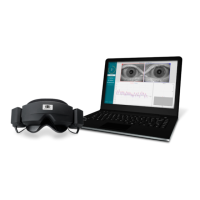
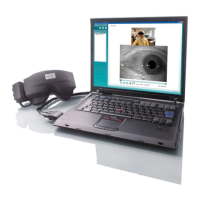
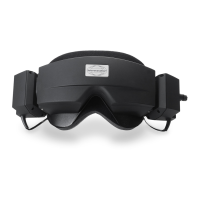
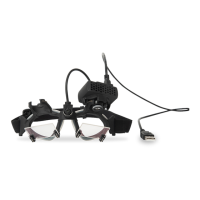
10. Ensure that the goggles are sanitized with appropriate procedure. Disposable foam pads used with
the side mounted camera goggles are meant for single use and should be replaced after testing
every single patient to avoid cross infection. Front mounted camera goggles and top mounted
camera goggles should be disinfected with approved cleansing wipes as described in section 5.1.
11. Headband straps should be checked with each patient for the best fit. If the headband strap does not
remain fastened, then it should be replaced. Replacement headband straps are available from the
manufacturer.
12. Before starting any test involving the Orion AT/C chairs, a set of safety checks (Figure 4.5-1) will
appear on the software to confirm safety precautions have been taken. Each box in the safety
checklist must be checked before testing can begin.
Figure 4.5-1 Safety Checklist for Orion AT/C chairs.
To ensure the safety of the patient before rotating the patient in the chair, please use this
checklist as a guide to ensure the patient’s safety during the test.
Are ALL patient seat belts securely fastened?
Is the patient’s head restrained to the head support?
Has the ankle restraint been fastened?
Does the patient have access to the patient stop button?






 To Next Page