Section 3 - Maintenance
Routine Maintenance
Engine Cooling System
3-21 3-21
9803/9390-2
Draining, Flushing and Refilling the
Coolant
!MWARNING
The cooling system is pressurised when the coolant is
hot. When you remove the cap, hot coolant can spray
out and burn you. Make sure that the engine is cool
before you work on the cooling system.
9-3-3-1_2
1 Park the machine on firm, level ground and stop the
engine. If the vehicle has a manually operated load
bay, remove the starter key.
2 Raise the load bay. If your vehicle has an electric
tipper, ensure that the starter key is removed.
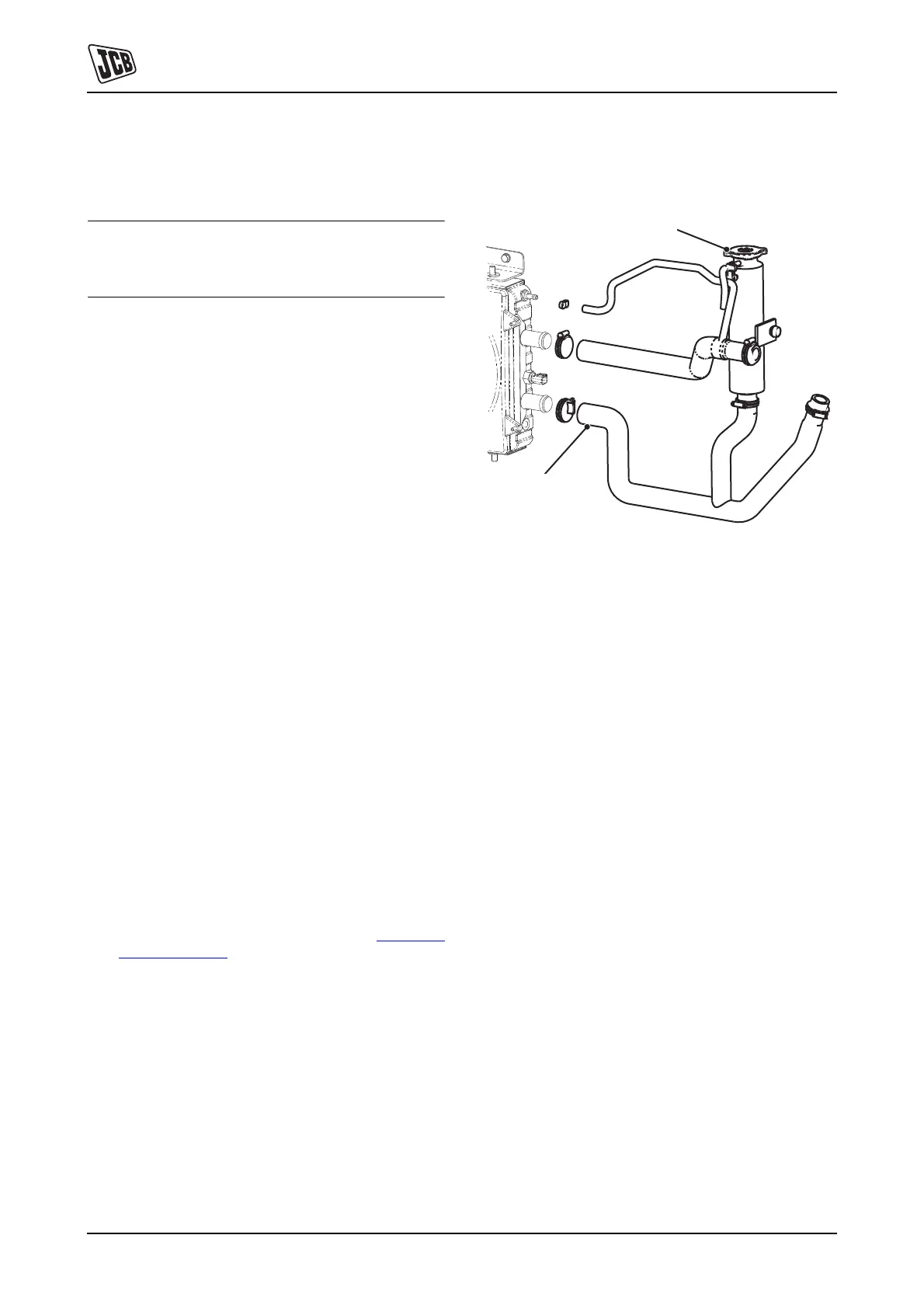
3 Carefully loosen the filler cap on the expansion tank
12-2. Let any pressure escape. Remove the
expansion tank cap.
4 Remove the bottom hose 12-1. Let the coolant drain
out into a suitable container. Note that a small amount
of coolant will remain at the bottom of the radiator. If
necessary, remove this using a suction device or by
removing the radiator.
5 Refit the bottom hose 12-1.
6 Prepare a suitable mixture of water and sodium
carbonate (or a commercially available alternative).
7 Fill the system slowly with the mixture to prevent air
locks. Wait 2 to 3 minutes to allow air to be vented,
then top up to the level marked 'COLD MIN'. Do not fit
the filler cap at this stage.
8 Run the engine for 5 minutes at the normal running
temperature. Stop the engine and allow to cool.
9 Drain the cooling system, checking that the coolant is
not dirty. If it is, repeat the flushing process (steps 5 to
7).
10 Refill the system as described at step 5 but using pre-
mixed water/antifreeze solution (K
Coolant
Mixtures ( T 3-8)). Do not overfill. Fit the filler cap.
Note: A 50% anti-freeze mixture must be used even if frost
protection is not needed. This gives protection against
corrosion and raises the coolant's boiling point.
11 Run the engine and raise the coolant to working
temperature. Stop the engine. Check for leaks and
check the coolant level. Top up as required.
Fig 12.
1
2


 To Next Page