© Microhard Systems Inc. Confidential 47
3.0 Mesh Configuration
3.2.4.3 TX Profiling and Ranking
Ranking allows wide area systems with several coordinators a mechanism to segregate and control
transmissions to mitigate collisions in overlapping coverage areas. Each Coordinator in a system is
automatically assigned a rank, starting with the Primary Coordinator always being assigned Rank 0. Up
to 4 levels of ranking are used, and then are repeated for systems that require more layers. Remote
units will always associate with the lowest rank coordinator they can hear, regardless of proximity.
Ranking information is sent in each sync packet. It is possible to manually assign the coordinator rank
by using S220.
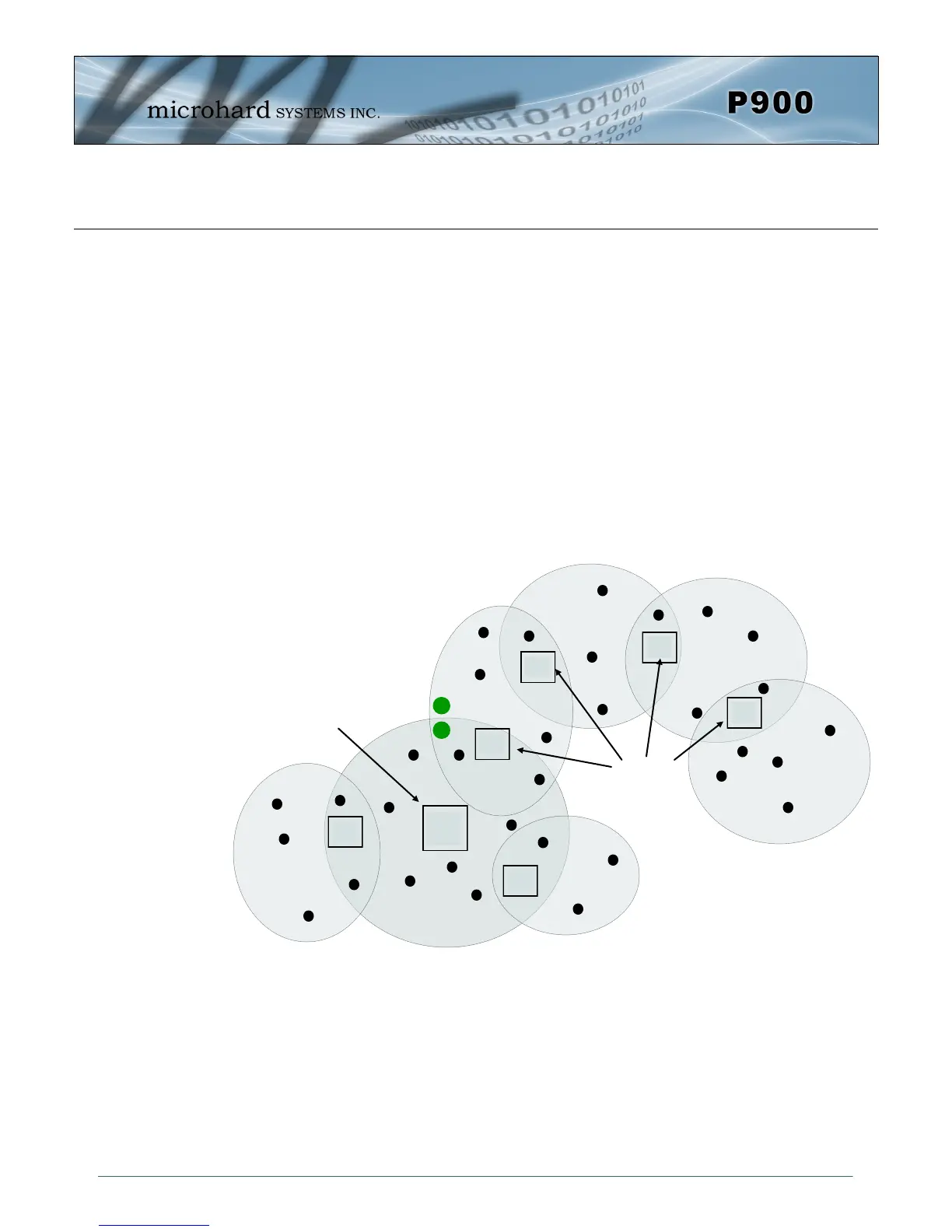
The drawing below illustrates how the ranking areas work. Notice that all devices that can hear the Pri-
mary Coordinator (Rank 0), are assigned Rank 1. In the overlapping coverage area, the units can hear
both the Primary and Secondary Coordinators, but they are also assigned rank 1, as the Primary Coor-
dinator is the lowest ranked coordinator. The remaining units which are in the Secondary Coordinators
(Rank 1) coverage area are assigned rank 2. Notice that with the addition of Secondary Coordinators
the Rank is incremented by 1. Once reaching Rank 3, the process begins again at Rank 0. Ranking
ensures that the Mesh network maintains a stable logical structure and prevents modems from erratic
association with multiple coordinators.
Drawing 3-6: Mesh Ranking
P.C
Secondary
Coordinators
S.C
Rank 1
Rank 1
Remote A
Remote B
Rank 1
Primary
Coordinator
S.C
S.C
Rank 2
Rank 2
Rank 2
Rank 3
S.C
Rank 0
S.C
S.C
Rank 2
Rank 0
Rank 0
Rank 1
The ranking of coordinators is done automatically, and creates some structure and organization to the
Mesh Network. Tx Profiling can now use that logical separation to provide collision avoidance in the
system by assigning frames to be only used by specific ranked units, as per a TX Profile. This allows
guaranteed periods of time in which only certain ranked modems can transmit data. The result is reduc-
ing or eliminating collisions on the overlapping coverage boundaries.


 To Next Page