How To Verify the Orifice Selection A
endix B: Valve Orifice Selection
60
Using Different Gases
The valve orifice selection data is based on nitrogen gas. If you will be using a gas other than
nitrogen, you need to compensate for the density difference between nitrogen and your process
gas before you can select the appropriate valve orifice.
1.
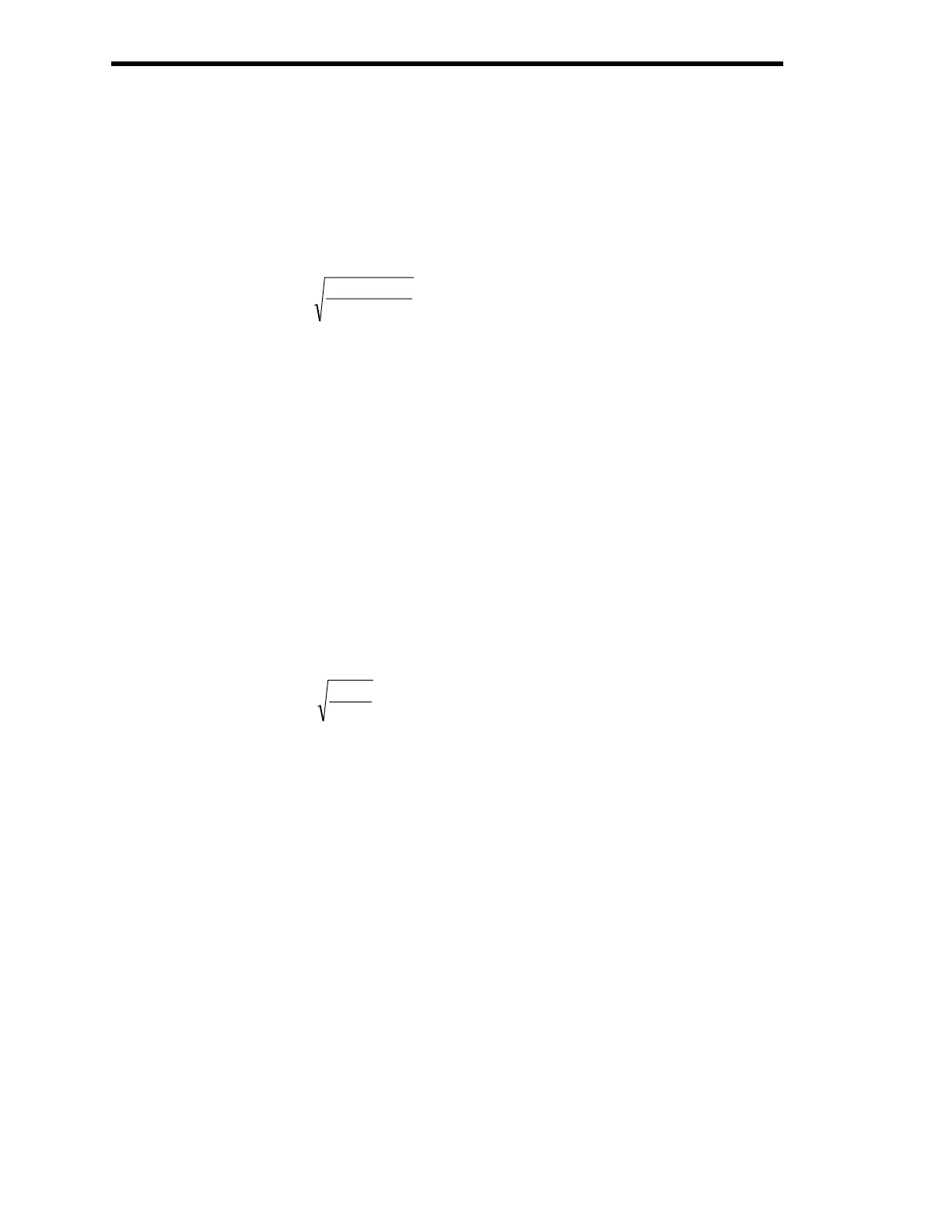
To calculate an orifice sizing factor, use the equation:
N Density
Gas Density
Orifice Sizing Factor
2
=
Appendix C: Gas Density Table,
page 63, lists the standard density for common gases.
2.
To calculate the valve orifice index number for the new gas:
(valve orifice index number for nitrogen) x (orifice sizing factor) = new valve index number
3.
Proceed with step 3 of
How To Verify the Orifice Selection,
page 59, to determine the
correct orifice size.
Example 1: Using Sulfur Hexafluoride (SF
6
)
Following the example in
How To Verify the Orifice Selection,
page 58, using 100% sulfur
hexafluoride (SF
6
):
1.
Calculate the orifice sizing factor, using the equation above.
The standard density of SF
6
is 6.516, so the equation is:
1.250
6.516
0.44 Orifice Sizing Factor
=
2.
Calculate the valve index number, using the equation above.
(175) x (0.44) = 77 valve index number for SF
6
3.
Use the index number and the maximum flow rate to determine the orifice number from
Figure 24, page 59.
Using the maximum flow rate of 1000 sccm (in our example) and an index number of 77,
the correct orifice number would be 2. Since sulfur hexafluoride is heavier than
nitrogen, the point on the graph is very near the top of the range for orifice number 2.
Therefore, you may choose orifice number 3 if control in the lower end of the flow range
is not critical.



 To Next Page