NOTE: The function related to pressing the key briefly is performed by pressing the key which will activate
the function assigned to it.On the other hand, to perform the function carried out when the key is held down
longer, press the key until the relative function is started. The buzzer will ring shortly to signal the function
has started.
NOTE: Warm-up: When the equipment has not been used for a prolonged period (more than 3 months) or
when turned on for the first time, a number of emissions with short times (0.01-0.02 sec.) are recommended
and then some pictures with 0.1 sec. intervals to better stabilize the operation of the x-ray tube before using
it.
3.4. CHECKING THE PARAMETERS
Before actually taking an exposure, make sure the exposure parameters for the examination in progress are correctly
set:
- Controlling the type of collimator selected.
Make sure the cone icon shown on the handheld matches the desired cone:
ICON ON: indicates that the x-ray unit is using the built in round cone (diameter 60mm, focal spot-skin
distance 20cm).
ICON OFF: indicates that the external removable rectangular or round cone is attached to the x-ray device
(source-skin distance 30cm).
Refer to paragraph 5.3 to set the type of movable collimator used.
NOTE: After the rectangular collimator (12”) has been attached or detached, the icon and set exposure
times will automatically be modified within a few seconds.
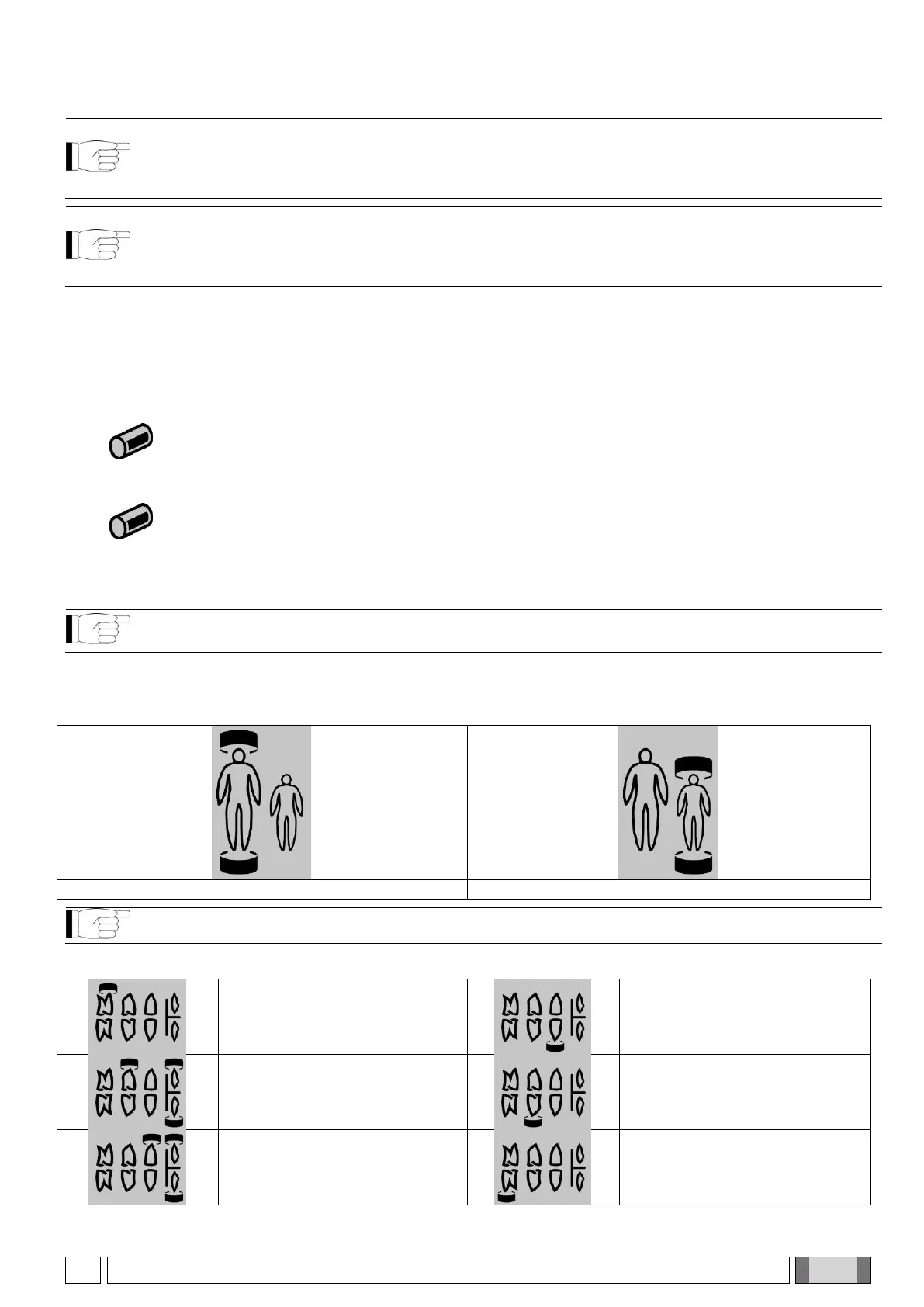
- Checking the selected body build.
- “Child” selected: indicates the x-ray unit is set for patients with small builds.
- “Adult” selected: indicates the x-ray unit is set for patients with average-large builds.
Average/large build (ADULT) selected
Small build (child) selected
NOTE: After the change has been made, the preset exposure times will automatically be modified.
- Checking the selected type of intraoral exam.
Upper canines/bicuspids or rear
”bite-wing”
Upper incisors
or front ”bitewing”


 To Next Page