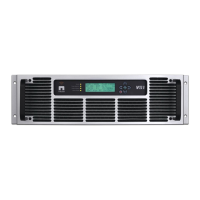
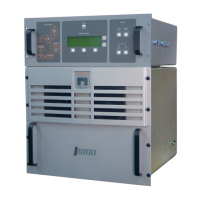
10 000 WATT FM BROADCAST TRANSMITTER
FM10
Page 5-22
01 October 2002
NOTE
Random alarm occurrences can result from AC line
voltage fluctuations at the service entrance.
Monitor the AC line voltage and contact the power
company.
(a) Measure the voltage between J2-12 (+) of the
low voltage power supply PWB (A26A1),
representative of the AC line voltage, and
ground (-).
(b) If the voltage measured in step (a) is nominally
27.8 VDC or greater, then the AC line voltage
has exceeded its preset high AC threshold.
Verify the tap selection on the power
transformer is correct and, if so, then it is
probable that the AC mains are too high.
(c) If the voltage measured in step (a) is within
acceptable limits, it is probable that a problem
exists with the AC supply monitoring circuitry
on the control/monitor PWB.
NOTE
If it is necessary to check the control/monitor PWB's
AC supply monitor circuitry, refer to the control/
monitor PWB's service instruction manual and the
trouble shooting data in section 7 of this manual to
isolate circuit defects.
5.11.6 LOW AC PWR ALARM: A LOW AC
PWR
alarm can occur if the unregulated 24 VDC,
representative of the AC line voltage, falls below a
preset threshold due to AC mains falling at least ten
percent below the normal level. If the transmitter's
RF output has been inhibited, the fault remains. If
the transmitter's RF output has been restored, the
alarm was probably caused by a power fluctuation at
the AC power service entrance and ALARM RESET
should be pressed to clear the alarm indication.
Trouble shoot a low AC power alarm as follows:
NOTE
Random alarm occurrences can result from AC line
voltage fluctuations at the service entrance.
Monitor the AC line voltage and contact the power
company.
(a) Ensure the LOW AC PWR
lamp was not caused
by an AC phase alarm by pressing the ALARM
RESET
switch. If the LOW AC PWR
lamp turns
off and the AC PHASE lamp turns on, a phase
loss may have occurred (see paragraph 5.11.4).
(b) Measure the voltage between J2-12 (+) of the
low voltage power supply PWB (A26A1),
representative of the AC line voltage, and
ground (-).
(c) If the voltage measured in step (b) is nominally
19.0 VDC or less, then the AC line voltage has
fallen below its preset low AC threshold.
Verify the tap selection on the power
transformer is correct and, if so, then it is
probable that the AC mains are too low.
(d) If the voltage measured in step (b) is within
acceptable limits, it is probable that a problem
exists with the AC supply monitoring circuitry
on the control/monitor PWB.
NOTE
If it is necessary to check the control/monitor PWB's
AC supply monitor circuitry, refer to the control/
monitor PWB's service instruction manual and the
trouble shooting data in section 7 of this manual to
isolate circuit defects.
5.11.7 REFLECTED POWER ALARM: A
reflected power alarm can occur if the reflected
power at the transmitter's output exceeds a preset
threshold or if a fault occurs in the control/ monitor
PWB's reflected power detection circuitry. The
severity of the reflected power level and the
subsequent condition of the transmitter's RF output
aids in trouble shooting the cause of the fault.
Trouble shoot a reflected power alarm as follows:
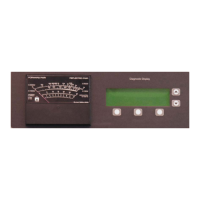
(a) Note the control/monitor panel's reflected and
forward power readings by setting the
FORWARD/REFLECTED switch to either
REFLECTED
or FORWARD.
(b) Based on the meter readings in step (a), refer to
the applicable paragraph (5.11.7.1 thru
5.11.7.3) to determine the probable cause and
trouble shooting information.
5.11.7.1 Reflected and Forward Power Zero
Watts: If the REFLECTED POWER indication is near
zero watts and the FORWARD POWER indication is
zero watts, the transmitter's RF output has been
inhibited due to:


 To Next Page