
 Need help?
Do you have a question about the Proroute GEM420 and is the answer not in the manual?
Provides instructions and warnings for installing the GEM420 hardware, including system requirements.
Covers fundamental network settings, including WAN, LAN, VLAN, WiFi, IPv6, NAT, and Routing.
Configures various WAN connection types, including 3G/4G, USB 3G/4G, and Ethernet.
Details settings for physical WAN interfaces, operation modes (Always-on, Failover), and line speed.
Configures internet connection types like 3G/4G, Dynamic IP, Static IP, PPPoE, PPTP, and L2TP.
Manages LAN settings and configures Virtual LANs (VLAN) for network segmentation.
Sets up wireless LAN configurations, including SSID, security, and operation modes.
Configures 2.4GHz wireless settings, including operation modes like AP Router, WDS Hybrid, and WDS Only.
Configures IPv6 connectivity, supporting Static IPv6, DHCPv6, PPPoEv6, 6to4, and IPv6 in IPv4 tunnel.
Sets up a static IPv6 WAN connection by manually entering IP address, subnet, and gateway.
Configures DHCPv6 for automatic IPv6 address assignment and network configuration.
Sets up PPPoEv6 connection for IPv6 networks, requiring account and password from ISP.
Manages Network Address Translation (NAT) and Bridging settings, including loopback and virtual servers.
Configures routing functions to find proper paths and enable communication between different subnets.
Manually defines static routing rules, specifying destination IP, gateway, and metric for traffic paths.
Supports dynamic routing protocols like RIP, OSPF, and BGP for automatic routing table configuration.
Configures DHCP servers to automatically assign IP addresses to local network clients.
Configures firewall functions to control network access, including Packet Filters, URL Blocking, and MAC Control.
Defines rules to filter packets based on source/destination IP, port, and protocol for inbound/outbound traffic.
Blocks web access by filtering URLs, domain names, or keywords containing specific pre-defined terms.
Filters web content by blocking specific file extensions, script types, and applications.
Assigns different access rights to users based on their MAC addresses.
Filters internet protocol packets based on application data, allowing or denying passage.
Manages Quality of Service (QoS) and Bandwidth Management (BWM) for prioritizing traffic and controlling usage.
Configures QoS on multiple WAN interfaces and flexible bandwidth management (FBM).
Sets up flexible QoS policies based on group categories and differentiated services.
Enables rule-based QoS and provides help on configuring QoS policies.
Establishes secure virtual private networks (VPNs) using IPSec, PPTP, L2TP, and GRE tunneling technologies.
Configures IPSec VPN for secure communication, involving IKE and IPSec phases for authentication and encryption.
Enables IPSec VPN, NetBIOS over IPSec, NAT Traversal, and sets the maximum number of tunnels.
Configures PPTP VPN for secure tunneling and remote access, supporting various authentication methods.
Sets up the device as a PPTP server, allowing remote hosts to access LAN servers.
Enables and configures the device as a PPTP client to establish tunnels to remote PPTP servers.
Configures L2TP VPN for secure tunneling and remote access, supporting various authentication methods.
Sets up the device as an L2TP server, allowing remote hosts to access LAN servers.
Enables and configures the device as an L2TP client to establish tunnels to remote L2TP servers.
Configures GRE tunnels for encapsulating various network layer protocols over IP networks.
Enables GRE tunnel function for VPN connectivity.
Manages device redundancy protocols like VRRP to ensure high availability and reliability.
Supports system management protocols like TR-069, SNMP, Telnet with CLI, and UPnP.
Configures mobile application features like SMS, USSD, Network Scan, and Remote Management via SMS.
 General
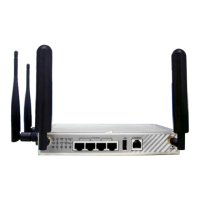
| Brand | Proroute |
|---|---|
| Model | GEM420 |
| Category | Wireless Router |
| Language | English |

 To Next Page