7 General Description of Functions
44 / 86 EN-US · 30.30.00.00424 · 07 · 10/23
Dynamic pressure monitoring:
If possible, a dynamic pressure measurement is taken at the start of every suction cycle. The result of this
measurement is compared to the vacuum limit values set for H1 and H2.
If the dynamic pressure is greater than (H2-h2) but less than H1, the corresponding condition monitoring
warning will be set and the system status light will switch to yellow.
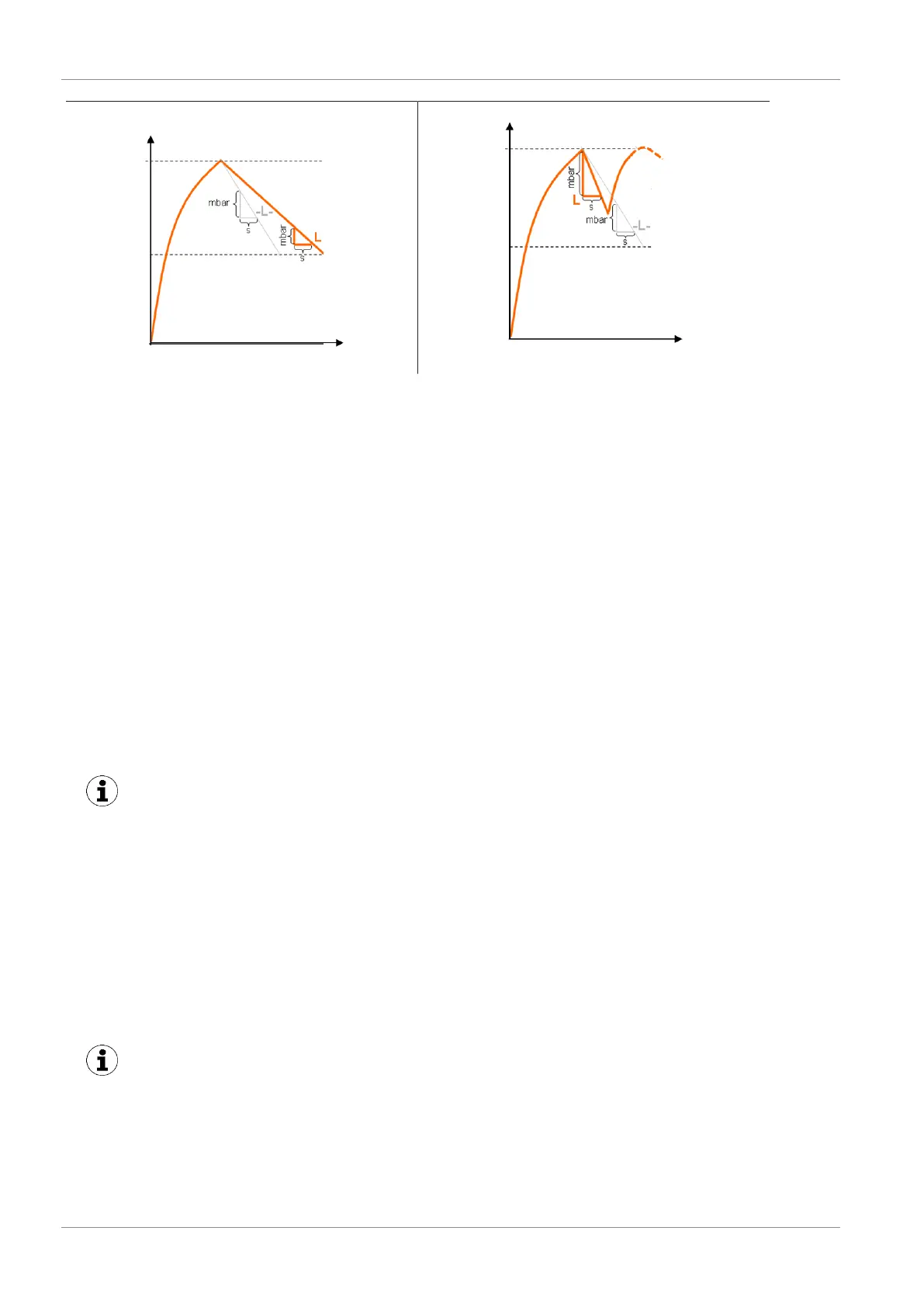
Leakage level evaluation:
This function determines the average leakage during the last suction cycle, divides it into subareas and
makes it available as a parameter via IO-Link.
Autoset
The CM Autoset IO-Link function in the process output data allows the condition monitoring parameters
for maximum permitted leakage [-L-] and the evacuation time [t-1] to be set automatically. The ac-
tual values from the last suction cycle are combined with additional tolerance and stored.
7.24.2Energy Monitoring (EM)
To optimize the energy efficiency of the vacuum gripping systems, the ejector provides functions for mea-
suring and displaying energy consumption.
The ejector is not a calibrated measuring device. However, the values may be used as a refer-
ence and for comparison measurements.
Percentage-based air consumption measurement:
The ejector calculates the air consumption from the last suction cycle as a percentage. This value corre-
sponds to the ratio for the full duration of the suction cycle and the active suction and blow-off times.
Absolute air consumption volume:
The actual air consumption in a suction cycle is calculated taking the system pressure and nozzle size into
account.
An absolute air consumption measurement can be made only using a pressure value supplied
externally via IO-Link.
The measured value for the absolute air consumption (air consumption per cycle) is reset at the start of
the suction cycle and then continuously updated during the cycle. It can continue to change until after
the end of blow-off.



 To Next Page