71
3 Description
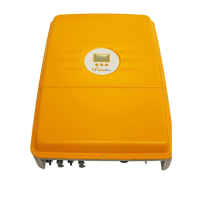
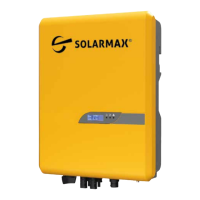
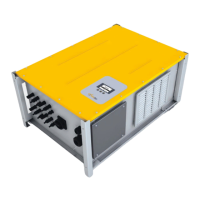
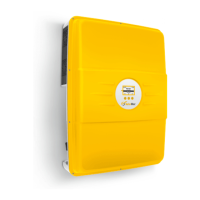
3.1 Identication
The inverter can be identied on the basis of the information provided on the nameplate
(see Section 3.5).
3.2 Functionality
Inverter operation is completely automatic and depends on the available output of the PV
generator. If there is enough power, the inverter starts mains operation and feeds into
the power grid. If there is not enough power available from the PV generator, the inverter
disconnects from the grid and shuts down.
The graphics display with three function keys allows convenient inverter operation and
reading of all important operating data. The graphics display is only switched on when the
DC input voltage is high enough.
The inverter has congurable functions for grid monitoring, limitation of output and reac-
tive power control.
For the purpose of monitoring the PV power plant remotely, the inverter can be connected
directly to the Internet via Ethernet.
With the optional I/O module, the inverter can be remotely switched off and its output
controlled.
3.3 Safety installations
Overvoltage protection
P series SolarMax inverters feature integrated surge arrestors (varistors) at both input
and output. Each DC input (plus and minus connection) is tted with a surge arrester. The
surge arresters have a common gas discharge tube to ground. On the AC side a surge
arrester is installed between the phase and neutral. A second surge arrester with gas
discharge tube is tted between neutral and ground (for details regarding the tted surge
arresters see section 11).
When designing the PV system, it may be necessary to provide additional external light-
ning protection. The optional I/O module can be used to monitor external lightning protec-
tion modules.
Fault current monitoring
The inverters in the SolarMax P series have an integrated AC/DC-sensitive fault current
sensor. This sensor can distinguish between the operational capacitive stray currents



 To Next Page