Need help?
Do you have a question about the Sur-Gard System III and is the answer not in the manual?
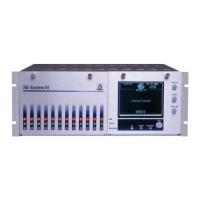
Describes the product's classification as Class 1, rack-mounted, fixed equipment.
Details how to connect the equipment to the mains power supply and telecommunication network.
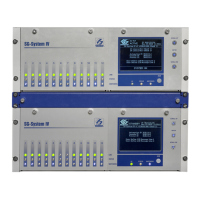
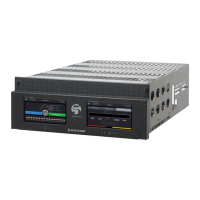
Details the System III's features, capabilities, and hardware components.
Lists UL and industry approvals for the System III equipment.
Describes the BP3 Backplane's function for module interconnection and communication.
Explains the DC/DC-3 converter's role in providing 5VDC power for modules.
Details the PSU3 power supply unit specifications and requirements.
Describes the CPM3 module's role in system control and communication.
Explains the DRL3 line card's function in monitoring telephone lines and storing events.
Details the BP3X module for connecting telephone lines.
Explains the receiver's default operation mode and handshake order.
Describes the System III's static IP address and port configuration for network management.
Explains the Ethernet port for traditional automation communication.
Explains the ACK signal requirement and retransmission process for communication.
Describes how the CPM3 handles ACK, NAK, and no-response scenarios.
Details how the CPM3 handles absent automation and heartbeat signals.
Describes the primary TCP/IP connection and fallback to RS-232 in active mode.
Explains manual mode operation, buzzer acknowledgment, and printer output.
How to view and understand system trouble messages displayed on the screen.
Explains DRL3 standby mode, line monitoring, and LED indicators.
Describes the DRL3's line fault detection and related messages.
Explains the DRL3's buffering behavior and status LED flashing on CPM3 error.
Refers to the System III Console Software for primary system programming.
Explains using debug output for diagnostics via serial communication.
Guides setting up HyperTerminal for debug communication.
Setting the CPM3's IP address on the network.
Configuring the subnet mask address for the CPM3.
Managing user passwords and access levels for the System III.
Setting the baud rate for the COM1 serial port.
Setting the baud rate for the COM2 serial port.
Setting the interval for heartbeat transmission to ensure communication.
Masking PSU 1 trouble reporting.
Masking PSU 2 trouble reporting.
Masking DC A trouble reporting.
Masking DC B trouble reporting.
Masking DC A2 trouble reporting.
Masking DC B2 trouble reporting.
Masking SG Serial Shelf 1 trouble reporting.
Masking SG Serial Shelf 2 trouble reporting.
Setting the number of line cards to be polled by the CPM3.
Configuring automation output mode (Loop, Fallback, All, IP Fallback).
Setting the communication speed between CPM3 and DRL3s.
Explains profiles, DNIS/Caller ID selection, and look-up tables.
Assigning a virtual identification code for each DRL3 module.
Determining how many digits of the line card number are sent to output.
Enabling or disabling the backup telephone line feature.
Enabling or disabling hook-flash and setting its duration.
Receiving Caller ID or DNIS data from telephone lines.
Transmitting Caller ID or ANI information to the computer output.
Transmitting Caller ID or ANI information to the printer output.
Controlling the formatting of the 4/3 DTMF format computer output string.
Seizing the phone line in case of errors or full buffer.
Controlling communication speed between DRL3 and CPM3.
Enabling Automatic Handshake Selection for panel communication.
Configuring automation output mode (Loop, Fallback, All, IP Fallback).
Selecting English printer words for event codes.
Using common event codes for automation software compatibility.
Bit-selectable options for configuring SIA protocol features.
Defining account codes that activate the 2-way audio feature.
Defining 3-digit account codes that activate the 2-way audio feature.
Defining alarm codes that activate the 2-way audio function.
Selecting the first handshake to be sent to a dialer.
Stripping leading digits (F or 0) from account codes.
Indicating format types (4/1, 3/2, 4/2, 5/1) for 5-digit pulse data.
Converting Acron Super Fast format to standard RS-232 protocols.
Decoding Modem II formats and controlling output protocol.
Converting Ademco High Speed format to 4/2 format or sending as is.
Enabling computer for FBI Super Fast protocol.
Replacing or inserting digits in account codes using ASCII values.
Reporting BFSK format as Radionics 6500 or standard 3/1 format.
Programming dial-out numbers for transferring 2-way audio calls.
Enabling or disabling audio for selected CCITT formats.
Information identifying the location or owner of the alarm panel.
Signal sent from receiver indicating data received correctly or with errors.
Automatic Handshake Selection feature for requesting handshake.
Message transmitted from panel containing account, event, zone, user info.
Automatic Number Identification for requesting handshake.
Standard alphanumeric code used in data communications.
Software package connecting receiver to receive alarm events.
Alarm information delivered by receiver to central station.
Motherboard-style PCB for module interconnection and communication.
FSK format received by line card providing additional alarm info.
PC application for diagnostics and programming via TCP/IP.
Central Processing Module controlling receiver operations.
Digital Receiver Line Card 3.
Network protocol for data transmission above physical layer.
Signal sent by receiver indicating connection establishment.
Periodic signal to verify presence of output or other CPM3s.
Ability to add/remove cards without removing system power.
Trouble condition generated within the receiver.
Removable card with POTS interface controlling one or more POTS lines.
Globally unique device address for Ethernet network identification.
Communication link sharing a single channel by multiple stations.
User-configurable parameters controlling device operation.
Alarm system at premises transmitting alarms to receiver.
Plain Old Telephone System, standard analog telephone network.
Group of options selected by receiver based on conditions.
Asynchronous serial communications protocol.
Name for the entire receiver configuration.
Transmission Control Protocol/Internet Protocol.
User Interface Board with LEDs and buttons.
Portion of an alarm identifying the specific zone violated.
Describes warranty terms for international customers, including customs fees.
Outlines the process for obtaining service under warranty.
Lists conditions that will void the product warranty.
Lists specific items and conditions not covered by the warranty.
States the terms and limitations of the product warranty.
Details the process and charges for out-of-warranty repairs.
Describes the product's classification as Class 1, rack-mounted, fixed equipment.
Details how to connect the equipment to the mains power supply and telecommunication network.
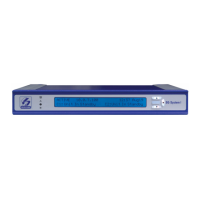
Lists features of the SG-DRL3-IP line card, including higher line security and faster transmission.
Details the System III Console Software and T-LINK Console Software requirements.
Lists essential items required for receiver setup and operation.
Explains the receiver's default operation mode and handshake order.
Describes the System III's static IP address and port configuration for network management.
Explains the ACK signal requirement and retransmission process for communication.
Describes how the CPM3 handles ACK, NAK, and no-response scenarios.
Details how the CPM3 handles absent automation and heartbeat signals.
Explains the SIA internal status output format and its components.
Explains SG-DRL3-IP standby mode, network monitoring, and LED indicators.
Explains SG-DRL3-IP buffering and status LED on CPM3 error.
Details the SG-DRL3-IP's Ethernet interface, port, and connection requirements.
Controls the communication speed between SG-DRL3-IP and CPM3.
Setting the SG-DRL3-IP's unique IP address on the network.
Defining the subnet mask address for the SG-DRL3-IP.
Setting the gateway address for SG-DRL3-IP to reach T-LINK.
Setting the port number for T-LINK connection to the SG-DRL3-IP.
Setting the receiver number for sending signals to the central station.
Assigning a virtual identification code for each SG-DRL3-IP module.
Determining how many digits of the line card number are sent to output.
Enabling or disabling debug mode for SG-DRL3-IP troubleshooting.
Setting time for transmitter absence before reporting failure.
Setting time for transmitter presence before sending restoral message.
Masking or enabling reporting of Network Present condition.
Masking or enabling reporting of Network Absent condition.
Masking or enabling reporting of Transmitter restoral condition.
Masking or enabling reporting of Transmitter failure/absent condition.
Masking or enabling reporting of T-LINK swap condition.
Masking or enabling reporting of unencrypted event condition.
Masking or enabling reporting of invalid report conditions.
Masking or enabling reporting of unknown account conditions.
Masking or enabling reporting of account table limit exceeded condition.
Masking or enabling reporting when a T-LINK account is deleted.
Masking or enabling reporting of option changes on SG-DRL3-IP.
Masking or enabling reporting of console lead-in events.
Masking or enabling reporting of console lead-out events.
Masking or enabling reporting of denied console sessions.
Masking or enabling reporting of printer buffer full condition.
Masking or enabling reporting of computer buffer full condition.
Masking or enabling reporting of internal printer communication errors.
Masking or enabling reporting of internal computer communication errors.
Option reserved for future use.
Stopping transmitter event acknowledgments under specific trouble conditions.
Setting the format for internal messages sent via RS-232.
Information identifying the location or owner of the alarm panel.
Signal sent from receiver indicating data received correctly or with errors.
Automatic Handshake Selection feature for requesting handshake.
Message transmitted from panel containing account, event, zone, user info.
Automatic Number Identification for requesting handshake.
Standard alphanumeric code used in data communications.
Software package connecting receiver to receive alarm events.
Alarm information delivered by receiver to central station.
Motherboard-style PCB for module interconnection and communication.
FSK format received by line card providing additional alarm info.
PC application for diagnostics and programming via TCP/IP.
Central Processing Module controlling receiver operations.
Digital Receiver Line Card 3.
Network protocol for data transmission above physical layer.
Signal sent by receiver indicating connection establishment.
Periodic signal to verify presence of output or other CPM3s.
Ability to add/remove cards without removing system power.
Trouble condition generated within the receiver.
Removable card with POTS interface controlling one or more POTS lines.
Globally unique device address for Ethernet network identification.
Communication link sharing a single channel by multiple stations.
User-configurable parameters controlling device operation.
Alarm system at premises transmitting alarms to receiver.
Plain Old Telephone System, standard analog telephone network.
Group of options selected by receiver based on conditions.
Asynchronous serial communications protocol.
Name for the entire receiver configuration.
Transmission Control Protocol/Internet Protocol.
User Interface Board with LEDs and buttons.
Portion of an alarm identifying the specific zone violated.
Details FCC compliance, product identifier, and USOC jack information.
Explains telephone connection requirements, including plug and jack compliance.
Defines REN and its purpose for telephone line device connections.
States compliance with Industry Canada Terminal Equipment Technical Specifications.

 To Next Page
 General