e1600 User Manual, Issue 1 © Synectic Systems Group Ltd 2012. All Rights Reserved
Specifications subject to change. E&OE Page 47
The Stream Bandwidth setting is used to finely tune the size of RAM cache needed for the incoming
UDP streams from the encoder. Underestimating this setting can cause cache errors in the system
and possibly unnecessary hot-swapping.
Should you want to use multicasting, enter an IP address for the First Multicast Group. Typically
Level 2 should be selected; in this case a new multicast group and port will be created for each
stream. Selecting Level 3 means that the multicast group will be the same for all streams. You can
only select Level 3 if the multicats switched support this.
Setup the Motion Detection options as desired.
Use S/W VMD – if checked RMS will perform the motion detection (instead of the encorders)
Send Motion Alarms – if checked RMS sends an alarm to Synergy when motion is detected
Attach JPG – if checked when a start motion event is sent a snapshot in JPG format is
attached
If Event Based Recording is required, set up the options. If the Alarm recording schedule is to be
triggered when an alarm is received and/or motion is detected then select the corresponding
checkbox. The minutes of recording to be retained before and after an alarm/motion is detected can
be then be configured.
Select the Recording Drive; typically it is the F drive.
If you want audio recorded check the Audio check box in the Record group.
In the Decimation Periods (specified in hours) panel set the decimation periods for I, P, B and A
frames. These settings determine the number of hours recording, after which the various parts of the
video/audio stream will be deleted. The system should be set to decimate within the available storage
limits.
If you wish to use archiving, provide the necessary information in the Archiving group.
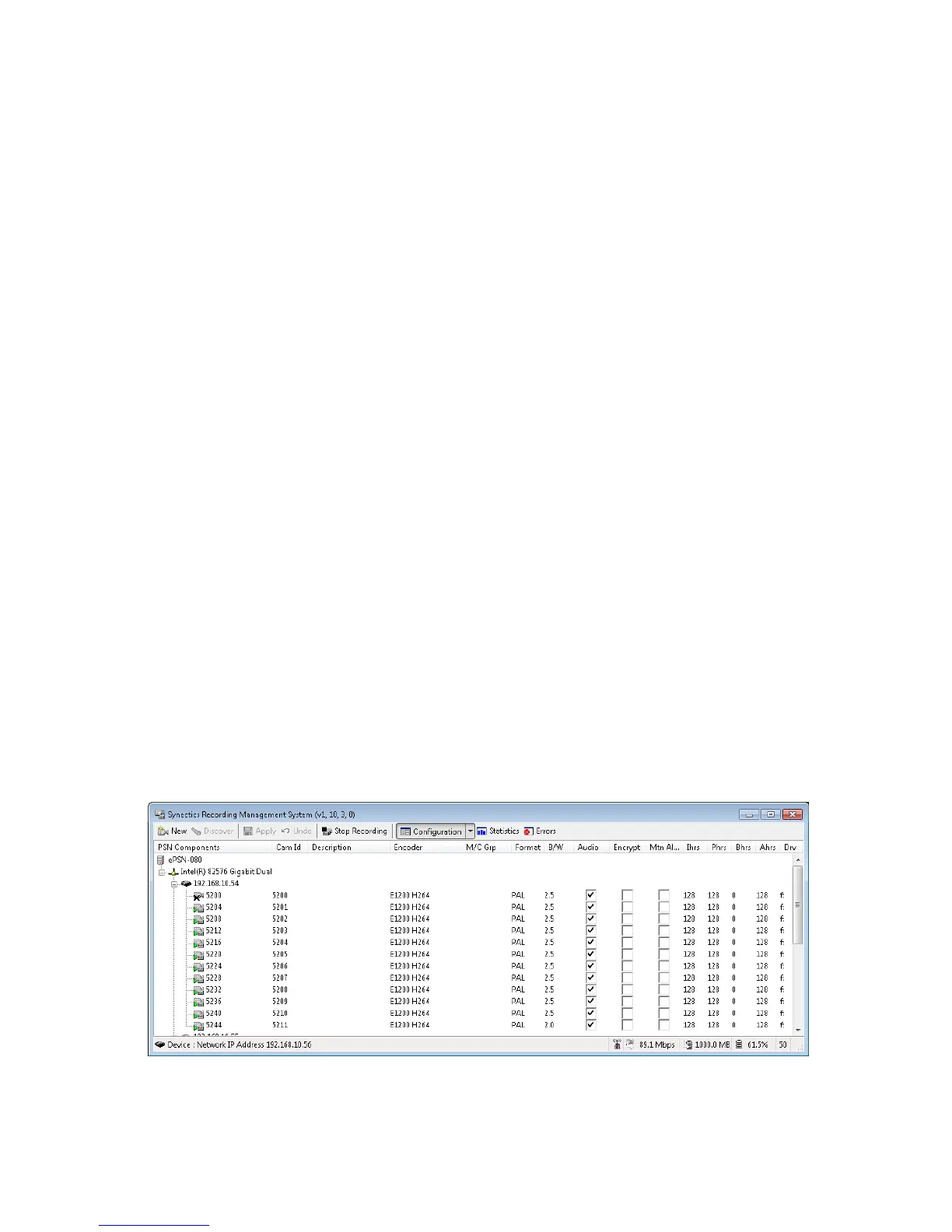
When you are finished, click OK. The Stream Batch Creation dialog closes and the streams are
added to the encoder.



 To Next Page