Maintenance, Service, and Repair
Motor
Page 2
REMOVAL
The motor is an intergal components of the transaxle
assembly. Refer to the Transaxle section for information.
INSPECTION
Refer to the table at the end of this section for service
limits and specifications.
Field / Armature Windings (DC motors)
Very expensive equipment is required to electrically test
the motor windings. Most failures of the motor windings
can be diagnosed by symptoms, visual inspection of
the windings and a simple continuity test.
Continuity Test:
Using a standard DVM, test the continuity across the
following terminals in this order:
Test #: Terminals: Should be:
1) A1 - A2 0-Ohms
2) S1 - S2 0-Ohms
3) A1 - S1 Open Circuit
4) A1 - Motor Frame Open Circuit
Any deviance from what the test result “should be”
indicates a failure of the motor winding.
A motor with a shorted armature or field winding should
exhibit one or more of the following symptoms:
• Lack of power
• Slow acceleration.
• Slow speed.
• Short battery life.
• Excessive motor current.
• Excessive speed (shorted field only).
Note: A short in the vehicle wiring or other
components could be misinterpreted as a
shorted motor. Test all other components
before replacing the motor.
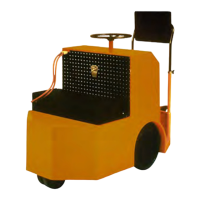
Visually inspect the armature windings where they loop
around at the shaft end of the armature. The armature
windings are coated with a thick insulating enamel. The
enamel should be a deep red color. If the enamel is
brown, black or cracked then the armature has been
overheated and may be shorted.
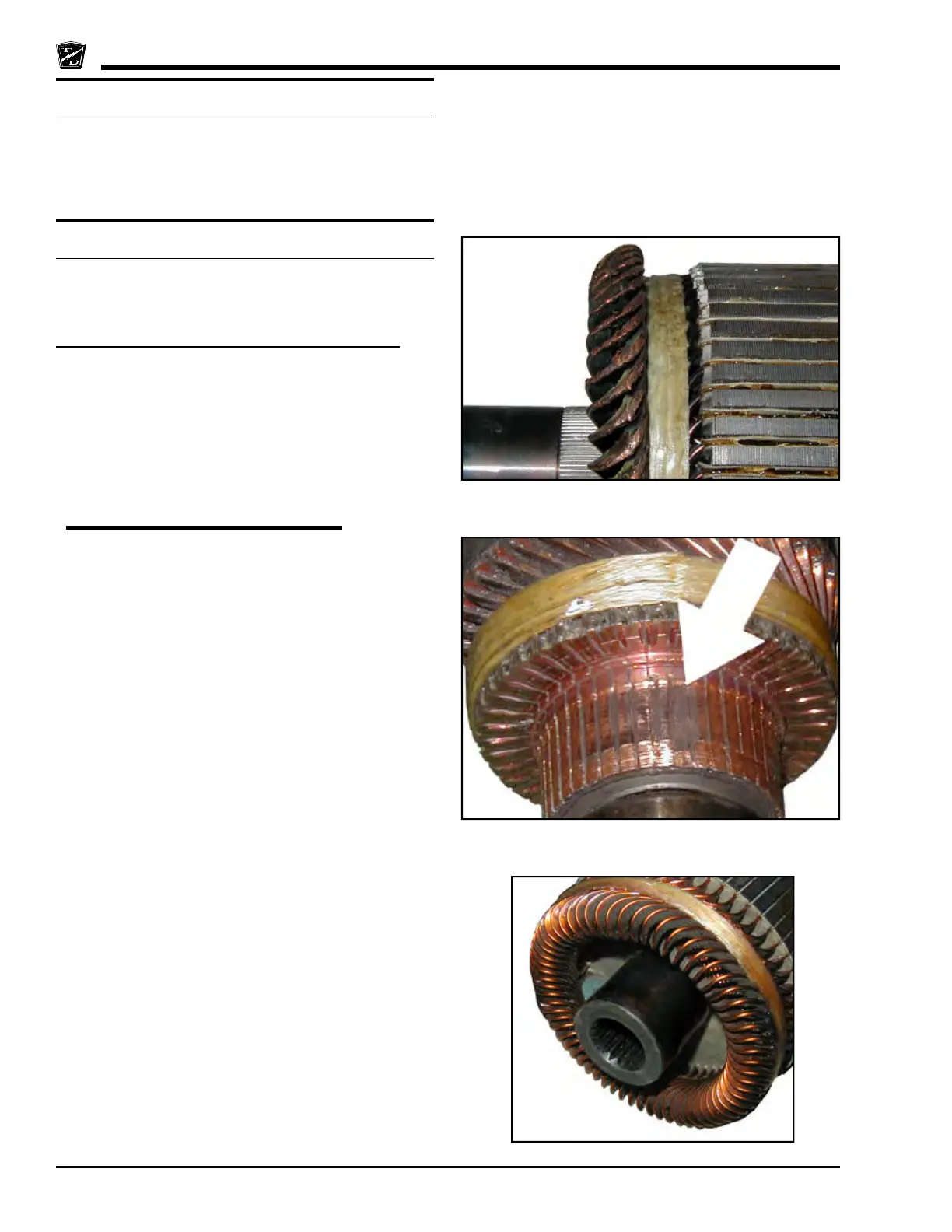
If the loops of wires expanded and contacted the field,
then the maximum RPM of the motor has been
exceeded (see illustration).
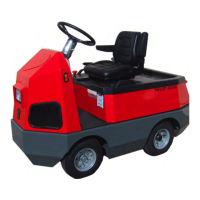
Visually inspect the surface condition of the commutator.
Although the commutator may be grooved, it should be
the same diameter all the way around.
• Raised segments are caused by excessive motor
RPM or overheating.
• Burn marks or depressions are caused by a shorted
armature or a result of a stalled motor (see
illustration).
Typical burn mark on a shorted armature
Normal armature winding loops
Expanded armature windings



 To Next Page