p
Model 880 DEPOSITION CONTROLLER
y
SECTION 8.XX
e page 267 of 276 ^
Section 8. 0 Maintenance/Problem Solutions
Maintenance of Model 880 Deposition Controller
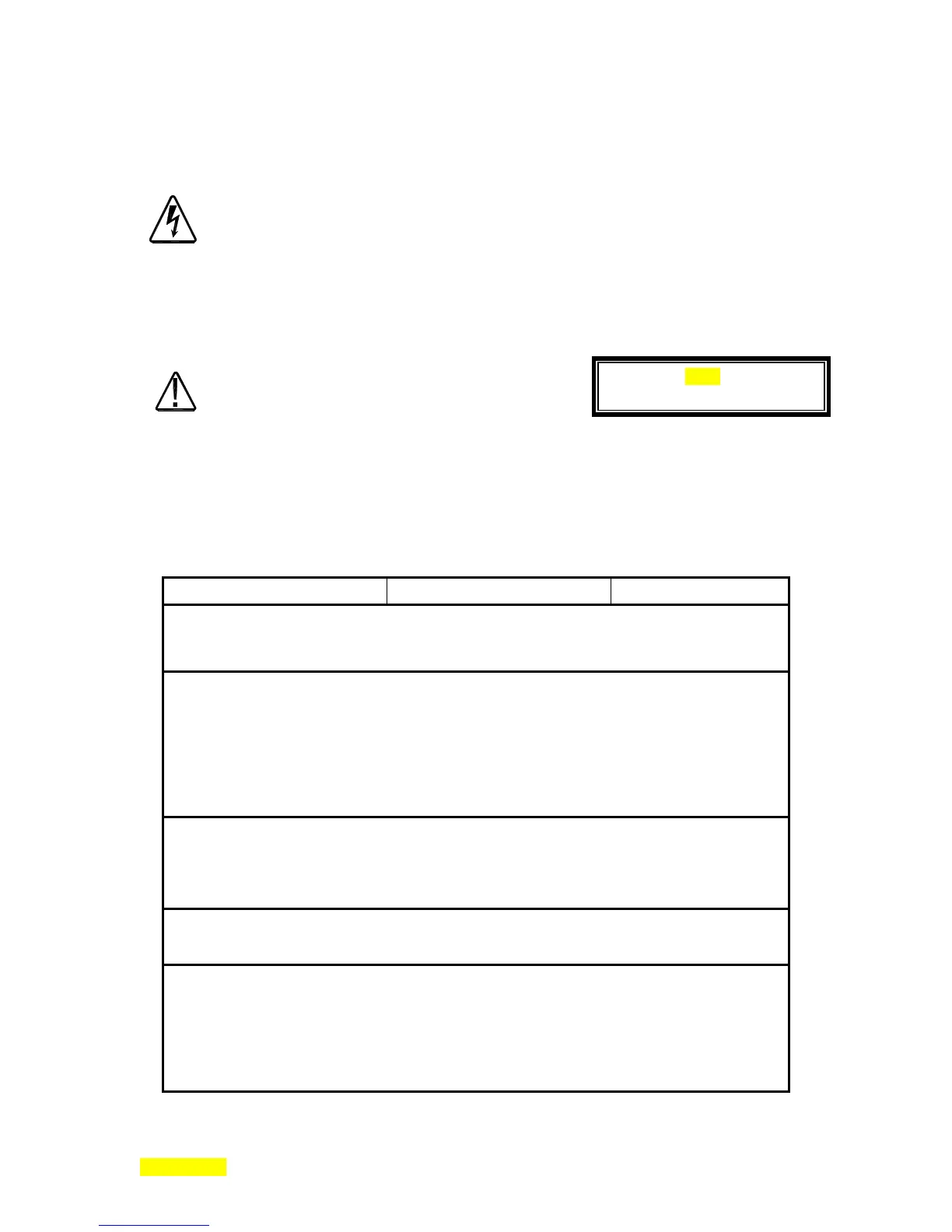
Hazardous Voltages Present
WARNING There are potentially lethal voltages present within the Model 880 control unit with a
line cord or an INPUT/OUTPUT cable attached. Service should be attempted by qualified personnel only.
Disconnect all cables and power cord when removing, installing, or servicing any component of the Model
880 instrument.
Static Sensitive
CAUTION The Model 880 and remote oscillator contain static sensitive components. Use
adequate and appropriate precautions when attempting any service to these devices. Discharge yourself by
touching the ground stud on the Model 880 before disconnecting the power cord. The power cord provides
a path back to earth ground through the AC outlet. This will equalize the voltage potential between you
and the Model 880. It is recommended that work be done on a properly grounded mat or table surface.
User Correctable System Problems
SYMPTOM CAUSE REMEDY
1. No LED/LCD displays a. Blown fuse (1 or more of 3) Replace fuse(s)
b. Power switch off Switch on unit.
(See section 2.21 for additional
diagnostic information)
c. Line cord loose or unplugged Tighten cord.
2. Constant crystal fail message a. Bad or severely oxidized
sensor
New crystal.
b. Crystal cable connections to
oscillator or sensor missing or
loose
Check cables.
c. Severe material buildup on
edges of crystal holder causing a
short at the sensor
Clean sensor.
3. Large thickness jumps during
deposition
a. Defective crystal New crystal.
b. Crystal near end of life New crystal.
c. Particles or flakes on crystal
seating surface
Clean sensor.
4. Crystal stops suddenly during
deposition before reaching typical
source life expectancy.
a. Crystal being hit by small
droplets of molten material
Move farther from source.
5. Thermal instability (large
change in thickness reading
during source warm-up)
a. Poor crystal seating Clean sensor.
b. Poor or no water flow Correct flow.
c. Excessive heating due to
secondary electron formation in
some sputtering systems
Increase water flow to
sensor.
See Section x3.19,
"OPTions/INFo" for diagnostics


 To Next Page