MAINTENANCE CHECK As a part of the WEEKLY
MAINTENANCE checks, inspect the tires and rims for
damage. Cuts and bruises, snags, punctures, and
abrasions should be repaired before they can cause
tire failure. Bent, cracked or loose rims should be re-
paired or replaced.
Check tire valve condition and make sure each valve
has a cap.
Check the wheel retaining nuts for proper tightness.
Wheel retaining nuts should be torqued to 400-500
ft.lbs.
TIRE PRESSURES Always maintain the recommend-
ed tire inflation pressures in all tires.
When driving, some increase in tire pressures can be
expected due to heat generated by friction. Over-
speeds may also produce increased tire pressures. In
such circumstances, NEVER BLEEED THE TIRES. In-
stead slow down or stop until the tires cool.
Inflation pressure should be checked when tires are
cool, using an accurate tire pressure gauge. Check
pressures at regular intervals.
Bleeding the air from hot tires is dangerous and should
not be attempted. While the pressure will be reduced,
an increase in temperature of the tire will take place as
soon as driving is resumed and tire failure will result.
UNDERINFLATION Too little air pressure increases
deflection, causes the tread to wipe and scuff over the
road, results in extra strain on the tire, and increases
the chances for bruising.
PROPER INFLATION Maintaining the proper air pres-
sure provides maximum road contact and results in in-
creased tire life.
OVERINFLATION Overinflation reduces tire deflection
and tire contact area, causing the tire to ride on the
crown, and results in rapid wear in the center of the
tread.
MAINTENANCE AND LUBRICATION
TIRES
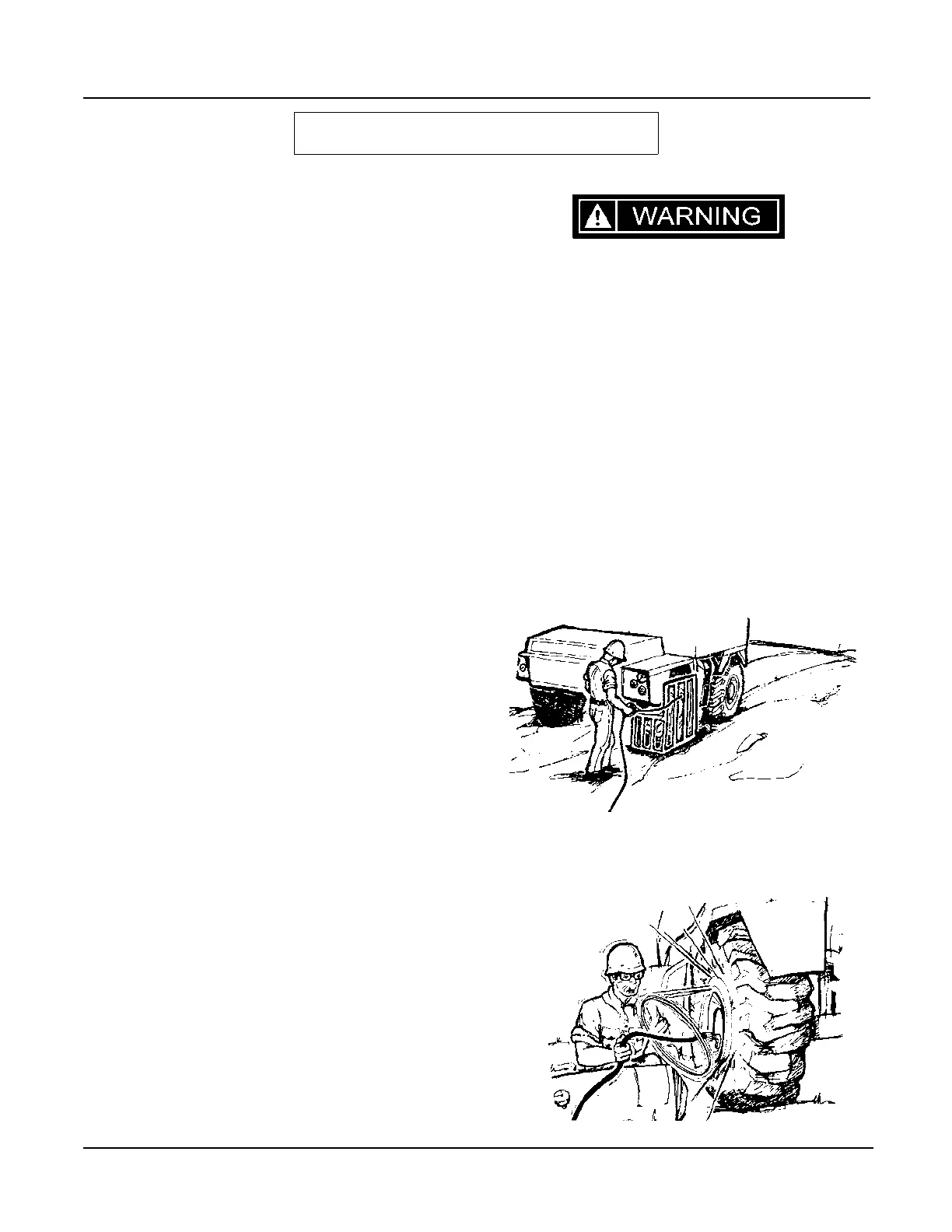
The explosive stored in a tire and rim assembly under
pressure makes changing truck and off-road tires haz-
ardous. Death or personal injury can occur while han-
dling or maintaining these tires. Special procedures
must be followed and special tools must be used if tires
are to be changed safely. Whenever possible, let your
service company handle this job. If you must change a
tire, follow the step by step instructions detailed in a tire
repair manual. Should low pressures make it necessary
to add air, never stand beside the tire tread. Instead use
a extension hose long enough to permit you to stand be-
hind the tire tread. Always use a tire cage or equivalent
protection when adding air.
RIGHT WAY
4 - 12 Revised: March 2005RT700 Series


 To Next Page