iCNC PERFORMANCE
Manual 0-5399 MAINTENANCE / TROUBLESHOOTING 6-1
SECTION 6: MAINTENANCE AND TROUBLESHOOTING
6.1 Maintenance
Weekly Check buttons for wear and tear.
Monthly Check cables for wear and tear. Check all connectors are properly connected.
Clean and check rails
Clean lifter screw and rails
6.2 Cut Quality
Cut Quality
Cut quality requirements differ depending on application. For instance, nitride build-up and bevel angle may be major factors when the
surface will be welded after cutting. Dross-free cutting is important when finish cut quality is desired to avoid a secondary cleaning opera-
tion. Cut quality will vary on different materials and thicknesses.
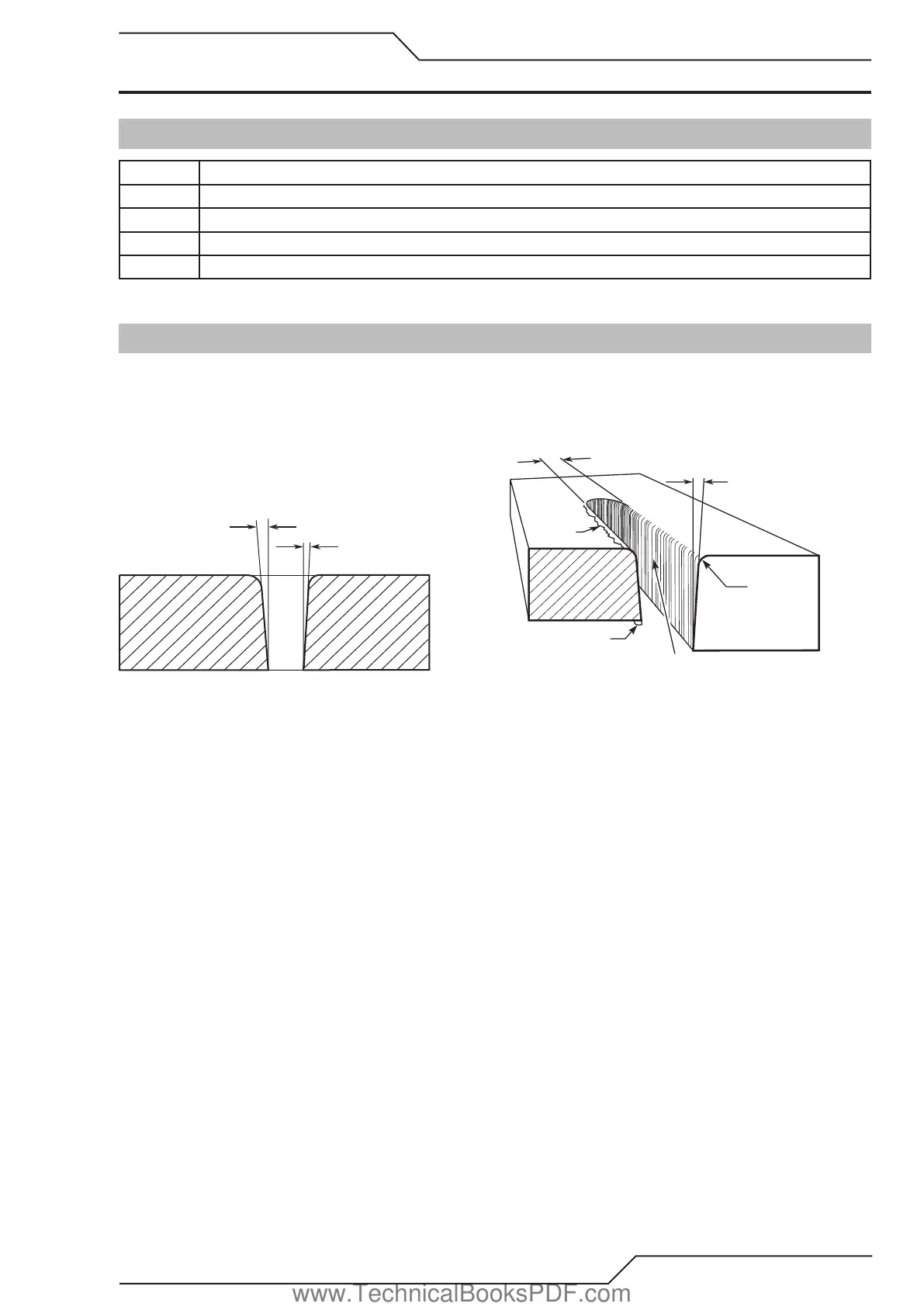
Right Side
Cut Angle
Left Side
Cut Angle
A-00512
Kerf Width
Cut Surface
Bevel Angle
Top Edge
Rounding
Cut Surface
Drag Lines
Dross
Build-Up
Top
Spatter
A-00007
Cut Surface
The condition (smooth or rough) of the face of the cut.
Bevel Angle
The angle between the surface of the cut edge and a plane perpendicular to the surface of the plate. A perfectly perpendicular cut
would result in a 0° bevel angle.
Top-Edge Rounding
Rounding on the top edge of a cut due to wearing from the initial contact of the plasma arc on the workpiece.
Dross Build-up and Top Spatter
Dross is molten material which is not blown out of the cut area and re-solidifies on the plate. Top spatter is dross which accumulates
on the top surface of the workpiece. Excessive dross may require secondary clean-up operations after cutting.
Kerf Width
The width of material removed during the cut.
Nitride Build-up
Nitride deposits which may remain on the cut edge of the carbon steel when nitrogen is present in the plasma gas stream. Nitride
buildups may create difficulties if the steel is welded after the cutting process.
www.TechnicalBooksPDF.com



 To Next Page