Need help?
Do you have a question about the TransAct Ithaca 280 and is the answer not in the manual?
FCC Class A compliance designation.
ULc compliance certification.
CE Mark certification for product conformity.
UL 1950 safety standard compliance.
TUV safety certification.
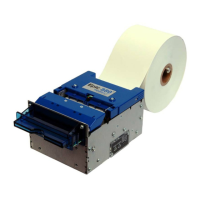
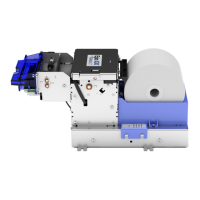
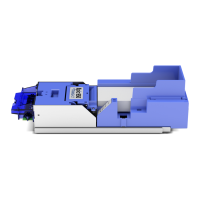
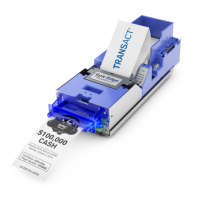
Overview of the iTherm® 280 printer's features and technology.
Identifies the target audience for the programmer's guide.
Outlines the content covered in the programmer's guide.
Details standard and optional warranty coverage for the iTherm® 280 printers.
Provides information on accessing technical and sales assistance.
Lists the different interface models of the iTherm® 280 thermal printer.
Details common features across the iTherm® 280 thermal printer family.
Lists optional features available on specific iTherm® 280 printer models.
Provides general specifications including printing method and resolution.
Details printing parameters like method, resolution, and speed.
Explains character pitch and provides a table of possible character pitches for fonts.
Details the 10x24 small font characteristics and recommended CPI.
Details the 13x24 medium font characteristics and recommended CPI.
Details the 15x24 large font characteristics and recommended CPI.
Explains the capability of rotating printed output in 90-degree increments.
Provides the physical dimensions of the iTherm® 280 printer.
Specifies the approximate and shipping weight of the printer.
Details power input requirements for AC-powered models.
Details power input requirements for optional 24-volt DC powered versions.
Provides an overview of the thermal print head specifications and operating precautions.
Specifies details about receipt paper, including width, diameter, and thickness.
Lists monochrome thermal paper grades from different manufacturers.
Lists color thermal paper grades from different manufacturers.
Provides precautions for using thermal paper, especially two-color paper.
Describes the parallel interface, connectors, and pin-outs.
Details the signal voltage and current levels for the parallel interface.
Describes the serial port features, baud rates, and pin-outs.
Details the USB interface standards and connector pin functions.
Describes the cash drawer interface capabilities and status interpretation.
Illustrates pin definitions for cash drawer configurations (Ithaca, Epson, Star).
Outlines the four steps to verify printer configuration before system installation.
Guides on identifying and verifying the correct communications interface card.
Explains how to change interface cards in the field, including firmware considerations.
Provides step-by-step instructions for removing an old interface card.
Instructions on verifying the cash drawer interface label and matching it to the printer.
Steps for installing a new interface card, including connecting cables.
Explains how to connect the cash drawer connector to internal controllers.
Steps for removing the interface card from the controller board.
Steps to reconfigure the cash drawer harness connection.
Steps for reinstalling the interface card after reconfiguration.
Instructions for connecting the printer's power supply, internal and external.
Details serial and parallel communication cable connections and pin-outs.
Step-by-step guide for installing printer drivers on Windows 95/98/Me.
Step-by-step guide for installing printer drivers on Windows NT4.0/2000.
Explains the printer's buttons and indicator lights for operation.
Details the function and operation of the standby/power down button.
Explains how to use the FEED button for paper feeding functions.
Explains the Power indicator's role in showing printer status and errors.
Details the Error indicator's function in signaling problems and recovery status.
Explains the Paper indicator's role in showing paper status, including low paper.
Introduces modes for testing printer functionality and configuration.
Provides a sequence of operations to enter self-test and configuration modes.
Describes TEST-Receipt and TEST-Head Test options for verifying printer operation.
Describes two methods for configuring the printer: manual sequence and remote software.
Lists common incompatibilities for parallel and serial printer configurations.
Provides steps on how to enter and use Configuration Mode to change settings.
Details configurable parameters like Emulation, Baud Rate, Handshaking, and Font.
Introduces the programmer's guide's nomenclature for describing control codes.
Explains the nomenclature used for control codes (e.g., [], <>, <n>).
Explains the two phases of page mode operation: definition and printing.
Details how the [ESC]t command starts page definition and sets orientation.
Explains embedding auto-cutter commands within page definitions.
Discusses how mechanism commands are processed in page mode.
Provides steps for generating and printing APA graphics images.
Explains the printer's bit-image graphic capability and modes of operation.
Defines character graphics and provides an example using mosaics.
Guides on generating color graphics using PJColor or a Windows driver.
Lists options for configuring the order of coupon, cut, and logo printing.
Specifies the paper feed amount for the cut command.
Explains the concept of Unicode and its evolution for character representation.
Discusses Unicode mapping, character representation, and communication challenges.
Details memory requirements for full Unicode font storage.
Explains TransAct's approach to Unicode implementation via downloadable fonts.
Command to read and return printer statistics like cover open count.
Command to print the current printer configuration and totals.
Command to print the current totals log.
Command to print the current printer setup values.
Reconfigures electronic journal print mode and record separator.
Illustrates communication flow and explains protocol basics.
Discusses USB standards, development, and support for POS devices.
Details Microsoft's POSUSB driver model and TransAct's USB printer interface.
Describes the 10-BaseT Ethernet adapter for networking printers.
Lists features of the standard Ethernet connection.
Lists supported protocols for Ethernet connections.
Details HTTP/Web interface, login, and configuration options.
Mentions push buttons for reset and self-diagnostics.
Explains the parallel port behavior, data transfer, and timing specifications.
Discusses the configurable printer buffer size and its implications.
Details IEEE 1284 support, modes, and inquire commands.
Explains Plug and Play implementation for parallel ports.
Describes serial port flow control standards (XON/XOFF, Ready/Busy).
Explains the serial device identification string format.
Details how to inquire about serial port status and responses.
Explains how to perform a software printer reset in serial mode.
Describes how to perform a software reset via the parallel port INIT signal.
Explains how to check the power-cycle flag for printer status.
Details the data pass-through feature for serial communication.
Describes multi-drop configuration for connecting multiple printers in serial mode.
Describes EEPROM read errors and potential recovery steps.
Details EEPROM write errors and lack of recovery.
Explains software errors, Watch Dog resets, and ESD events.
Describes user store format errors and reformatting.
Details flash write errors and lack of recovery.
Explains communication adapter errors and missing firmware.
Details ordering options for different types of receipt paper.
Lists stock numbers for various power and communication cables.
Lists available drivers and software tools for the printer.
 General
| Print Method | Direct thermal |
|---|---|
| Print Speed | 250 mm/sec |
| Print Resolution | 203 dpi |
| Interface | USB |
| Paper Width | 80 mm |
| Dimensions | 210 x 150 x 140 mm |
| Weight | 1.5 kg |
| Max Print Width | 72 mm |
| Paper Handling | Roll |

 To Next Page