WP1624
Firewood Processor
Safety
10
Safety
• Never exceed the limitations of the machine. If its ability to
do the job, or to do it safely is in question–STOP!
2.6.1 Maintenance Safety
Always place the machine in a safe service position before
performing any service or maintenance work, storage
preparation, or hooking / unhooking. See Safe Condition on
page 9.
Follow good shop practices:
• Have at least two workers present when performing
maintenance on this equipment. Never work alone in case
an emergency should arise.
• Keep service area clean and dry.
• Never operate the engine in a closed building. Make sure
there is plenty of ventilation. Exhaust fumes can cause
asphyxiation.
• Never work under unsupported equipment.
• Use only genuine OEM replacement parts. The
manufacturer is not responsible for injuries or damage
caused by the use of non-approved parts or accessories.
• Make sure all safety shields and devices are re-installed
when a maintenance or service procedure is finished.
• Do not use gasoline or diesel fuel when cleaning any parts.
Use a regular cleanser.
• Use proper tools that are in good condition. Make sure the
procedure is understood before performing any service
work.
2.6.2 Hydraulic System Safety
• Make sure that all the components in the hydraulic system
are kept clean and in good condition.
• Make sure all components are tight, and that lines, hoses
and couplings are not damaged before applying pressure to
the system.
• Do not use a hand to check for hydraulic
oil leaks. Hydraulic fluid escaping under
pressure can penetrate the skin causing
serious injury. Use a piece of cardboard.
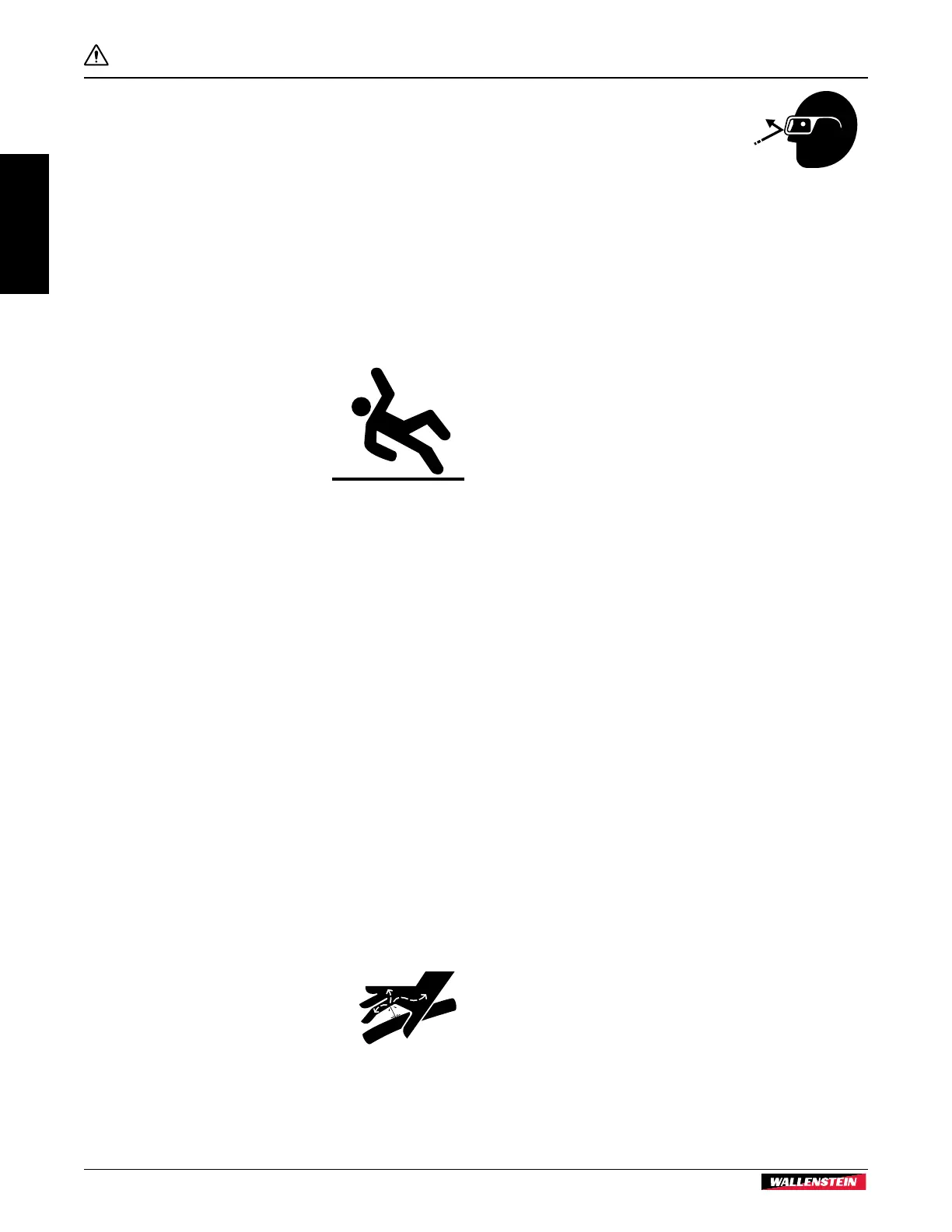
• Wear proper hand and eye protection
when searching for a high pressure
hydraulic leak.
• Seek medical attention immediately if injured by a
concentrated high-pressure stream of hydraulic fluid.
Serious infection or toxic reaction can develop from
hydraulic fluid piercing the skin surface.
• Do not attempt any makeshift repairs to the hydraulic lines,
fittings or hoses by using tape, clamps or cements. Doing
so can cause sudden failure and create a hazardous and
unsafe condition.
• Relieve pressure on the hydraulic system before working
it. The hydraulic system operates under extremely high
pressure.
• Replace any hydraulic hose immediately that shows signs
of swelling, wear, leaks or damage before it bursts.
• Do not bend or strike high-pressure lines, tubes or hoses,
or reinstall them in a bent or damaged condition.
• Check to make sure hydraulic hoses are not worn or
damaged, and are routed to avoid chafing.
• Never adjust a pressure relief valve or other pressure-
limiting device to a higher pressure than specified.
2.6.3 Storage Safety
• Store the unit in an area away from human activity.
• Do not allow children to play on or around the stored
machine.
• Consult the engine owner's manual for storage information
on the engine.


 To Next Page