Service and Maintenance
WP1624
Firewood Processor
58
8.8 Axles and Suspension
Except for periodic inspection of the fasteners used to attach the
axle to the frame, no other suspension maintenance is required.
For further information on maintenance and inspection
procedures regarding brakes, hubs, bearings and seals, refer to
the Dexter® axle service manual at www.dexteraxle.com.
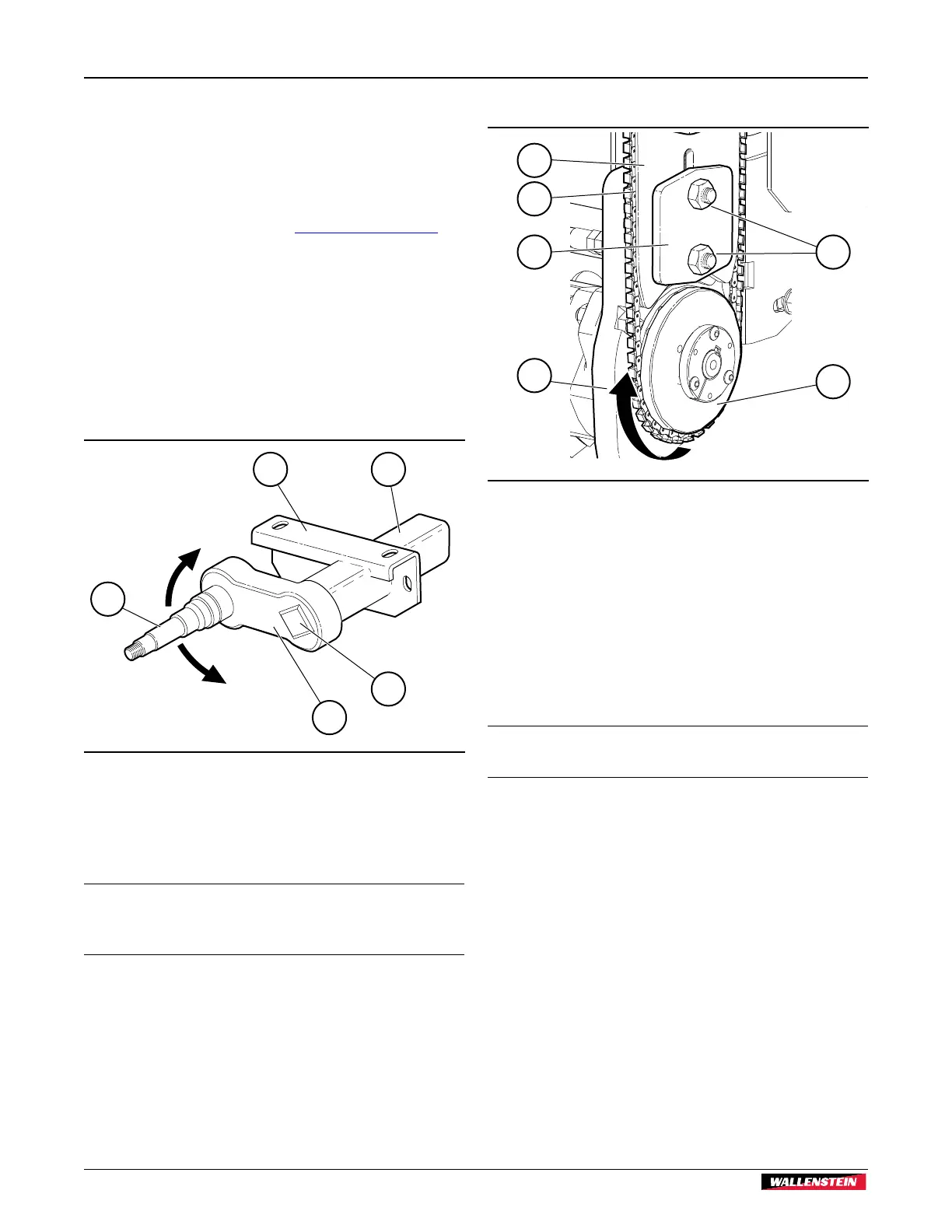
The Dexter Torflex® axle suspension system is a torsion arm
type suspension completely self-contained within an axle tube.
The Torflex axle provides suspension through a steel torsion bar
surrounded by four rubber cords, encased in the main structural
member of the axle beam.
The wheel/hub spindle is attached to the torsion arm, fastened
to the rubber encased bar. As load is applied, the bar rotates
causing a rolling / compressive resistance in the rubber cords.
00356
1 2
3
4
5
Fig. 89 – Axle
1. Spindle
2. Mounting Bracket
3. Axle Tube
4. Torsion Bar
5. Torsion Arm
IMPORTANT! Do not weld on the axle beam. Heat
generated from welding could damage the rubber
suspension cords.
8.9 Saw Chain Maintenance
00412
6
5
4
3
1
2
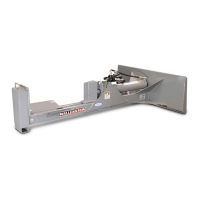
Fig. 90 – Saw Parts
1. Bar Nuts
2. Drive Sprocket
3. Direction of Chain Travel
4. Clamp plate
5. Cutting Chain
6. Guide Bar
8.9.1 Sharpening
Use chain and bar in sets to equalize wear. Keep chain sharp to
make faster cuts and reduce energy required to make the cuts.
IMPORTANT! Refer to the Oregon® Mechanical Timber
Handbook for instructions on sharpening the saw chain.
• Before sharpening, clean the saw chain to remove dirt,
debris and bar oil so it can be inspected thoroughly.
• Inspect for broken, cracked, damaged or missing chain
parts.
• Look for signs of excessive chain stretch. Stretch indicates
wear occurring to the flange of the rivet and holes in the
drive links.
• Inspect the chain chassis for abnormal wear patterns,
which are indicators of issues with the guide bar and drive
socket.
• Discard the chain if it has broken, parts are missing, there
is excessive stretch, or it has loose rivets.


 To Next Page