11
2. For the Installer
2.3.2 Operating independently of the room air:
(Combustion air supply from ventilation draught in the chimney)
This variant is to be preferred over operating with room air, because it ensures that there will always be sufficient
combustion air and that the induction noise during operation will be transferred to the outside. The accessory
FIRE 024 is required for this operation.
The combustion air is drawn in through an unobstructed ventilation draught in the chimney – Figs. 3, 4. The ope-
nings for the intake air and the flue gas are only allowed to be located with a square with a 500 mm side length.
This ensures that the same air pressure always prevails in the openings (even in very windy conditions).
Only flue gas systems that have been tested and approved for solid fuel applications may be used.
The lengths stated are only a guideline and should not take the place of an actual flue calculation.
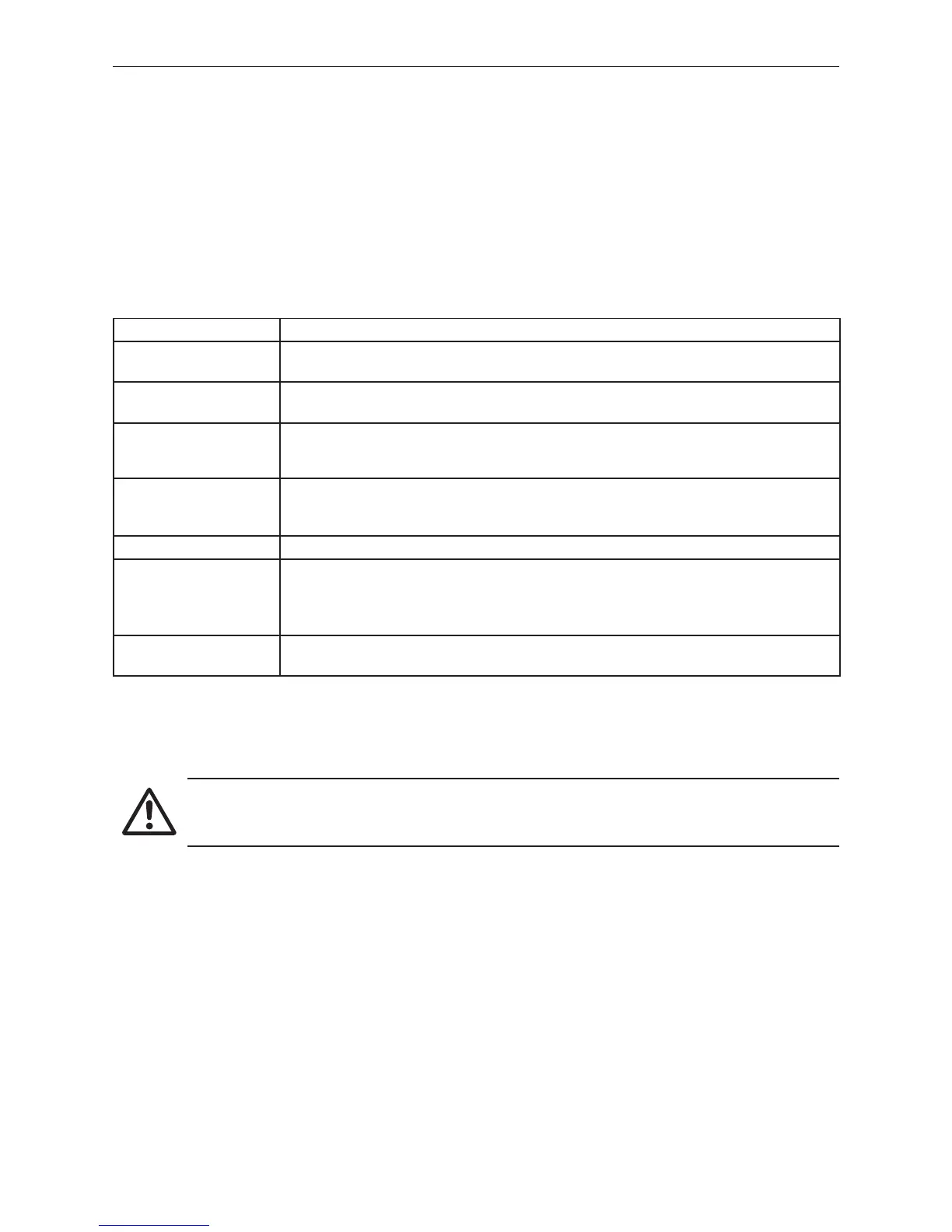
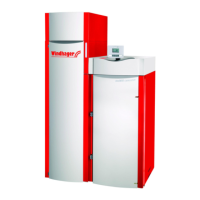
pellet boiler FireWIN 90/120
Max. induction length
(Air intake)
9 m, each 90° bend reduces the length by 1 m
Air intake
cross-section
min Ø 75 mm
(or technically equivalent cross-section)
Combustion air line
(Air intake)
DN 80
Seal integrity: min. 0.1 m
3
/h at 0.1 mbar ; temperature resistance: 95 °C
(standard plastic discharge lines with correctly fitted seal)
Connecting piece
(Flue gases)
Max. length 3 m,
only use lines with minimum classification according to EN 1851-1:
T200 H1 D V2 L(xxxx) G(xx)
Shaft head Tested wind protection fixture or design in accordance with DIN V 18160-1 – Fig. 3.
Air/flue gas system
(sketch Fig. 5)
Configuration as equal-pressure system
(induction opening for air intake and opening for flue gas discharge are
within a square with a max. edge length of 0.5 m)
Required accreditations: for solid fuels; moisture-resistant
Swinging draught flap,
explosion flap
Energy-saving intake regulators or explosion flaps are not allowed to be installed
in the living area. Comply with the statutory regulations and directives.
The connection for the connecting piece on the chimney should be designed such that the condensate is preven-
ted from flowing from the chimney back into the connecting piece.
Please note for Germany!
Only chimneys with general technical approval, classified as W3G according to DIN V 18160 Part 1
may be used.


 To Next Page