30
2. For the Installer
2.14 Installing the exhaust pipe
a) Install the exhaust pipe upward to the flue (45° is the ideal angle). Maximum exhaust pipe length 3 m.
Information!
Any section of this exhaust line that only rises slightly (up to 30°) or is horizontal is not allowed to
be more than 1 m in length.
b) Avoid 90° bends, 45° bends are better.
c) Make the flue connection at 45° if possible.
d) Do not push the exhaust pipe too far into the flue.
e) Do not seal the exhaust pipe completely into the flue. Connection with fle-
xible exhaust pipe inlet into the flue. The vacuum fan can cause sound
transmissions that create noise pollution.
f) The FireWIN is a low-pressure boiler and this means that the flue gas
system needs to meet the „N1“ seal integrity requirement according to EN
1856-1 and EN1856-2. Please ensure a sufficient immersion depth when
fitting (e.g. when using Windhager stainless steel flue systems).
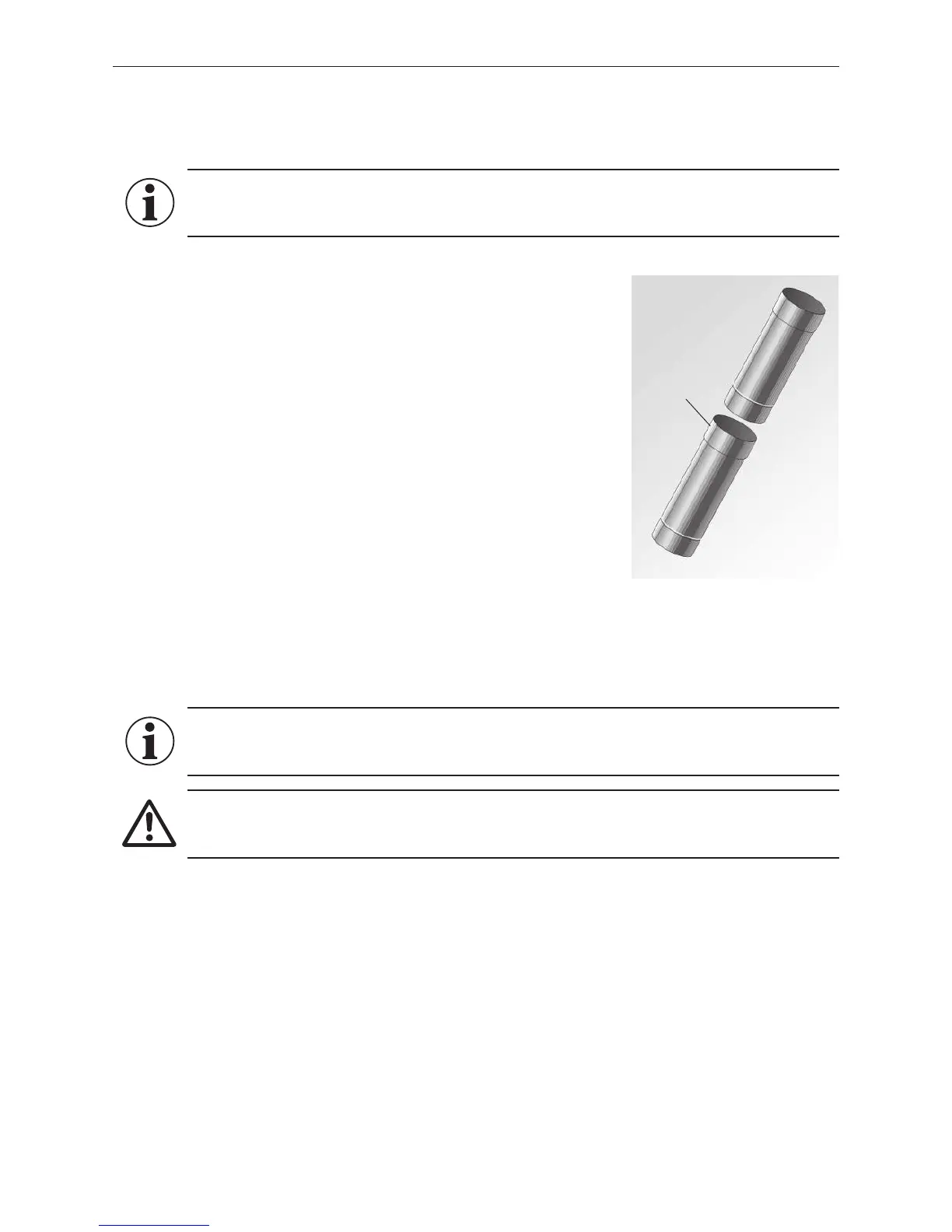
g) Always fit exhaust pipes together with the sleeve pointing upwards (smal-
ler diameter end of stainless steel flue accessory fits exactly onto flue
outlet in FireWIN), so that any condensation flowing back cannot leak out
of the exhaust pipe – Fig. 40.
The parts must be secured with pipe clamps to ensure adequate leak-
tightness and stability. Pipelines are not allowed to sag.
h) The entire exhaust line (particularly after 1 m length) should be insulated
in order to prevent or minimise condensation.
i) An additional measuring opening is only allowed to be drilled in the stain-
less steel exhaust pipe using a stainless steel drill bit.
Information!
In fully automated pellet feed, the exhaust pipe must be insulated and the delivery and return hose
must be replaced by non-flammable steel pipes in this area.
Attention!
Energy-saving intake regulators or explosion flaps are not allowed to be installed in the living area.
Comply with the statutory regulations and directives.
Fig. 40 Stainless steel exhaust pipe
Sleeve


 To Next Page