INTRODUCTION
The
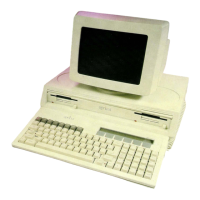
Apricot has, as standard,
an
800 by 400 pixel
high-resolution screen.
This
gives
the
user
320
thousand
individual
points
which,
in
the
high-resolution mode,
can
be individualy
switched
on
or off as required.
The
Graphics
Systems
Extension module, from Digital
Research, allows
the
user
to
write
programs
which
can
use
the
full
high-resolution
screen. Programs
written
in
high-
level languages (such as
Pascal
and
Basic)
which
use
Graphics
Systems
Extension
can
be compiled
on
the
Apricot
and
then
executed.
APPLICATIONS INTEREST
Graphics
Systems
Extension
Functions
All graphics devices
were
not
created equal. Terminals,
plotters
and
printers
all draw lines, fill
in
areas
and
produce
text
differently.
All
computer
graphics are displayed
on
a coordinate
system
of
one
sort
or
another. Graphics Systems Extensions
job is to
make
sure
the
coordinate
system
that
one
device
uses
matches
the
coordinate
system
used
by another. For
example,
with
GSX
an
applications program produces
the
same
graphics
image
on
an
Apricot as
it
does
on
an
IBM
PC:
the
linetypes are
the
same,
the
character size
the
same, etc.
How
To
Use
Graphics Systems Extension
Applications programs
work
with
Graphics Systems
Extension
through
a
standard
calling sequence. GSX
translates
the
parameters
passed by
these
standard calls to
fit
the
peculiarities of
each
graphics device.
It
is
this
translation
process
that
makes
applications programs
device-independent.


 To Next Page