System Overview 2-19
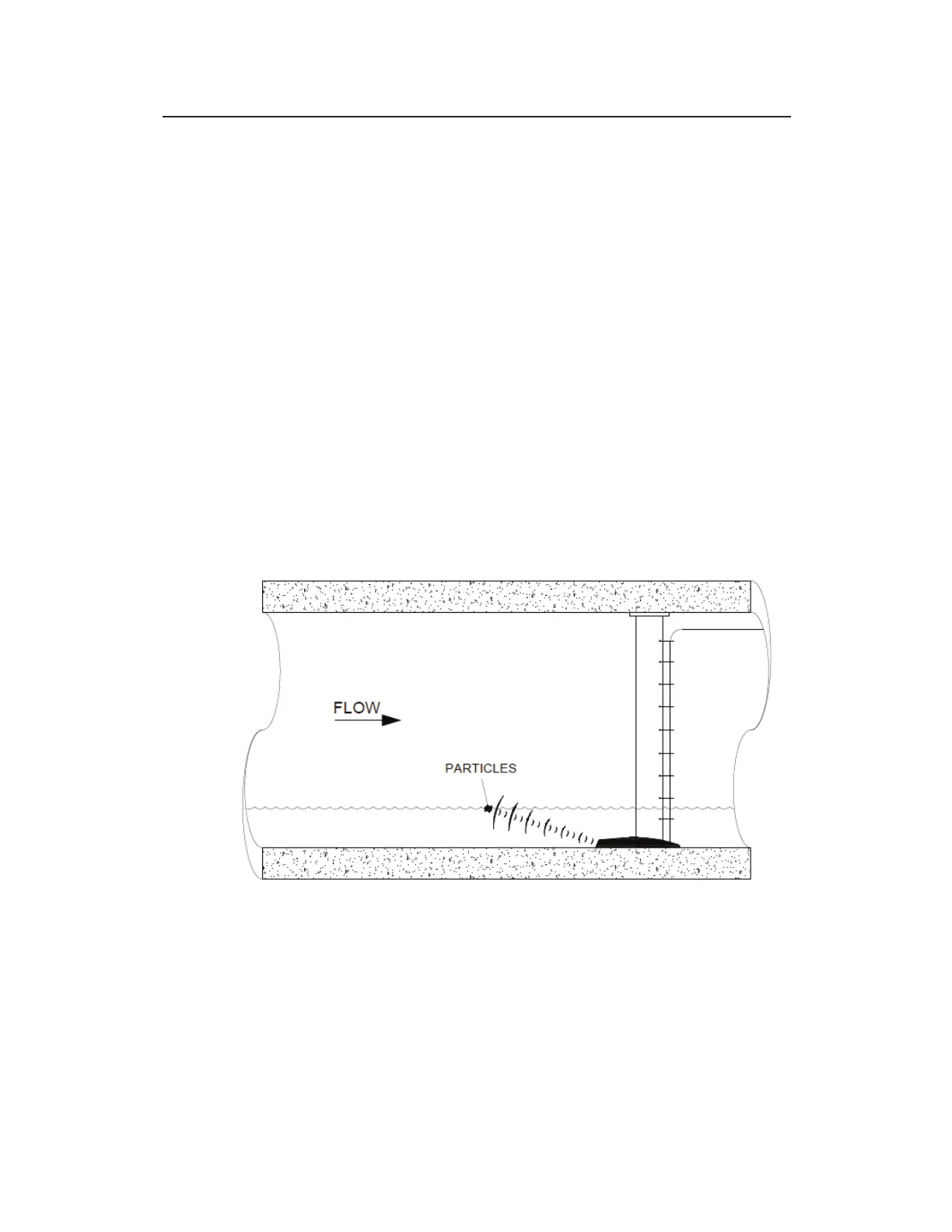
The AV|Max sensor measures peak velocity by sending an
ultrasonic signal at an angle up through the velocity layers in the
oncoming flow. It emits a wide, omni-directional sound wave at a
specific frequency upward into the flow. The sound wave bounces
off particles in the flow and returns to the sensor. The velocity
sensor measures the change in the sound wave's frequency from
transmission to reception. This change is used to determine the
peak velocity of the flow based on the Doppler effect.
The Doppler effect describes the shift in frequency of a sound wave
emitted by a morning object in relation to a stationary point. The
moving objects represent particles in the flow. The stationary point
is the velocity sensor, and the signal received is the reflection of the
sound wave (emitted by the velocity sensor) off the particles.
Based on this information, the sensor determines the peak velocity
of the oncoming flow. The peak velocity is then converted to
average velocity by applying a user-defined average-to-peak ratio.
AV|Max Sensor firing velocity
Ultrasonic Depth Sensor
The AV|Max sensor leverages dual depth technology and provides
ultrasonic depth measurements to full pipe and pressure depth
measurements during surcharge conditions.
To provide the depth of the flow, the sensor sends an ultrasonic
signal upward that bounces off the water surface – air interface.


 To Next Page