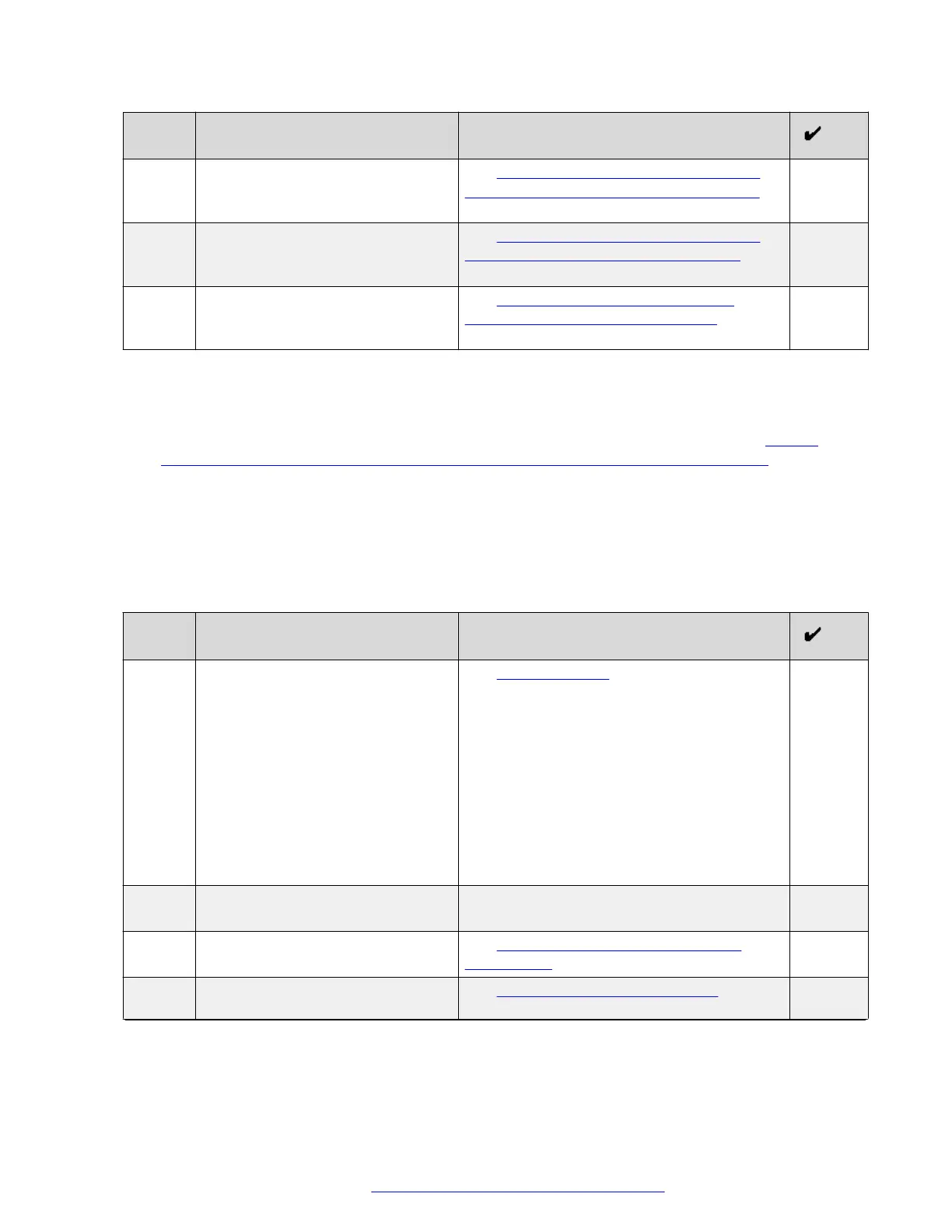
No. Task TLS server profile required for SIP
communications with Avaya SBCE
4 Configure the Avaya SBCE
signaling interface.
See Configuring the Avaya Session Border
Controller for Enterprise signaling interface on
page 132.
5 Configure the Avaya SBCE media
interface.
See Configuring the Avaya Session Border
Controller for Enterprise media interface on
page 132.
6 Configure Avaya SBCE server
flows.
See Configuring Avaya Session Border
Controller for Enterprise server flows on
page 134.
Prerequisites
Before configuring support for external native clients media, do the following:
• Add Avaya SBCE to the Avaya Aura
®
Web Gateway. For more information, see
Adding
Avaya Session Border Controller for Enterprise to the Avaya Aura Web Gateway on
page 122.
• Configure one A interface IP address and one B interface IP address on the Avaya SBCE.
TLS server profile checklist for external native clients media configuration
Perform the following tasks to create a TLS server profile required for SIP communications with
Avaya SBCE.
No.
Task Notes
1 Create a certificate signing request. See Certificate setup on page 135.
Use the following options:
• For Common Name, use the Equinox
Management FQDN. For example:
conferencing_management.company.
com.
• For Subject Alternative Name, use the
Equinox Management FQDN. For example:
DNS:conferencing_management.comp
any.com.
2 Download and save the
created .KEY and .CSR files.
3 Send the .CSR file to the System
Manager CA for signing.
See Signing certificates with the System
Manager CA on page 137.
4 Install the signed certificate and the
key on the Avaya SBCE.
See Installing a certificate and a key on
page 138.
Table continues…
External client access configuration
October 2018 Deploying the Avaya Aura
®
Web Gateway 129
Comments on this document? infodev@avaya.com



 To Next Page